
Laser Rust Removal Equipment for Rust, Paint and Oxide Cleaning

Hi! I am Dawn. With 10 years of field experience, I specialize in laser cleaning systems—from optical sourcing to automation. I write here to turn complex specs into actionable buying guides.
Table of Contents
Laser rust removal equipment is used to clean rust, oxide layers, paint, coatings, oil and surface contamination from metal parts by using a focused fiber laser beam. For many workshops and industrial users, it is a cleaner alternative to grinding, sandblasting or chemical rust removal.
But choosing the right machine is not just about buying the highest wattage.
A 300W pulsed laser cleaner and a 3000W CW laser cleaner can both remove rust, but they are built for different jobs. One is better for precision cleaning and lower heat impact. The other is better for heavy rust, thick paint and large steel surfaces.
This page will help you choose the right laser rust removal equipment based on your material, rust level, working area, budget and required surface finish.
Quick Recommendation
If you need to remove light rust, oxide or residue from tools, molds, stainless steel, aluminum or precision parts, a 100W–300W pulsed laser cleaner is usually the better choice.
If you clean medium rust on machinery parts, farm equipment, welding parts or workshop components, a 500W–1000W machine is often enough.
If you need to remove heavy rust, thick paint, corrosion or coating from steel frames, trailers, ship parts or construction machinery, a 1500W–3000W CW laser cleaner is usually more practical.
If your work involves shipyards, bridges, large steel structures or long-hour industrial cleaning, you should consider a 3000W+ CW laser cleaning system.
Not sure which one fits your work? Send us photos of the rusted part, material type, rust thickness and cleaning area. We can recommend a machine before you buy.
Choose by Rust Level
Rust condition | Suggested equipment | Typical users |
Light surface rust | 100W–300W pulsed laser cleaner | Tool repair, molds, stainless steel parts, car restoration |
Medium rust | 500W–1000W pulsed or CW laser cleaner | Repair shops, metal workshops, machinery maintenance |
Heavy rust | 1500W–3000W CW laser cleaner | Steel frames, trailers, factories, construction machinery |
Thick paint + rust | 2000W–3000W CW laser cleaner | Industrial maintenance, coating removal, ship parts |
Large-area corrosion | 3000W+ CW laser cleaning system | Shipyards, bridges, steel structures, production lines |
Heat-sensitive surface | Pulsed laser cleaning equipment | Aluminum, molds, thin metal, precision components |
The right machine depends on five things:
- Material type
- Rust or coating thickness
- Cleaning area per day
- Required surface finish
- Whether speed or surface protection is more important
If the part is expensive, thin, polished or heat-sensitive, we normally recommend testing before choosing the final power.
Laser Rust Removal Equipment Models
Below are the main machine types used for rust cleaning. You can replace this section with your actual product models.
Model type | Power range | Laser type | Best application | Recommended buyer |
Portable pulsed laser cleaner | 100W–300W | Pulsed | Light rust, oxide, molds, thin metal | Precision users, restoration shops |
Workshop laser rust remover | 500W–1000W | Pulsed or CW | Medium rust, machinery parts, repair work | Small businesses, workshops |
Industrial handheld laser cleaner | 1500W–3000W | CW | Heavy rust, paint, steel frames | Factories, steel structure maintenance |
Heavy-duty laser cleaning system | 3000W+ | CW | Large-area corrosion, long-hour cleaning | Shipyards, bridges, industrial users |
3-in-1 laser cleaning machine | 1000W–3000W | CW | Cleaning, welding and light cutting | Fabrication shops |
Handheld Laser Rust Removal Equipment
Handheld laser rust removal equipment is the most common choice for workshops and industrial maintenance. The operator uses a laser cleaning gun to scan the rusted surface. It works well on irregular parts, large frames, welded structures and equipment that cannot be moved easily.
Common uses include:
- Car frame and chassis rust removal
- Machinery repair
- Trailer cleaning
- Farm equipment maintenance
- Steel pipe and plate cleaning
- Weld seam preparation
- Local rust removal before painting or coating
For most buyers, the key questions are not only “How many watts?” but also “How fast can it clean my parts?” and “Will it affect the base metal?” That is why we recommend sending sample photos before choosing a machine.
Pulsed Laser Rust Removal Equipment
Pulsed laser rust removal equipment sends laser energy in short pulses. It is usually selected when surface control is more important than cleaning speed.
It is suitable for:
- Light rust
- Oxide layers
- Stainless steel parts
- Aluminum parts
- Mold cleaning
- Precision components
- Thin metal
- High-value parts
Typical power options:
- 100W
- 200W
- 300W
- 500W
- 1000W
The advantage of pulsed laser cleaning is lower heat input and better control. The limitation is that it is usually slower than a high-power CW laser cleaner when cleaning heavy rust or large surfaces.
CW Laser Rust Removal Equipment
CW laser rust removal equipment uses continuous laser output. It is normally chosen for speed and productivity.
It is suitable for:
- Heavy rust
- Thick paint
- Large steel plates
- Ship parts
- Trailers
- Steel structures
- Construction machinery
- Industrial surface preparation
Typical power options:
- 1000W
- 1500W
- 2000W
- 3000W
- 6000W+
CW laser cleaners are usually more efficient for large-area cleaning. The trade-off is higher heat input, so parameter control and operator training are important.
3-in-1 Laser Cleaning, Welding and Cutting Machines
A 3-in-1 machine can combine laser cleaning, laser welding and simple cutting in one system. It can be useful for metal fabrication shops that need one machine for several jobs.
However, if rust removal is your main business, compare the cleaning performance carefully. A dedicated laser cleaning machine may be a better choice for heavy rust, precision cleaning or long-hour industrial work.
Price Guide
Laser rust removal equipment prices vary by power, laser source, laser type, cooling system, cleaning head, cable length, safety accessories, warranty and service support.
To avoid misleading you with a single number, we usually quote based on the application. A small pulsed laser cleaner for precision parts and a 3000W industrial CW machine are very different systems.
Equipment type | Power range | Price level | Suitable buyer |
Entry pulsed laser cleaner | 100W–300W | USD4000-6000 | Car restoration, molds, small parts |
Medium workshop cleaner | 500W–1000W | USD13000-28000 | Repair shops, machinery maintenance |
Industrial CW laser cleaner | 1500W–3000W | USD4000-7000 | Factories, steel frames, trailers |
Heavy-duty system | 3000W+ | Custom quote | Shipyards, bridges, production lines |
What Affects the Price?
The final price usually depends on:
- Laser power
- Pulsed or CW laser source
- Laser source brand
- Air cooling or water cooling
- Cleaning head quality
- Fiber cable length
- Machine cabinet design
- Control system
- Safety glasses and protective accessories
- Fume extraction requirement
- Spare lenses and protective windows
- Warranty
- Training and technical support
- Shipping and import cost
A lower price is not always the better deal. Two machines may look similar from the outside but use different laser sources, cleaning heads, cooling systems or protective components.
Factory Price or Distributor Price?
Factory-direct purchase can be useful when you need OEM options, custom configuration, bulk orders or direct technical support.
A local distributor may be better when you need local stock, on-site training or local after-sales service.
Before comparing quotations, make sure the machines have the same laser type, power, cooling method, cleaning head, fiber cable length and warranty conditions.
CW vs Pulsed Laser Rust Removal Equipment
This is one of the most important decisions before buying.
Factor | CW laser cleaner | Pulsed laser cleaner |
Best for | Heavy rust, thick paint, large steel surfaces | Light rust, precision parts, molds, thin metal |
Cleaning speed | Faster on large surfaces | Slower but more controlled |
Heat impact | Higher | Lower |
Surface protection | Good with correct settings | Better for delicate surfaces |
Typical power | 1000W–6000W+ | 100W–1000W |
Cost per watt | Usually lower | Usually higher |
Main buyer | Industrial users | Precision users, restoration shops, mold users |
Choose CW if:
- You need fast cleaning
- The rust is thick
- The surface is large
- The part is strong carbon steel
- You clean steel frames, ship parts, trailers or heavy equipment
- Productivity matters more than a cosmetic finish
Choose Pulsed if:
- The part is thin or expensive
- The surface finish matters
- You clean stainless steel, aluminum or molds
- You need lower heat impact
- You are removing light rust, oxide or residue
- You want better control instead of maximum speed
Power Selection Guide
100W–300W
Choose this range for light rust, thin oxide layers, molds, stainless steel, aluminum and small precision parts.
It is not the fastest option for heavy rust, but it gives better control and lower heat input.
500W–1000W
This range is suitable for many repair shops and small industrial users. It can handle medium rust, machinery parts, welding preparation and general workshop cleaning.
It is a good choice when you need more productivity than a small pulsed system but do not need a heavy-duty 3000W machine.
1500W–3000W
This range is commonly used for heavy rust, thick paint, large steel parts and industrial maintenance.
It is suitable for:
- Steel frames
- Trailers
- Construction machinery
- Ship parts
- Large plates
- Coating removal
For B2B buyers, this is often the most practical range when speed and daily productivity matter.
3000W+
Choose this range for shipyards, bridges, large steel structures, heavy equipment and continuous cleaning.
Before buying, check:
- Power supply
- Cooling capacity
- Working environment
- Safety area
- Operator training
- Daily working hours
- Spare parts support
Real Cleaning Test Results
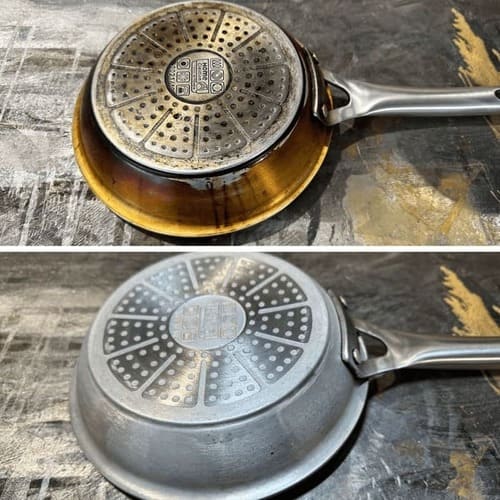
Before buying a machine, ask for a cleaning test on a similar material. Rust removal results can change depending on rust thickness, surface shape, paint type, laser power and cleaning parameters.
Use this table with your own test data.
Material | Surface condition | Machine used | Laser type | Test result | Notes |
Carbon steel plate | Heavy rust | [2000W/3000W model] | CW | Super! | Good for large-area cleaning |
Stainless steel | Light oxide | [300W/500W model] | Pulsed | Super! | Lower heat impact |
Aluminum part | Oxide layer | [300W/500W model] | Pulsed | Super! | Parameter test recommended |
Painted steel | Paint + rust | [1500W/3000W model] | CW | Super! | Fume extraction recommended |
Mold steel | Residue + light rust | [200W/300W model] | Pulsed | Super! | Suitable for precision cleaning |
Before and After Photos

Cleaning Test Video
Applications
Car Restoration
Laser rust removal equipment can be used on car frames, chassis, wheels, brackets, panels and engine parts.
For delicate surfaces, a pulsed laser cleaner is usually safer. For strong steel frames with heavy rust, a higher-power CW laser cleaner may be more efficient.
Good applications:
- Classic car restoration
- Chassis cleaning
- Wheel cleaning
- Engine part cleaning
- Rust removal before repainting
- Local repair work
Repair Shops and Small Businesses
Repair shops usually need flexibility. A portable or handheld laser rust remover is often the best fit because parts vary from job to job.
Common uses:
- Machinery repair
- Welding shop cleaning
- Farm equipment maintenance
- Trailer repair
- Tool restoration
- Metal fabrication surface preparation
For small businesses, pay attention to training, spare parts, service response and real cleaning speed.
Industrial B2B Cleaning
Factories and industrial users normally care about productivity, stability and after-sales support.
Common uses:
- Shipbuilding
- Steel structure cleaning
- Bridge maintenance
- Heavy machinery refurbishment
- Paint removal
- Weld preparation
- Production line cleaning
Industrial buyers should compare laser source, cooling system, cleaning head durability, warranty and spare part availability.
Mold Cleaning and Precision Parts
For molds and precision parts, pulsed laser cleaning is usually preferred because it provides better control.
Common uses:
- Tire molds
- Injection molds
- Stainless steel tools
- Aluminum components
- High-value parts
- Thin metal cleaning
Always test the parameters before cleaning expensive parts.
Welding Preparation and Post-Weld Cleaning
Laser cleaning can remove rust, oil, oxide and coating before welding. It can also clean weld seams after welding.
Common uses:
- Pre-weld cleaning
- Oxide removal
- Weld seam cleaning
- Coating preparation
- Manufacturing line cleaning
Laser Rust Removal vs Other Methods
Laser vs Sandblasting
Laser cleaning does not require abrasive media and creates less secondary waste. It is easier to control and can clean selected areas.
Sandblasting may still be cheaper for rough, large-area work where surface precision is not important.
Choose laser cleaning when you want:
- Less abrasive waste
- Better control
- Cleaner working process
- Lower media consumption
- Easier local cleaning
Laser vs Chemical Rust Removal
Chemical rust removal can work for small parts, but it may require chemical handling, rinsing, drying and waste treatment.
Laser cleaning avoids chemical baths and is easier to use on large fixed parts.
Choose laser cleaning when you want:
- No chemical bath
- Localized cleaning
- Less chemical handling
- Faster setup
- Easier process control
Laser vs Grinding
Grinding is simple and cheap, but it depends heavily on manual labor and may scratch or remove the base metal.
Laser cleaning is more controlled and repeatable, especially when you need consistent results before welding, coating or repainting.
How Laser Rust Removal Works
Laser rust removal works by directing laser energy at the rust, oxide, paint or coating layer. The contamination absorbs the energy and is removed from the surface.
With the right settings, the laser can clean the unwanted layer while reducing unnecessary damage to the base material.
The result depends on:
- Laser power
- Pulse or CW mode
- Scanning speed
- Focal distance
- Rust thickness
- Material type
- Surface finish requirement
This is why sample testing is important for valuable parts or unfamiliar materials.
Materials and Contaminants
Laser rust removal equipment can be used on many metal surfaces, but parameters must be adjusted for each material.
Common materials:
- Carbon steel
- Stainless steel
- Cast iron
- Aluminum
- Copper
- Brass
- Painted metal
- Mold steel
Common contaminants:
- Rust
- Oxide
- Paint
- Coating
- Oil
- Grease
- Welding discoloration
- Mold residue
Aluminum, copper and polished surfaces need more careful testing because they are more reflective or heat-sensitive.
Safety Requirements
Laser rust removal equipment is not a normal handheld power tool. It is a high-power laser system and must be used with proper safety control.
Laser Safety Glasses
Operators and nearby workers should wear laser safety glasses matched to the laser wavelength and power. Ordinary sunglasses or workshop glasses are not enough.
Fume Extraction
Removing paint, oil, coatings or unknown contamination may produce smoke, particles or fumes. Use a fume extractor or proper ventilation.
Controlled Working Area
Keep unauthorized people away from the cleaning area. Avoid reflective surfaces and do not point the laser at people, glass, mirrors or polished metal surfaces without protection.
Operator Training
Operators should understand:
- Startup and shutdown
- Parameter setup
- Focal distance
- Scanning speed
- Emergency stop
- Lens protection
- Reflection risk
- Fire prevention
- Daily maintenance
Fire Prevention
Keep flammable materials away from the cleaning area. Always test parameters on a small area before cleaning important parts.
Who Should Not Buy Laser Rust Removal Equipment?
Laser cleaning is useful, but it is not the right choice for every user.
It may not be suitable if:
- You only clean rust once or twice a year
- Your budget is very limited
- You cannot provide a safe working area
- You do not want to train operators
- Your parts are extremely reflective and cannot be tested first
- Sandblasting or grinding already meets your quality and cost requirements
If you are not sure, send us your application. We will tell you honestly whether laser cleaning is suitable or not.
How to Choose a Supplier
A good supplier should help you choose the right machine, not just sell the highest power.
Before buying, ask these questions:
- Is this machine CW or pulsed?
- What laser source does it use?
- What power do you recommend for my rust level?
- Can you test my sample?
- What cleaning head is included?
- What is the cooling method?
- What safety accessories are included?
- Are spare lenses available?
- What is the warranty?
- Do you provide parameter guidance?
- Can you provide a cleaning video before shipment?
- Do you support OEM or distributor orders?
A reliable supplier should provide:
- Clear machine configuration
- Real machine photos
- Cleaning test videos
- Before and after examples
- Technical parameter sheet
- Training support
- Spare parts
- Warranty terms
- Export documents
- Fast communication
What to Send Before Requesting a Quote
To recommend the right laser rust removal equipment, we need a few details.
Please send:
- Photos or videos of the rusted part
- Material type
- Rust thickness
- Cleaning area
- Required surface finish
- Daily working hours
- Indoor or outdoor use
- Available power supply
- Delivery country
- Whether you need OEM or distributor support
With this information, we can suggest the right laser type, power range, cleaning head, cooling system and accessories.
Frequently Asked Questions
Laser rust removal equipment is a fiber laser cleaning machine used to remove rust, oxide, paint, coatings, oil and other surface contamination from metal parts. It can reduce the need for abrasive media or chemical cleaning.
The laser beam hits the rust or coating layer and removes it from the metal surface through laser cleaning action. The result depends on power, speed, focus, material and rust thickness.
For light rust, 100W–300W pulsed equipment is usually suitable. For medium rust, 500W–1000W may be enough. For heavy rust or thick paint, 1500W–3000W or higher CW equipment is usually recommended.
CW laser cleaning is better for heavy rust, thick paint and large surfaces. Pulsed laser cleaning is better for precision parts, molds, thin metals and lower heat impact.
Yes, if the wrong settings are used. Too much power, slow scanning or poor focus can affect the surface. The right machine and parameters reduce this risk.
Yes. Laser rust removal equipment can remove paint and coatings. Thick paint may require higher power or multiple passes. Fume extraction is recommended.
It depends on the job. Laser cleaning is cleaner, more controlled and uses fewer consumables. Sandblasting may still be cheaper for rough large-area work where precision is not important.
The price depends on power, laser type, laser source, cooling system, cleaning head, safety accessories, warranty and service. Send your application details to get an accurate quote.
Yes, but aluminum needs careful parameter testing because it is more reflective and heat-sensitive. Pulsed laser cleaning is often preferred for aluminum parts.
Yes, especially when removing paint, coating, oil, grease or unknown contamination. Proper ventilation helps protect operators and keeps the workspace cleaner.
It can be safe when used with proper laser glasses, PPE, controlled working area, fume extraction and trained operators. It should not be used without safety protection.
Yes, some portable and handheld machines can be used outdoors. You still need to control reflection, dust, humidity, power supply, cooling and safety distance.
Cleaning speed depends on rust thickness, power, laser type, cleaning width, scanning speed and surface requirement. Heavy rust and thick paint take longer than light surface rust.
For delicate car parts, a pulsed laser cleaner is usually safer. For heavy rust on car frames or chassis, a higher-power CW laser cleaner may be more efficient.
Basic maintenance includes checking the cleaning head, protective lens, cooling system, fiber cable, electrical connections and safety devices. Operators should follow the manufacturer’s maintenance schedule.
Yes, many machines can remove rust, paint, oxide, oil and coatings. Different contaminants need different parameters, so testing is recommended.
Yes. Send photos, videos or sample information. We can recommend the right machine and, when possible, provide a cleaning test video.
We need the material, rust level, cleaning area, daily working hours, required surface finish, delivery country and whether you prefer pulsed or CW equipment.
🚀 Ready to Build Your Laser Cleaning Business?
Contact Chihalo for personalized consultation: application analysis, equipment recommendations, ROI projections, and complimentary sample processing on your actual workpieces.
Tell us about your application and we’ll recommend the perfect solution:
Contact Information:
- 📧 Email: [info@chihalo.com]
- 📱 WhatsApp: [+86 18608325040]
Our technical team will respond within 24 hours with personalized recommendations and competitive pricing.