
Laser Cleaning Machine Shipping: Complete Guide to Costs, Methods & Safe Delivery Worldwide

Hi! I am Dawn. With 10 years of field experience, I specialize in laser cleaning systems—from optical sourcing to automation. I write here to turn complex specs into actionable buying guides.
Laser cleaning machines — including handheld pulsed models for rust removal and paint stripping as well as heavy-duty continuous-wave systems — are shipped internationally via air express (DHL, FedEx, UPS) in 3–7 business days or sea freight in 15–40 days, depending on destination. Most units ship from China in fumigation-free wooden crates with anti-vibration protection.
Air express costs $200–$800 for portable models under 50 kg; sea freight runs $500–$2,000 for heavier industrial systems. Import duties under HS Code 8456.11 average 0–2.4% in major markets, and reputable manufacturers include full customs documentation with every shipment.
Table of Contents
KEY TAKEAWAYS
- Air express delivers laser cleaners in 3–7 days; sea freight takes 15–40 days but costs 50–70% less for heavy units.
- Portable handheld pulsed cleaners (100 W–500 W, under 50 kg) are most economical to ship by air. Continuous-wave systems (1,500 W–3,000 W, 80–200 kg) typically go by sea.
- Proper packaging — fumigation-free crates, anti-vibration foam, fiber optic protection — is the single biggest factor in whether your machine arrives undamaged.
- Import duties on laser cleaning equipment (HS 8456.11) range from 0% in the EU and Canada to 2.4% in the United States.
- Always confirm whether your supplier’s quoted price includes shipping, customs clearance, and door-to-door delivery before placing an order.
- Shipping insurance covering the machine’s full replacement value is strongly recommended for any international purchase.
What Happens After You Order a Laser Cleaning Machine?
If you have never imported industrial equipment before, the process between clicking “confirm order” and powering on your new machine can feel like a black box. It does not have to be. Below is the standard timeline that most professional laser cleaning machine manufacturers follow.
Order Confirmation and Payment
Once you finalize the machine configuration — laser power, cooling type, cable length, voltage — the supplier issues a proforma invoice. Standard payment terms are 30% deposit upfront with the remaining 70% due before shipment. Wire transfer (T/T) is the most common method for B2B orders. Some suppliers also accept letters of credit for large purchases.
At this stage, confirm the Incoterms. FOB (Free on Board) means you pay shipping from the Chinese port. DDP (Delivered Duty Paid) means the supplier handles everything, including freight, customs clearance, and delivery to your door.
CIF (Cost, Insurance, and Freight) falls in between — the supplier pays freight and insurance to your nearest port, but you handle customs and local delivery. Getting this right upfront prevents surprises.
Production, Testing, and Quality Inspection
Most laser cleaning machines are built to order, not pulled off a shelf. Production typically takes 5–7 working days for standard models. During this period, the manufacturer assembles the machine, installs the laser source, and calibrates the optical system.
Before packaging, a responsible manufacturer runs a full-power burn-in test — usually 24 to 48 hours of continuous operation — to verify laser output stability, cooling system performance, and control panel function.
You should receive a test report with measured parameters: actual laser output power, beam quality, and cleaning width. Some manufacturers offer live video inspection via WhatsApp or WeChat so you can watch your specific machine being tested. If your supplier does not offer this, ask.
Professional Packaging
Packaging is covered in detail later in this guide, but the key point here is timing. Proper crating takes an additional 1–2 days after testing is complete.
The machine is wrapped in protective foam, placed in a fumigation-free wooden crate, and secured to a pallet base. All accessories — the handheld cleaning head, fiber cable, power cord, tools, and user manual — are inventoried and sealed separately inside the crate.
Shipping and Tracking
Once packed, the supplier hands the crate to the carrier. For air express, pickup is typically same-day or next-day. For sea freight, the crate goes to the nearest port (usually Shanghai, Ningbo, or Shenzhen) and is loaded onto the next available vessel.
You receive a tracking number immediately. Air express shipments (DHL, FedEx, UPS) offer real-time tracking updated multiple times per day. Sea freight tracking is less granular — you can check the vessel’s position and estimated arrival date through the shipping line’s website, but updates come every few days rather than hourly.
Customs Clearance
When the shipment reaches your country, it must clear customs. Air express carriers handle this automatically in most cases — they file the customs declaration on your behalf and contact you if duties are owed.
Sea freight requires more involvement: you (or your freight forwarder) must submit the import declaration, pay duties and taxes, and arrange release of the cargo. The documents you need are covered in the customs section below. A well-prepared supplier provides all of them before the shipment arrives.
Last-Mile Delivery and Setup
Air express shipments are delivered to your door. Sea freight shipments arrive at the destination port and need to be picked up or transported to your facility by truck — your freight forwarder can arrange this, typically for $100–$400 depending on distance.
Once the machine arrives, unpack it carefully and compare the unit’s condition to the pre-shipment photos and test report. Power it on and run a test clean on a sample surface. Most manufacturers provide remote technical support via video call to walk you through first-time setup and parameter adjustment.
The entire process — from order placement to machine running at your facility — typically takes 10–20 days via air express or 30–55 days via sea freight.
How Much Does It Cost to Ship a Laser Cleaning Machine?
Choosing the right shipping method comes down to three variables: how much your machine weighs after packaging, how soon you need it, and how much you are willing to spend on freight. In short, air express costs $200–$800 for units under 60 kg, while sea freight runs $500–$2,000 for heavier systems — but the total landed cost also includes customs duties, insurance, and last-mile delivery.
Air Express (DHL, FedEx, UPS)
Air express is the fastest and simplest option. The carrier picks up the crate from the manufacturer’s facility, flies it to a hub near your address, clears customs on your behalf, and delivers it to your door. The entire process is handled under one tracking number.
This method works best for portable and mid-weight laser cleaning machines — handheld pulsed models in the 100 W to 500 W range, which typically weigh 15–60 kg after packaging. For these units, air express is often cheaper than sea freight because the volume is too small to justify a sea shipment’s minimum charges and port fees.
Typical costs and transit times for air express:
- A 100 W–200 W backpack-style pulsed cleaner weighing 15–25 kg after packing usually costs $150–$350 to ship and arrives in 3–5 business days.
- A 200 W–500 W trolley-mounted handheld cleaner at 35–60 kg packed weight runs $300–$600, arriving in 4–7 days.
- Heavier continuous-wave systems at 1,500 W weighing 100–130 kg can still be shipped by air at $500–$900, though the cost advantage over sea freight narrows significantly.
Be aware of dimensional weight pricing. Air carriers charge based on whichever is greater — actual weight or volumetric weight (length × width × height in centimeters, divided by 5,000).
A laser cleaning machine packed in a wooden crate often has a volumetric weight 30–50% higher than its actual weight because of the crate dimensions and protective padding. Ask your supplier for the packed dimensions before comparing shipping quotes.
Sea Freight
Sea freight is the most economical option for heavy equipment — continuous-wave laser cleaners in the 1,500 W to 3,000 W range, which weigh 80–200 kg and ship in crates measuring 1.0–1.5 cubic meters. It is also the standard choice for bulk orders of multiple machines.
There are two options within sea freight.
- LCL (Less than Container Load) means your crate shares container space with other shippers’ cargo — the typical choice for a single machine.
- FCL (Full Container Load) means you rent an entire 20-foot or 40-foot container, which makes sense for orders of three or more machines.
Transit times vary by destination.
- Shipments to the US West Coast (Los Angeles, Long Beach) take 15–20 days.
- The US East Coast (New York, Savannah) requires 30–40 days.
- European ports (Hamburg, Rotterdam, Felixstowe) take 25–35 days.
- Southeast Asian ports average 7–15 days.
- Middle Eastern ports (Jebel Ali, Dammam) take 15–25 days.
Sea freight costs for a single laser cleaning machine via LCL typically range from $500 to $1,500. A full 20-foot container costs $1,000–$2,500 depending on the route and season. These figures cover port-to-port freight only.
You will also need to budget for local trucking from the destination port to your facility ($100–$400), customs brokerage fees ($50–$200), and any applicable port handling charges.
Unlike air express, sea freight does not include customs clearance or last-mile delivery. You need a freight forwarder or customs broker at the destination to handle import paperwork, pay duties, and arrange pickup from the port.
Rail Freight (China–Europe)
For buyers in Europe, China-Europe rail freight offers a middle ground. The China Railway Express connects Chinese manufacturing cities to European hubs like Duisburg (Germany), Łódź (Poland), and Madrid (Spain) in 15–20 days — roughly half the time of sea freight, at a cost premium of about 20–30% over ocean rates.
Rail freight works well for single heavy machines or small batch orders destined for Central and Eastern Europe, where the rail terminals are closest. For Western European destinations, the crate typically transfers to truck at the European rail terminal for final delivery.
Quick Comparison
For a single laser cleaning machine shipped from China, here is how the three methods compare at a glance.
Method | Best For | Transit Time | Cost Range | Door-to-Door | Customs Handling |
Air Express | Single units under 50 kg | 3–7 days | $200–$800 | ✅ Included | ✅ Carrier handles |
Sea Freight (LCL) | Single heavy units over 80 kg | 15–40 days | $500–$1,500 | ❌ Arrange separately | ❌ Need freight forwarder |
Sea Freight (FCL) | Bulk orders (3+ units) | 15–35 days | $1,000–$2,500 | ❌ Arrange separately | ❌ Need freight forwarder |
Rail Freight | Europe, medium urgency | 15–20 days | $800–$1,500 | ❌ Arrange separately | ❌ Need freight forwarder |
What Customs Duties Do You Pay When Importing a Laser Cleaner?
Customs clearance is the step that causes the most anxiety for first-time importers — but for laser cleaning equipment, it is actually more straightforward than most industrial machinery. The duty rates are low, and the required documentation is standard.
HS Code Classification
Laser cleaning machines are classified under HS Code 8456.11, which covers machine tools for working any material by removal of material, operated by laser. This classification applies because laser cleaning works by ablating (removing) surface contaminants — rust, paint, oxide layers — from the substrate using focused laser energy.
In the United States, the specific tariff code is 8456.11.9000. In the European Union, it falls under 8456.11.90. Most other countries follow the same six-digit HS structure (8456.11), with country-specific extensions.
One note for buyers of multi-function machines: a 3-in-1 laser welder, cutter, and cleaner may be classified differently depending on which function the customs authority considers primary. If welding is the primary function, the machine could fall under HS 8515 (electric welding machines) instead. Confirm the applicable code with your customs broker before importing.
Import Duty Rates by Country
Duty rates on laser cleaning equipment are among the lowest of any industrial machinery category. In summary, most major import markets charge 0–2.4% duty on laser cleaning machines, with the notable exception of Brazil (14%) and India (7.5%). Below are the current rates.
Country/Region | HS Code | Import Duty | VAT / GST | Key Notes |
United States | 8456.11.9000 | 2.4% | No federal VAT | Check Section 301 tariff additions |
European Union | 8456.11.90 | 0% (MFN) | 19–27% by country | CE marking mandatory |
United Kingdom | 8456.11.90 | 0% | 20% VAT | CE marking currently accepted |
Canada | 8456.11 | 0% (MFN) | 5% GST + provincial | Straightforward process |
Australia | 8456.11 | 0–5% | 10% GST (if >AUD 1,000) | Electrical safety cert may apply |
India | 8456.11 | ~7.5% | 18% GST | BIS registration may apply |
Brazil | 8456.11 | ~14% | ICMS 7–18% + federal | Complex process; use local agent |
The United States applies a 2.4% ad valorem duty on HS 8456.11.9000. There is no federal VAT, but state sales tax may apply depending on your location and whether the purchase qualifies for a manufacturing equipment exemption.
Important: check whether additional Section 301 tariffs on Chinese-origin goods apply at the time of your import — these rates have changed multiple times and may add 7.5–25% depending on the current trade policy.
The European Union applies 0% duty (MFN rate) on HS 8456.11.90. However, VAT is charged on the CIF value plus any duty. VAT rates vary by member state: Germany charges 19%, France 20%, Italy 22%, and Sweden 25%. CE marking is mandatory for laser equipment sold or used in the EU.
The United Kingdom applies 0% duty with 20% VAT on the CIF value. UKCA marking requirements are evolving — currently CE marking is still accepted for most imported goods, but this may change.
Canada applies 0% duty (MFN rate) on laser machine tools, plus 5% federal GST and any applicable provincial sales tax.
Australia charges 0–5% duty depending on the specific classification, plus 10% GST on goods valued over AUD 1,000.
India applies approximately 7.5% basic customs duty plus 18% GST, and may require Bureau of Indian Standards (BIS) registration depending on the product classification.
Brazil charges approximately 14% import duty plus ICMS (state-level VAT, varying from 7–18%) and additional federal taxes. Brazil’s import process is among the most complex globally — budget extra time and consider using a Brazilian import agent.
These rates are current as of mid-2026 but are subject to change. Always verify with your customs broker or the destination country’s official tariff database before importing.
Documents Required for Customs Clearance
A properly prepared shipment includes all of the following documents. Your supplier should provide items one through five; items six and seven are your responsibility or your freight forwarder’s.
- The commercial invoice should show the buyer and seller details, a complete description of the machine (model, serial number, power, specifications), the quantity and unit price, the total value in the agreed currency, the Incoterms, and the HS code.
- The packing list should detail every item in the shipment — the main machine unit, cleaning head, fiber cable, power cable, accessories, tools, and user manual — with individual weights and dimensions.
- The bill of lading (for sea freight) or air waybill (for air express) serves as the shipping contract and is required for cargo release at the destination.
- The certificate of origin confirms the manufacturing country. This is essential for determining applicable duty rates and trade agreement eligibility.
- Compliance certificates include CE certification (mandatory for EU and many other markets), FDA laser product report (mandatory for US imports of Class 3B and Class 4 laser products under 21 CFR 1040), and any other destination-specific certifications.
- The ISPM 15 stamp on the wooden crate confirms that the wood packaging has been heat-treated or fumigated to prevent pest transfer. Most professional manufacturers use fumigation-free plywood crates that meet this requirement automatically.
- The import declaration is filed by you or your customs broker at the destination country’s customs authority. For air express shipments, the carrier typically handles this on your behalf.
Get a Shipping Quote for Your Laser Cleaning Machine Tell us your destination and machine requirements, and we will provide a complete cost breakdown — machine price, shipping, customs duties, and delivery timeline. No middlemen. No hidden fees.
How Should a Laser Cleaning Machine Be Packaged for Shipping?
A fiber laser cleaning machine is a precision optical instrument. The laser source, fiber delivery cable, and galvanometric scanning head all contain delicate components that can be damaged by impact, vibration, or moisture during transit. Proper packaging is not optional — it is the difference between a working machine and an expensive paperweight.
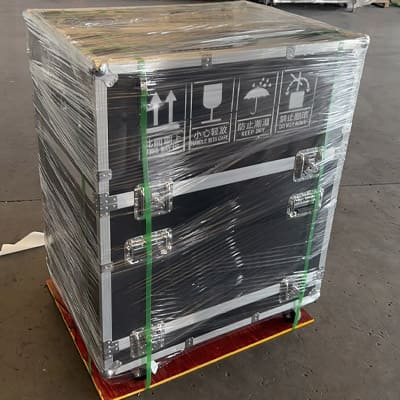
Why Packaging Matters More Than You Think
The most vulnerable component is the fiber optic delivery cable. This cable carries the laser beam from the source to the handheld cleaning head through a thin glass fiber core. If the cable is bent below its minimum bend radius — typically 150 mm for standard single-mode fiber — the core can crack or develop micro-fractures that degrade beam quality permanently.
This kind of damage is invisible from the outside but shows up immediately as reduced cleaning performance.
The galvo scanner inside the cleaning head contains precision mirrors mounted on high-speed motors. These mirrors are aligned at the factory to deliver a specific beam pattern. Strong impacts or sustained vibration can shift the mirror alignment, causing uneven cleaning patterns or reduced scan width.
For water-cooled continuous-wave systems, the cooling circuit must be completely drained before shipping. Any residual water left in the chiller, hoses, or laser module can freeze during air transport at high altitude, expanding and cracking internal components.
Professional Packaging Standards
A properly packaged laser cleaning machine uses a layered protection system designed to handle the specific hazards of international freight.
- The outer crate should be constructed from fumigation-free plywood (meeting ISPM 15 standards) with a minimum wall thickness of 12 mm. The crate should be bolted to a pallet base with forklift channels for easy handling.Total crate dimensions are typically 20–30% larger than the machine itself to allow space for cushioning material on all six sides.
- Inside the crate, the machine is wrapped in 20 mm high-density EPE (expanded polyethylene) foam on all contact surfaces, with additional corner protectors. A layer of bubble wrap goes over the foam. The machine is then strapped to the crate base with nylon or steel banding to prevent any movement during transit.
- The fiber delivery cable is the most critical item to protect. It should be coiled in a natural loop with a radius no smaller than 150 mm, secured with cable ties at regular intervals, and placed in a padded channel or separate compartment. The cable connectors at both ends should be covered with dust caps.
- For water-cooled systems, all coolant lines and the chiller reservoir are drained and left open to evaporate any residual moisture. Drain ports should be capped after drying.
- Accessories — the handheld cleaning head (if detachable), power cables, tools, protective goggles, and documentation — are packed in a separate inner box with foam dividers.
- For sea freight shipments, the entire inner assembly is sealed in a moisture-barrier aluminum foil bag with 200–500 grams of silica gel desiccant packets. This is essential because containers can experience condensation during ocean transit when passing through different climate zones. Air freight shipments do not typically require moisture barriers, but desiccant packets are still recommended.
Arrival Inspection Checklist
When your machine arrives, inspect it methodically before signing the delivery receipt. If using a freight carrier that requires signature on delivery, note any visible damage on the receipt before signing.
- Check the exterior crate for dents, punctures, water stains, or signs of rough handling.
- Open the crate carefully and photograph the interior packaging condition.
- Remove the machine and inspect the housing, control panel, and all external surfaces for dents or scratches.
- Examine the fiber delivery cable along its entire length for kinks, sharp bends, or crushed sections.
- Check all connectors and ports for damage.
- Verify that every item on the packing list is present.
- Power on the machine and compare the laser output reading to the factory test report — the values should match within normal tolerance, typically plus or minus 5%.
If you discover damage, do not discard any packaging material. Take detailed photographs and video, notify the carrier and supplier immediately, and file a damage claim within the carrier’s required timeframe — usually 24–72 hours for visible damage and 7–14 days for concealed damage.
How Do You Choose a Supplier with Reliable Shipping?
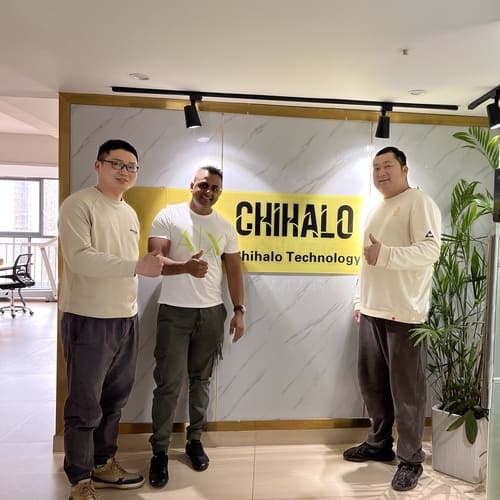
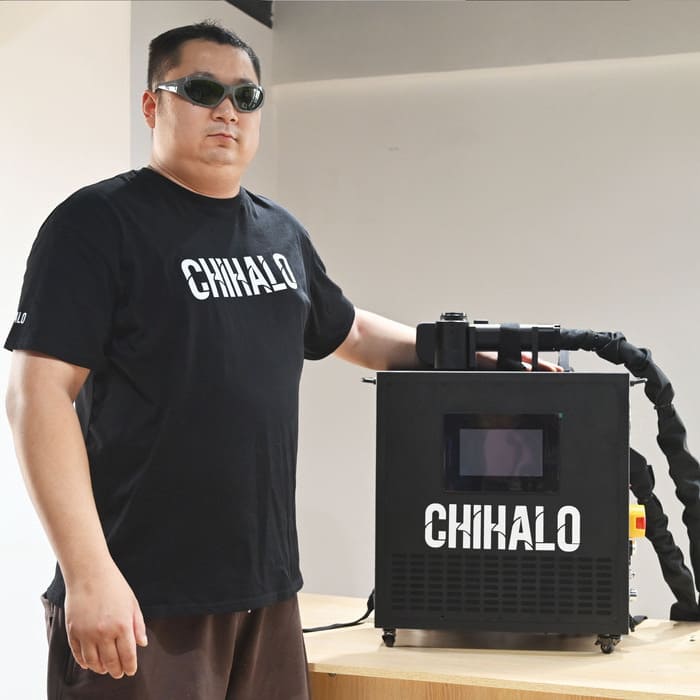
The quality of your shipping experience depends almost entirely on your supplier. Two manufacturers selling identical laser sources and scanning heads can deliver radically different results based on how they handle packaging, logistics, documentation, and post-delivery support.

Red Flags to Watch For
Be cautious of any supplier that advertises “free shipping” without transparency on the actual freight arrangement. In practice, no international shipment is free — the cost is always built into the machine price. The question is whether the supplier is transparent about this.
A supplier quoting $4,500 with “free shipping” and another quoting $3,800 plus $500 freight may be offering the same total cost, but the second supplier is giving you a clearer picture of where your money goes.
Other warning signs include suppliers who cannot provide packed dimensions and weight before you commit to a purchase, suppliers who use cardboard boxes instead of wooden crates for machines over 20 kg, suppliers who cannot provide CE or FDA documentation, suppliers who refuse to share pre-shipment test reports or inspection photos, and suppliers who offer no warranty coverage for shipping damage.
Questions to Ask Before Ordering
Before committing to a purchase, get clear written answers to these questions:
- Does the quoted price include shipping, or is freight charged separately?
- Which carrier and shipping method will be used?
- Can the supplier provide full customs documentation — commercial invoice, packing list, certificate of origin, and CE or FDA certificates?
- What packaging method is used, and can they share photos or video of their standard packing process?
- Is shipping insurance included, and what is the coverage amount?
- What is the supplier’s policy if the machine arrives damaged?
- Does the supplier offer remote technical support for first-time setup after delivery?
- During the warranty period, who pays for shipping replacement parts?
A supplier who answers these questions clearly and without hesitation has done this many times before. One who deflects or gives vague responses is a risk.
Why Factory-Direct Purchasing Changes the Shipping Equation
When you buy a laser cleaning machine through a distributor or reseller — particularly one based in the US or Europe — you are paying for at least two layers of shipping and handling. The machine ships from the Chinese factory to the distributor’s warehouse (first freight cost), sits in inventory (warehousing cost), and then ships from the warehouse to you (second freight cost). The distributor adds margin at every step.
When you purchase factory-direct from the manufacturer, the machine ships once — from the production line to your facility. One shipment means lower total freight cost, less handling, and less risk of damage. It also means you deal directly with the people who built and tested your specific machine, which matters enormously when you need technical support.
As Chihalo CEO Dawn Huang explains: “Buyers often assume factory-direct means more complexity, but it’s the opposite. We handle packaging, carrier booking, customs documentation, and tracking updates — the same services a distributor provides, but without the 30–40% markup on the machine itself.”
At Chihalo, we have shipped laser cleaning equipment factory-direct to over 30 countries since 2016, including OEM supply to European military, government, and university clients. Every machine leaves our facility with a full-power test report, CE certification, professional wooden crate packaging, and complete customs documentation. We offer both air express and sea freight with door-to-door delivery options, and our engineering team provides remote setup support via video call in English, German, and Chinese.
Unlike dealers who stock limited models and cannot customize, we build to your specifications — voltage, cable length, power level, cooling configuration — and ship directly from our Chengdu production facility. This factory-direct model typically saves buyers 30–40% compared to purchasing the same class of equipment through a Western distributor.
What Buyers Say About Shipping with Chihalo
A facilities maintenance team at Airbus Helicopters’ European service partner ordered a 2,000 W continuous-wave cleaner for aerospace component surface preparation. The machine arrived in Germany in 28 days via sea freight. The wooden crate was in perfect condition, all documentation was ready for German customs, and the machine tested at full rated power on the first startup. (Customer details shared with permission.)
A restoration shop owner in Austin, Texas ordered a 200 W handheld pulsed cleaner for automotive rust removal and received it via DHL Express in five business days. He noted that the packaging quality exceeded what he had received from US-based competitors selling similar equipment at higher prices.
A materials science research lab at the University of Sheffield (UK) purchased a 300 W pulsed system. The lab manager highlighted that Chihalo provided the FDA laser product report and CE certificate proactively, which simplified the university’s import compliance process. (Published with the university’s authorization.)
Frequently Asked Questions
Yes. Air express carriers like DHL, FedEx, and UPS provide full door-to-door service, including customs clearance, for shipments of any size. For sea freight, door-to-door delivery is available through freight forwarders who arrange customs clearance and trucking from the destination port to your address. Some manufacturers, including Chihalo, coordinate door-to-door sea freight as a standard service option — you simply provide your delivery address and they handle everything from factory to your facility.
Laser cleaning machines are classified under HS Code 8456.11 in most countries. This heading covers machine tools that work materials by laser-based removal processes. In the United States, the full tariff code is 8456.11.9000 with a duty rate of 2.4%. Multi-function machines (welder-cleaner-cutter combinations) may fall under a different classification depending on which function customs authorities consider primary, so confirm with a broker if importing a 3-in-1 unit.
In most countries, no import license is required for laser cleaning equipment. However, the United States requires an FDA laser product report (accession number) for Class 3B and Class 4 laser products under 21 CFR 1040. The EU requires CE marking. Australia may require electrical safety certification. Your supplier should provide the necessary compliance documentation — if they cannot, that is a significant red flag.
Yes. Fiber laser cleaning machines do not contain materials classified as dangerous goods for air transport. The laser source is a solid-state device with no hazardous chemicals or gases. The main risk during air shipping is physical damage from impact or vibration, which is mitigated by proper wooden crate packaging with foam cushioning. Thousands of laser machines are shipped safely by air express every month.
Inspect the crate exterior for damage before accepting delivery. Open it carefully, photograph the internal condition, and remove the machine. Check the housing, control panel, and all surfaces for physical damage. Examine the fiber delivery cable along its full length for kinks or crushed spots. Power on the machine and compare the displayed laser output to the factory test report — values should match within five percent. If you find damage, keep all packaging, take photos and video, and file a claim with the carrier within 48 hours.
Air express carriers deliver to residential addresses without restriction. For sea freight, residential delivery is possible but may incur additional fees for liftgate service (if no forklift is available) and limited-access delivery surcharges. Machines over 100 kg typically arrive on a pallet and need to be unloaded by forklift or pallet jack. If you do not have loading equipment at your location, confirm with your freight forwarder that liftgate service is included.
Air carriers charge based on the greater of actual weight or volumetric weight. Volumetric weight is calculated as length × width × height (in centimeters) divided by 5,000. Because laser cleaning machines are packed in wooden crates with protective padding, the volumetric weight is typically 30–50% higher than the actual weight. Sea freight is priced by volume (cubic meters) for LCL shipments and by container size for FCL. Always ask your supplier for packed dimensions and weight to get accurate freight quotes.
It is strongly recommended. Carriers' standard liability limits are typically far below the replacement cost of a laser cleaning machine. A 2,000 W system worth $8,000 might only be covered for $500–$1,000 under the carrier's default liability. Comprehensive shipping insurance covering the full declared value typically costs 0.3–1.0% of the machine's value — a worthwhile investment for a shipment worth thousands of dollars.
You pay the duty rate in effect at the time of import, not at the time of order. If tariffs increase between your order date and the shipment's arrival, you will owe the higher rate. To mitigate this risk, consider choosing air express for faster delivery when tariff changes are anticipated. Some buyers also ask their supplier to ship the machine to a bonded warehouse in the destination country, holding it until tariff conditions are favorable.
Most portable handheld pulsed laser cleaners (100 W–500 W) operate on standard household power — 110 V or 220 V single-phase, depending on your region. Continuous-wave systems at 1,500 W and above typically require 220 V single-phase power and draw 15–30 amps, which may require a dedicated circuit. High-power systems at 3,000 W may need 380 V three-phase power. Your supplier should specify the exact electrical requirements before shipment.
Yes. You do not need to be a large corporation to purchase factory-direct. Most Chinese manufacturers, including Chihalo, accept orders for a single machine from individuals, small workshops, auto restoration shops, and independent contractors. The ordering process is the same: confirm your specifications, pay the deposit, and the manufacturer handles production, testing, packaging, and shipping. Minimum order quantities are typically one unit.
Return policies vary significantly between suppliers. Most manufacturers accept returns for verified quality defects within 7–15 days of delivery, but charge restocking fees (typically 10–50% of the purchase price) for non-defective returns because used laser equipment cannot be resold as new. Return shipping costs are almost always the buyer's responsibility. Before ordering, get the supplier's return policy in writing and understand the distinction between defect-based returns and buyer's-remorse returns. Shipping insurance does not cover dissatisfaction — it only covers physical damage during transit.
🚀 Ready to Build Your Laser Cleaning Business?
Contact Chihalo for personalized consultation: application analysis, equipment recommendations, ROI projections, and complimentary sample processing on your actual workpieces.
Tell us about your application and we’ll recommend the perfect solution:
Contact Information:
- 📧 Email: [info@chihalo.com]
- 📱 WhatsApp: [+86 18608325040]
Our technical team will respond within 24 hours with personalized recommendations and competitive pricing.