
1000W Laser Cleaner for Rust, Paint, Oxide and Coating Removal

Hi! I am Dawn. With 10 years of field experience, I specialize in laser cleaning systems—from optical sourcing to automation. I write here to turn complex specs into actionable buying guides.
Laser cleaning machines — including handheld pulsed models for rust removal and paint stripping as well as heavy-duty continuous-wave systems — are shipped internationally via air express (DHL, FedEx, UPS) in 3–7 business days or sea freight in 15–40 days, depending on destination. Most units ship from China in fumigation-free wooden crates with anti-vibration protection.
Air express costs $200–$800 for portable models under 50 kg; sea freight runs $500–$2,000 for heavier industrial systems. Import duties under HS Code 8456.11 average 0–2.4% in major markets, and reputable manufacturers include full customs documentation with every shipment.
Table of Contents
A 1000W laser cleaner is a practical choice for industrial rust removal, paint stripping, oxide cleaning and surface preparation. It gives higher cleaning efficiency than lower-power machines while still being suitable for workshops, factories, maintenance teams and professional restoration users.
At Chihalo Laser, we supply both 1000W pulsed laser cleaners and 1000W CW laser cleaners. The right choice depends on your material, the contamination layer, the cleaning speed you need and whether the base surface must be protected.
If you need to clean heavy rust, old paint or thick coatings from steel parts, a 1000W CW laser cleaner is usually the faster choice. If you need better control on molds, welds, aluminum, stainless steel or precision parts, a 1000W pulsed laser cleaner is normally the safer option.
Send us a photo or video of your workpiece. We can help you choose the right model and provide a factory quote.
Quick Answer: What Is a 1000W Laser Cleaner?
A 1000W laser cleaner is an industrial fiber laser cleaning machine used to remove rust, paint, oxide, oil, grease, coating and welding stains from metal surfaces. A pulsed 1000W laser cleaner is better for precision cleaning and lower heat impact, while a CW 1000W laser cleaner is better for fast rust and paint removal on large or heavy-duty metal parts.
1000W Laser Cleaner Models
Different cleaning jobs need different laser technology. That is why we recommend choosing by application first, not only by power.
Model | Laser Type | Best For | Cooling | Quote |
[Model CHL-M1000] | 1000W pulsed fiber laser | Mold cleaning, weld cleaning, precision parts, stainless steel, aluminum | Air cooling | From USD25000-32000 |
[Model CHL–C1000] | 1000W CW fiber laser | Heavy rust, paint stripping, thick coating, steel structure, large metal parts | Water or Air cooling | From USD4500-6500 |
[Custom 1000W System] | Pulsed or CW | Robot integration, production line cleaning, OEM projects | Custom | Talk to engineer |
Not sure which model is right for you? Send us your material, contamination type and target cleaning speed. We will recommend the most suitable configuration.
Is a 1000W Laser Cleaner Right for Your Cleaning Job?
A 1000W laser cleaner is suitable for many industrial cleaning tasks, but it is not automatically the best machine for every surface. Thin sheets, polished surfaces and heat-sensitive parts should be tested before full production.
Cleaning Job | Is 1000W Suitable? | Recommended Option |
Medium rust on carbon steel | Yes | Pulsed or CW |
Heavy rust on steel parts | Yes | 1000W CW laser cleaner |
Paint stripping on large metal surfaces | Yes | 1000W CW laser cleaner |
Powder coating removal | Yes, test first | CW or pulsed |
Weld oxide removal | Yes | 1000W pulsed laser cleaner |
Mold cleaning | Yes | 1000W pulsed laser cleaner |
Aluminum cleaning | Yes, test first | Pulsed preferred |
Stainless steel cleaning | Yes | Pulsed preferred |
Automotive restoration | Yes, test required | Pulsed preferred |
Large steel structure cleaning | Yes | CW preferred |
Thin metal sheet | Test required | Pulsed preferred |
Delicate or polished surface | Test required | Pulsed preferred |
For most buyers, the main question is simple:
Do you need speed, or do you need control?
If speed is the priority, choose CW.
If surface protection is the priority, choose pulsed.
1000W Pulsed Laser Cleaner vs 1000W CW Laser Cleaner
This is the most important decision before buying a 1000W laser cleaner. Two machines can both be rated at 1000W, but their cleaning behavior can be very different.
1000W Pulsed Laser Cleaner
A 1000W pulsed laser cleaner releases laser energy in short pulses. This allows better control of heat input and helps reduce the risk of damaging the base material.
It is commonly used for:
- Mold cleaning
- Weld oxide removal
- Stainless steel cleaning
- Aluminum parts
- Thin metal surfaces
- Precision components
- Automotive parts
- Surface preparation before welding or coating
- Cleaning jobs where the base material must be protected
Choose a 1000W pulsed laser cleaner if the workpiece is valuable, thin, precise or sensitive to heat. It is also a good choice when the cleaned surface must look consistent after cleaning.

1000W CW Laser Cleaner
A 1000W CW laser cleaner uses continuous laser output. It is usually selected for faster removal of rust, paint and coatings from stronger metal surfaces.
It is commonly used for:
- Heavy rust removal
- Paint stripping
- Steel plate cleaning
- Machinery maintenance
- Shipyard repair
- Construction equipment cleaning
- Container cleaning
- Steel structure surface preparation
- Large-area industrial cleaning
Choose a 1000W CW laser cleaner when the surface is strong and the main goal is cleaning speed. It is often more cost-effective for heavy-duty rust and paint removal.
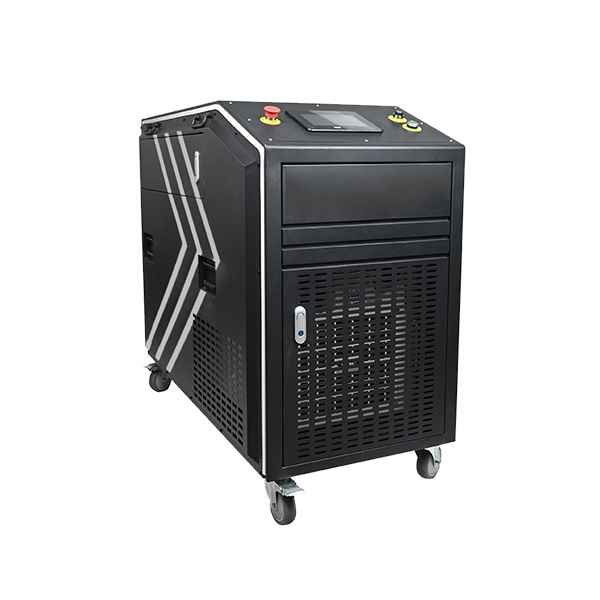
Pulsed vs CW Comparison
Factor | 1000W Pulsed Laser Cleaner | 1000W CW Laser Cleaner |
Cleaning precision | Higher | Medium |
Heat impact | Lower | Higher |
Heavy rust removal | Good | Better |
Paint stripping speed | Medium | Faster |
Mold cleaning | Better | Not recommended for delicate molds |
Thin metal | Better, after testing | Higher risk |
Large steel parts | Good | Better |
Surface protection | Better | Depends on settings |
Typical price | Higher | Usually lower |
Best buyer | Precision cleaning users | Heavy-duty cleaning users |
A simple rule:
Pulsed is better for control. CW is better for speed.
Cleaning Results: Rust, Paint, Oxide and Coating Removal
The real value of a 1000W laser cleaner is not the power number. It is the result on your actual workpiece.
Before recommending a machine, we normally check:
- Base material
- Rust, paint, oxide or coating thickness
- Required surface finish
- Daily cleaning area
- Manual or automated operation
- Heat sensitivity of the part
- Budget and delivery requirement
Rust Removal on Carbon Steel
A 1000W laser cleaner can remove light, medium and heavy rust from carbon steel, machine parts, steel plates, frames, tools and repair components.
For medium rust, both pulsed and CW systems may work. For heavy rust or large surfaces, CW laser cleaning usually provides higher speed. For parts that need better surface control, pulsed laser cleaning is preferred.
Recommended test format:
- Material: carbon steel
- Contamination: medium rust / heavy rust
- Laser type: 1000W CW or 1000W pulsed
- Cleaning width: [insert actual value]
- Cleaning speed: [insert actual test result]
- Surface result: [insert actual result]
- Before/after image: [insert real image]
- Demo video: [insert real video]
Paint and Coating Removal
A 1000W laser cleaner can remove paint, powder coating and old coatings from metal surfaces. For thick paint layers and large steel parts, a CW laser cleaner is normally faster. For thinner parts or surfaces that must be protected, pulsed laser cleaning should be tested first.
Common applications include:
- Steel plate paint stripping
- Machinery repainting preparation
- Automotive part restoration
- Old coating removal
- Powder coating removal
- Metal frame cleaning
- Surface preparation before welding, painting or bonding
Paint type and coating thickness matter. A thin paint layer and a thick industrial coating will not clean at the same speed. For accurate results, sample testing is recommended.
Oxide and Weld Cleaning
A 1000W pulsed laser cleaner is often used for oxide removal and weld cleaning. It can clean welding discoloration, oxide layers and surface stains from stainless steel, aluminum and other metals.
Typical applications include:
- Stainless steel weld cleaning
- Aluminum oxide removal
- Pre-welding surface cleaning
- Post-welding treatment
- Oxide removal before coating
- Surface activation before bonding
For weld cleaning, buyers usually care about more than speed. They also care about surface appearance, heat control and whether the cleaned surface is ready for the next process.
Oil, Grease and Surface Contamination
Laser cleaning can also remove oil, grease, lubricant residue and other surface contamination from metal parts. This is useful for maintenance teams and factories that want to reduce chemical cleaning.
For oily surfaces, use proper fume extraction and safe working conditions. Some contaminants may produce smoke or residue during laser cleaning, so testing and ventilation are important.
1000W Laser Cleaner Demo Videos
Real videos help buyers understand the cleaning effect much faster than text. We recommend testing your actual samples before purchase whenever possible.
Technical Specifications of 1000W Laser Cleaning Machine
Below is a sample specification format. Replace the bracketed fields with your actual machine data before publishing.
|
Specification |
1000W Pulsed Laser Cleaner |
1000W CW Laser Cleaner |
|
Laser power |
1000W |
1000W |
|
Laser type |
Pulsed fiber laser |
Continuous wave fiber laser |
|
Wavelength |
1064 nm |
1064 nm |
|
Laser source |
JPT / Max |
JPT / Max |
|
Cooling method |
Air cooling |
Water or Air cooling |
|
Cleaning width |
20cm |
50cm |
|
Pulse energy |
1.5-100mJ |
Not applicable |
|
Frequency range |
1-4000Khz |
Not applicable / model dependent |
|
Pulse width |
1-500ns |
Not applicable |
|
Fiber cable length |
[5m / 10m / custom] |
[10m / 15m custom] |
|
Power supply |
220V |
220V |
|
Cleaning head weight |
2KG |
0.8KG |
|
Machine size |
|
|
|
Machine weight |
70KG |
180KG |
|
Control language |
ALL |
ALL |
|
Warranty |
[2 warranty] |
[2 warranty] |
Parameters Buyers Should Check Before Ordering
Laser type:
Do not choose only by wattage. Pulsed and CW machines are built for different cleaning jobs.
Pulse energy and frequency:
For pulsed machines, these affect cleaning strength, precision and surface impact.
Cleaning width:
A wider cleaning width can improve productivity on large surfaces, but final speed still depends on the material and contamination layer.
Cooling system:
Most 1000W laser cleaning systems require water cooling for stable long-time operation.
Fiber cable length:
A longer cable gives more flexibility when cleaning large parts, molds or fixed equipment.
Cleaning head weight:
For handheld operation, the cleaning head weight affects operator comfort during long work sessions.
Power supply:
Confirm voltage, plug type and electrical requirements before shipping, especially for international orders.
1000W vs 500W, 1500W and 2000W Laser Cleaners
Many buyers compare 1000W with other power levels before ordering. The right choice depends on cleaning speed, budget and surface condition.
Power Level | Best For | Cleaning Speed | Cost Level | Typical Buyer |
500W | Light rust, small parts, precision cleaning | Medium | Lower | Workshops, repair users |
1000W | Medium rust, paint removal, oxide cleaning, industrial maintenance | High | Medium to high | Factories, distributors, professional workshops |
1500W | Heavy rust, larger surfaces, faster production | Higher | Higher | Industrial maintenance teams |
2000W+ | Large-area heavy-duty cleaning | Very high | Highest | Shipyards, steel plants, large factories |
When 1000W Is Better Than 500W
Choose 1000W instead of 500W when you need higher cleaning efficiency, more power for rust and paint removal, or longer daily operation. It is a stronger option for industrial buyers who need productivity.
When 1500W or 2000W May Be Better
Choose 1500W or 2000W when the project involves very large surfaces, thick rust, thick coatings or continuous heavy-duty production. A 1000W machine may still work, but the cleaning speed may not meet the production target.
How Much Does a 1000W Laser Cleaner Cost?
The price of a 1000W laser cleaner depends on the laser type, laser source, cleaning head, cooling system, control system, safety package, warranty and shipping.
In general, a 1000W pulsed laser cleaner costs more than a 1000W CW laser cleaner because pulsed technology offers better precision and heat control. A CW laser cleaner is often more cost-effective for heavy rust, thick paint and large steel surfaces.
Main Factors That Affect Price
- Pulsed or CW laser source
- Laser source brand
- Cleaning head quality
- Cooling system
- Control system and cleaning modes
- Fiber cable length
- Safety glasses and protection package
- Fume extractor
- Automation or robot integration
- Warranty period
- Spare parts package
- Training and technical support
- Shipping and import cost
Request an Accurate Quote
To quote the right machine, we need a few details:
- Your country
- Material to be cleaned
- Rust, paint, oxide, oil or coating type
- Approximate contamination thickness
- Cleaning area per day
- Required cleaning speed
- Manual or automated cleaning
- Photos or videos of the workpiece
- Preferred budget range, if available
With this information, we can recommend the right 1000W laser cleaner configuration and avoid overselling a machine that does not match your job.
Applications of 1000W Laser Cleaner
A 1000W laser cleaner can serve factories, maintenance teams, distributors and professional workshops.
Automotive Restoration
A 1000W laser cleaner can remove rust, paint and surface contamination from metal automotive parts. It can be used for frames, wheels, engine parts, brackets and restoration components. For thin body panels, pulsed laser cleaning and sample testing are recommended.
Mold Cleaning
Mold cleaning often requires precision. A 1000W pulsed laser cleaner can remove residue without using abrasive media that may wear the mold surface.
Manufacturing and Machinery Maintenance
Factories use laser cleaning to remove rust, oil, oxide and coating from parts before repair, painting, welding or assembly. It can reduce the use of chemical cleaning agents and abrasive media.
Shipbuilding and Steel Structure Maintenance
For shipyards and steel structures, 1000W CW laser cleaning can be used for rust removal and paint stripping on large metal surfaces. For very large areas, higher power may be more efficient, but 1000W is still useful for many maintenance jobs.
Welding and Metal Fabrication
Laser cleaning can be used before welding to remove oil and oxide, and after welding to clean discoloration and surface residue.
Heavy Equipment and Rail Maintenance
Construction equipment, rail parts and heavy machinery often need rust and coating removal before repair. A 1000W laser cleaner can help reduce manual grinding and improve cleaning consistency.
Safety Requirements for 1000W Laser Cleaning
A 1000W laser cleaner is a high-power industrial laser system. It must be used with proper protection and trained operators.
Basic safety requirements include:
- Laser safety goggles matched to the wavelength
- Laser protection curtain or enclosed work area
- Fume extraction system
- Emergency stop button
- Proper electrical grounding
- Fire prevention measures
- Warning signs around the work area
- Controlled access during operation
- Operator training before use
- Special care when cleaning reflective metals
Laser cleaning is efficient, but safety should never be treated as an optional accessory. A complete machine package should include safety guidance and proper protective equipment.
How to Choose the Right 1000W Laser Cleaner
Choosing the right machine starts with the cleaning job.
Step 1: Check the Base Material
Carbon steel, stainless steel, aluminum, copper, mold steel and painted metal may need different laser settings. Thin or polished surfaces should always be tested first.
Step 2: Check the Contamination
Rust, paint, oxide, oil, grease and coating behave differently under laser cleaning. The thickness and hardness of the layer will affect speed and result.
Step 3: Choose Pulsed or CW
Choose pulsed laser cleaning for precision, lower heat impact and better surface control. Choose CW laser cleaning for heavy rust, thick paint and faster cleaning on large steel parts.
Step 4: Confirm Cleaning Speed
Ask for test data when possible. Cleaning speed depends on the material, contamination thickness, cleaning width, laser type and required finish.
Step 5: Confirm Support and Spare Parts
Before ordering, check training, warranty, spare parts, remote support and shipment details. For business buyers, after-sales support can be as important as the machine itself.
Why Choose [Brand Name] 1000W Laser Cleaner?
[Brand Name] supplies laser cleaning machines for factories, distributors, repair workshops and professional users. We help customers select the right model based on the real cleaning job, not just the power number.
For B2B Buyers
We support:
- Factory direct supply
- OEM and ODM cooperation
- Distributor partnership
- Sample testing before order
- Technical recommendation
- Video testing before shipment
- Bulk order support
- Training and after-sales support
- Spare parts supply
- Global shipping
For B2C and Workshop Buyers
We support:
- Rust removal for restoration work
- Paint stripping for metal repair
- Small workshop cleaning solutions
- Safety package recommendation
- Operation guidance
- Remote technical support
- Machine selection based on budget and use case
Whether you are a factory buyer, distributor, repair shop or professional restorer, we can help you choose the right 1000W laser cleaner for your application.
Key Takeaways
- A 1000W laser cleaner is suitable for rust, paint, oxide, coating, oil and weld stain removal.
- Choose pulsed laser cleaning when precision and lower heat impact matter.
- Choose CW laser cleaning when speed and heavy-duty removal matter.
- 1000W is stronger than 500W and more manageable than very high-power systems.
- Actual cleaning speed depends on material, contamination thickness, laser type and cleaning width.
- Sample testing is the safest way to confirm the right machine before purchase.
Frequently Asked Questions About 1000W Laser Cleaner
A 1000W laser cleaner is used to remove rust, paint, oxide, coating, oil, grease and welding stains from metal surfaces. It is commonly used in manufacturing, machinery maintenance, automotive restoration, mold cleaning and surface preparation.
Yes. A 1000W laser cleaner can remove heavy rust from steel and metal parts. For large areas or thick rust, a 1000W CW laser cleaner is usually faster. For precision parts, pulsed laser cleaning is safer.
Yes. It can remove paint and coatings from metal surfaces. The result depends on paint type, coating thickness, base material and laser settings. Thick coatings should be tested before full production.
A 1000W pulsed laser cleaner is better for precision cleaning and lower heat impact. A 1000W CW laser cleaner is better for faster cleaning on heavy rust, thick paint and large steel surfaces.
With correct settings, laser cleaning can remove contamination while reducing damage to the base material. Thin metal, aluminum, polished surfaces and delicate parts should be tested first.
Cleaning speed depends on the material, contamination thickness, laser type, cleaning width and required surface finish. The best way to confirm speed is to test your actual workpiece.
The price depends on whether the machine is pulsed or CW, as well as the laser source, cleaning head, cooling system, safety package, warranty and shipping. Send your cleaning details for an accurate quote.
A 1000W laser cleaner usually cleans faster than a 500W machine and is better for medium rust, paint removal and industrial cleaning. A 500W machine may be enough for light rust or small precision parts.
Most 1000W laser cleaning machines use water cooling for stable long-time operation. Always check the cooling system before ordering.
Common materials include carbon steel, stainless steel, aluminum, copper, mold steel and painted metal. Special materials or heat-sensitive parts should be tested first.
It is safe only when used with proper protection and training. Operators need laser safety goggles, a protected work area, fume extraction, emergency stop controls and correct operating procedures.
Yes, if the environment is suitable. The operator must control moisture, dust, power supply, reflection risk and access to the cleaning area.
Laser cleaning uses fewer consumables than sandblasting or chemical cleaning. However, protective lenses, filters, cooling liquid and other maintenance parts may need replacement.
Yes. It can be used for rust and paint removal on automotive metal parts. For thin body panels, pulsed laser cleaning and sample testing are recommended.
Yes. A 1000W laser cleaner can be integrated with a robot arm or automated production line for repeated cleaning tasks, batch production and controlled industrial applications.
Get the Right 1000W Laser Cleaner for Your Project
A 1000W laser cleaner can be a strong solution for rust removal, paint stripping, oxide cleaning, coating removal and industrial surface preparation. The key is choosing the right laser type and configuration for your material.
Send us your workpiece photo, contamination type and cleaning target. Our team will recommend the right 1000W pulsed or CW laser cleaner and provide a factory quote.
Tell us about your application and we’ll recommend the perfect solution:
Contact Information:
- 📧 Email: [info@chihalo.com]
- 📱 WhatsApp: [+86 18608325040]
Our technical team will respond within 24 hours with personalized recommendations and competitive pricing.
Lorem ipsum dolor sit amet, consectetur adipiscing elit. Ut elit tellus, luctus nec ullamcorper mattis, pulvinar dapibus leo.