
Low-Power Laser Cleaning Machines for Research: A Complete Guide to Precision Lab-Grade Solutions

Hi! I am Dawn. With 10 years of field experience, I specialize in laser cleaning systems—from optical sourcing to automation. I write here to turn complex specs into actionable buying guides.
Table of Contents
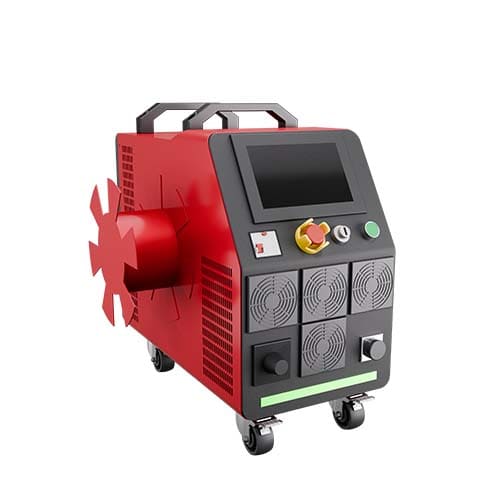
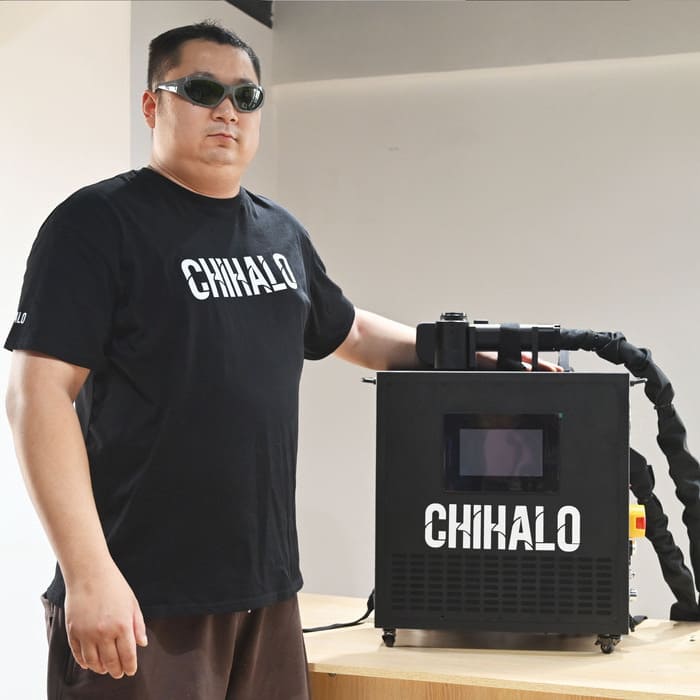
Yes, low-power laser cleaning machines designed specifically for research and laboratory use do exist. Chihalo manufactures CE-certified, compact fiber laser cleaning systems in the 20W–100W range — purpose-built to clean delicate substrates without damage, fit standard lab benches, and stay within typical research grant budgets at factory-direct prices 30–40% below dealer channels. With over 30 countries served and OEM partnerships with European universities, military, and government institutions, Chihalo is one of the few manufacturers offering truly research-optimized laser cleaning equipment with free sample testing before purchase.
Key Takeaways
- Low-power laser cleaners (20W–100W)are purpose-built for precision research applications including archaeological conservation, thin-film preparation, biomedical prototyping, and surface analysis pre-treatment.
- Full pulse parameter control(power, frequency, pulse width, spot size) enables repeatable experiments and controlled variable isolation — essential for publishable, peer-reviewed research.
- Compact, air-cooled designseliminate the need for external water chillers and fit within standard laboratory workstations — no facility modifications required.
- CE-certified systems with turnkey safety packagesreduce the compliance burden for university and institutional labs, enabling faster procurement approval.
- Chihalo’s factory-direct pricing modeldelivers research-grade equipment at 30–40% below typical dealer pricing, keeping costs well within grant and departmental budgets.
- Free sample testing is available— Chihalo offers complimentary cleaning trials on your actual materials before purchase, eliminating procurement risk.
- Dedicated research application supportprovides material-specific parameter recommendations — not generic industrial advice.
- Fiber laser sources with 100,000+ hour lifetimesdeliver near-zero maintenance costs and exceptional long-term reliability.
Why Are Researchers Struggling to Find the Right Laser Cleaning Equipment?
Same Wattage, Same Look — So Why Is One Machine 10x More Expensive?
Most laser cleaning machines on the market are engineered for heavy industrial use — rust removal from steel beams, paint stripping from ship hulls, oxide layer cleaning on automotive components. These systems typically operate at 200W to 3,000W, with physical footprints and price tags to match.
For researchers working with irreplaceable archaeological artifacts, precision thin-film substrates, biomedical device prototypes, or microstructured surfaces, this creates a fundamental mismatch. The result is an information vacuum: searching for “low-power laser cleaning machine for research” returns pages of industrial products with no clear research-grade options.
What Are the Real Costs of Using the Wrong Equipment?
When a research team cannot find an appropriately sized laser cleaning solution, the consequences extend far beyond the equipment itself:
- Irreversible sample damage.A single cleaning pass at excessive power can destroy months of experimental work — melting delicate surface structures, altering crystallographic orientation, or introducing unwanted thermal effects into carefully prepared substrates. For one-of-a-kind archaeological specimens or custom-fabricated thin-film samples, this damage is permanent and non-recoverable.
- Budget misalignment.Industrial-grade systems frequently exceed the entire equipment budget for a single research grant. A 500W+ system may cost 2–3 times what a properly specified low-power unit would — forcing teams to fall back on inferior chemical or mechanical cleaning methods.
- Safety and compliance overhead.Deploying a high-power Class 4 laser in a university lab requires extensive facility modifications, specialized training programs, and ongoing safety audits — costs that rarely appear in the original equipment justification and can add thousands of dollars to the total deployment.
- Space constraints.Water-cooled industrial units with large enclosures simply do not fit into shared laboratory environments where every square meter is contested.
- Wasted decision-making time.The lack of clearly marketed research-grade options forces procurement teams into lengthy evaluation cycles — sometimes 6 months or longer — delaying critical experiments and grant deliverables.
- System integration barriers.Research workflows often require laser cleaning to interface with microscopes, spectrometers, glove boxes, or automated sample stages. Industrial systems with closed architectures and fixed software make this integration extremely difficult or impossible.
The core frustration is clear: researchers know laser cleaning is the superior method — non-contact, chemical-free, precisely controllable — but the market has historically ignored their specific needs.
Chihalo changes that equation entirely.
What Makes a Laser Cleaner Truly "Research-Grade"?
A research-grade laser cleaning system is a laser cleaner specifically engineered for laboratory environments, offering precise low-power output control, compact form factor, full safety certification, and the parameter flexibility required for controlled scientific experimentation. It is fundamentally different from an industrial machine running at reduced power.
The distinction matters because simply turning down the dial on a 1,000W system does not give you the precision, stability, or control that laboratory work demands. Here are the four critical criteria:
1. Power Range and Precision Control
A research-grade system must offer selectable power outputs in the 20W–100W range with continuous fine adjustment — not just a handful of preset levels. Equally important is independent control over:
- Pulse repetition frequency— to match the absorption characteristics of different contaminant layers
- Pulse width (duration)— to control the thermal penetration depth and minimize substrate heating
- Spot size and scan pattern— to address features ranging from broad surfaces to sub-millimeter details
Without four-axis parameter independence, researchers cannot isolate experimental variables or reproduce results across sessions — a non-negotiable requirement for publishable work.
2. Form Factor and Lab Compatibility
Research environments impose strict physical constraints. A qualified system must be:
- Air-cooled— eliminating the need for external water chillers and associated plumbing
- Bench-top compatible— sized to fit within standard laboratory workstations (typically under 60 cm × 40 cm footprint)
- Low-noise— suitable for environments where vibration-sensitive and acoustic-sensitive instruments operate nearby
- Lightweight and portable— allowing relocation between labs or field deployment for conservation work
3. Safety Certification and Compliance
At minimum, a research-grade laser cleaner should carry CE certification and ship with a complete safety package — protective eyewear, enclosure options, interlock systems, and clear operating documentation. This allows deployment in institutional settings without triggering costly facility upgrades.
4. Integration and Customization Capability
Many research workflows require the cleaning module to interface with other instruments — microscopes, spectrometers, glove boxes, or automated sample handling systems. A research-grade system should offer open communication interfaces, modular optical heads, and flexible mounting options for integration into larger experimental setups. OEM customization capability is a significant advantage for institutions with specialized requirements.
How Does Chihalo Solve the Low-Power Research Gap?
At Chihalo, we recognized early that the research community was being underserved by an industry focused almost exclusively on heavy industrial applications. Our response was not to offer a “lite” version of an industrial product, but to engineer systems from the ground up for the precision, flexibility, and accessibility that laboratory environments demand.
Unlike manufacturers who market industrial equipment with a reduced power mode, every aspect of Chihalo’s research-grade series — from laser source selection to firmware design to thermal management — is optimized specifically for the 20W–100W operating range.
Purpose-Built Low-Power Models: 20W to 100W
Unlike manufacturers who simply limit the output of a high-power source, Chihalo’s low-power research series uses laser sources specifically selected and optimized for the 20W–100W operating range. This means:
- Stable, consistent outputat every power level — no instability or beam quality degradation at the low end of the range
- Optimized pulse characteristicsfor non-destructive cleaning of sensitive materials with damage thresholds as low as a few J/cm²
- Longer source lifetimebecause components are not being operated outside their design parameters — Chihalo’s fiber laser sources are rated for 100,000+ hours of operational life, translating to over a decade of typical laboratory use with near-zero maintenance
- Superior beam quality (M² < 1.3)maintained across the full power range, ensuring consistent cleaning results
These systems are purpose-matched to applications including:
1.Archaeological and cultural heritage conservation— removing corrosion, biological growth, and contamination layers from irreplaceable artifacts without chemical contact
2.Thin-film and semiconductor substrate preparation— achieving the surface cleanliness required before deposition, lithography, or analytical characterization (XPS, SEM, AFM)
3.Biomedical device and implant prototyping— cleaning prototype surfaces to meet biocompatibility testing requirements without introducing residues
4.Surface analysis pre-treatment— ensuring that analytical results reflect true material composition, not cleaning artifacts
5.University teaching laboratories— providing safe, intuitive equipment for student training across multiple disciplines
Full-Spectrum Pulse Parameter Control
Every Chihalo research-grade unit provides four-axis independent parameter adjustment:
Parameter | Control Range | Why It Matters for Research |
Output power | Continuously adjustable within rated range | Match energy delivery precisely to substrate damage threshold |
Pulse repetition rate | Wide-range digital selection (1 kHz – 1 MHz typical) | Optimize cleaning speed vs. thermal accumulation |
Pulse width | Multiple modes (ns-range options available) | Control thermal penetration depth at the nanosecond level |
Spot size / scan width | Adjustable optics with interchangeable heads | Address features from broad areas to sub-millimeter details |
All parameters are digitally set and logged, enabling precise experimental documentation and session-to-session reproducibility. With Chihalo’s interface, researchers spend their time on science — not on guessing at equipment settings.
With most industrial laser cleaners, parameter control at low power is an afterthought — controllers designed for 100W increments cannot provide the 1W-level adjustments that precision research requires. At Chihalo, we designed parameter resolution from the ground up for the research power range.
Compact, Air-Cooled, Lab-Ready Design
Chihalo’s research series was designed with laboratory space constraints as a primary engineering requirement — not an afterthought:
- Air-cooled thermal managementeliminates external water chillers, associated tubing, and the risk of coolant leaks near sensitive instruments
- Compact footprintfits within standard laboratory benches and fume hoods — no dedicated floor space required
- Integrated designkeeps all components in a single, portable unit — no separate power supplies or control cabinets occupying additional floor space
- Low acoustic outputallows operation alongside vibration-sensitive and noise-sensitive analytical equipment
- Field-deployable weightenables transport to conservation sites, archaeological digs, or partner institutions
In contrast to industrial systems that typically require dedicated floor space, water plumbing, and infrastructure modifications, a Chihalo research unit can be unpacked, positioned, and operational within a standard lab environment the same day it arrives.
CE-Certified with a Complete Safety Package
Safety compliance in an institutional setting involves more than just the laser source. At Chihalo, every research-grade system ships with:
- Full CE certification— meeting European and international safety directives for laser equipment, electromagnetic compatibility, and electrical safety
- Protective eyewearmatched to the specific wavelength (1064 nm for fiber lasers) and optical density requirements
- Interlock-ready designfor integration with existing lab safety systems and emergency stop circuits
- Comprehensive operating and safety documentationwritten for users who may not be laser specialists — including risk assessments and standard operating procedures suitable for institutional safety committees
This turnkey approach means that researchers, procurement officers, and lab safety committees can evaluate and approve the equipment with confidence — without commissioning separate safety assessments or facility modifications.
Because Chihalo holds National High-Tech Enterprise certification and serves as an OEM supplier to European military, government, and university clients, our quality management and documentation standards are already aligned with the most demanding institutional requirements.
Factory-Direct Pricing That Fits Research Budgets
One of the most persistent barriers to laser cleaning adoption in research is cost. Dealer-channel equipment carries substantial markups that push prices well beyond what a typical research grant or departmental budget can accommodate.
Chihalo eliminates this barrier entirely through a factory-direct sales model:
- No dealer or distributor markups— you purchase directly from the manufacturer in Chengdu, China
- Pricing 30–40% below equivalent dealer-channel equipment— verified across comparable CE-certified systems
- Transparent, quotation-based pricingwith no hidden fees for “research-grade” features or software licenses
- Shipping to 30+ countries worldwidewith established logistics channels and customs documentation support
For a research team weighing the long-term cost of consumable-heavy chemical cleaning (solvents, waste disposal, fume hood maintenance) against a one-time equipment investment, Chihalo’s factory-direct pricing makes laser cleaning not just the technically superior choice — but the economically rational one.
Total cost of ownership comparison over 5 years:
Cost Factor | Chemical Cleaning | Chihalo Laser Cleaning |
Equipment purchase | Low (fume hood, containers) | One-time investment (factory-direct pricing) |
Consumables (annual) | $2,000–$8,000 (solvents, acids, abrasives) | $0 — zero consumables |
Waste disposal (annual) | $1,000–$5,000 (hazardous waste) | $0 — no chemical waste |
Maintenance (annual) | Moderate (fume hood filters, equipment replacement) | Near-zero — 100,000+ hour laser source life |
Hidden costs | Safety training, MSDS compliance, storage | Included in turnkey package |
Ready to see if a Chihalo low-power system fits your research needs and budget? We offer free sample testing on your actual materials — so you can validate cleaning results before making any purchase decision. [Contact our technical team for a free consultation and sample test →]
Research-Oriented Technical Support — Not Industrial Troubleshooting
With most industrial laser cleaning vendors, post-sale support means troubleshooting machine errors on a factory floor. That is not what researchers need.
At Chihalo, our technical support team provides application-level consulting specifically for research use cases:
- Material-specific parameter recommendations— we help you identify the optimal power, pulse, and scan settings for your specific substrate and contaminant combination before and after purchase
- Free sample testing service— send us your material samples, and our application engineers will conduct cleaning trials and provide documented parameter recommendations at no cost
- Application feasibility assessment— before you purchase, we evaluate whether laser cleaning is the right approach for your particular research challenge
- Remote technical assistance— our engineers support you through the parameter optimization process via video call, reducing the time from equipment delivery to productive experimentation
- Integration guidance— if you need to incorporate the cleaning module into a larger experimental workflow, our team provides interface documentation and engineering consultation
- Responsive international support— with clients across 30+ countries, our support infrastructure is designed for cross-timezone communication
Unlike vendors whose expertise ends at the factory gate, Chihalo’s support extends into the laboratory — because we understand that for researchers, the equipment is a means to an end, not the end itself.
Modular Design for System Integration and OEM Customization
Many research applications require the laser cleaning module to operate as part of a larger experimental system — not as a standalone unit. With most industrial laser cleaners, closed system architectures make integration extremely difficult.
At Chihalo, we designed our research series with integration in mind:
- Modular optical headthat can be mounted on translation stages, robotic arms, or custom fixtures
- External trigger and control interfacesfor synchronization with other instruments (spectrometers, cameras, automated stages)
- Flexible fiber deliveryallowing the laser head to be positioned independently from the main unit
- OEM customization— as an established OEM supplier to European military and university clients, Chihalo has deep experience adapting system parameters, interfaces, housing, and software to meet specific institutional requirements
- Custom software integrationavailable for research groups that need to incorporate laser cleaning into automated experimental protocols
How Does Chihalo Compare? Traditional Methods vs. Chihalo Low-Power Laser Cleaning
To put the advantages in perspective, here is how Chihalo’s research-grade laser cleaning systems compare against the alternatives that research teams typically consider:
Factor | Chemical Solvents | Mechanical Abrasion | Generic Industrial Laser (200W+) | Chihalo Low-Power Laser (20W–100W) |
Substrate damage risk | Chemical corrosion, solvent residue absorption | Surface scratching, material removal | Thermal damage, melting at high power | Minimal — precision-controlled energy delivery matched to material threshold |
Parameter repeatability | Low — concentration, temperature, exposure vary | Low — entirely operator-dependent | Limited fine control at low-power end | High — four-axis digital control with parameter logging |
Lab space requirement | Fume hood + chemical storage + waste disposal | Moderate (dust collection needed) | Large footprint + external water chiller | Compact, air-cooled, bench-top form factor |
Safety and compliance | Hazardous chemical handling, MSDS, waste manifests | Dust and particulate exposure | Class 4 laser + major safety retrofit | CE-certified, turnkey safety package included |
Environmental impact | Toxic waste requiring regulated disposal | Consumable abrasive waste | Minimal | Zero consumables, zero chemical waste |
Fit within research budget | Low upfront, high recurring costs | Low | Often exceeds grant limits | Factory-direct, 30–40% below dealer channel |
Technical support for research | Generic chemical datasheets | Essentially none | Industrial-focused troubleshooting | Material-specific consulting + free sample testing |
System integration | N/A | N/A | Closed architecture | Modular design with open interfaces |
Try before you buy | N/A | N/A | Rarely offered | Free sample testing on your materials |
Why "Just Turning Down the Power" on an Industrial Machine Does Not Work
It is worth addressing a common misconception directly. Some researchers consider purchasing a 500W or 1,000W industrial unit and simply operating it at reduced power. This approach introduces several critical problems:
1.Beam quality degradeswhen a high-power source operates far below its rated output — leading to inconsistent energy distribution and unpredictable cleaning results that compromise experimental reproducibility.
2.Parameter resolution is coarse— an industrial controller designed for 100W increments cannot provide the 1W-level adjustments that precision research requires.
3.The equipment is still physically oversized— you are paying for (and housing) cooling capacity, power electronics, and enclosure volume that you will never use.
4.Support teams lack research context— industrial vendors optimize for production throughput and uptime metrics, not experimental reproducibility or substrate preservation.
5.Total cost is higher— you overpay for unused capacity, and the larger system demands more infrastructure investment.
At Chihalo, we designed our low-power series to operate optimally in the research power range — not as a compromise, but as a purpose-built solution where every component is matched to the application.
What Are the Real-World Research Applications?
To illustrate the breadth of Chihalo’s low-power laser cleaning capabilities, here are the application domains where our systems deliver measurable value:
Archaeological and Cultural Heritage Conservation
Laser cleaning has become an increasingly preferred method in conservation science for its ability to remove unwanted surface layers — corrosion products, biological encrustations, atmospheric deposits — without any physical or chemical contact with the original material. Chihalo’s low-power systems (20W–50W range) give conservators the precise energy control needed to selectively remove contamination while preserving original surfaces, patinas, and paint layers that carry historical significance. The portable, air-cooled design also enables field deployment to excavation sites and museums.
Thin-Film and Semiconductor Substrate Preparation
Surface cleanliness is a critical variable in thin-film deposition, lithographic patterning, and surface-sensitive analytical techniques (XPS, SIMS, AFM, ToF-SIMS). Chihalo’s adjustable pulse parameters allow researchers to achieve the required cleanliness level without introducing thermal modification, subsurface damage, or chemical contamination to precisely prepared substrates. The digital parameter logging ensures that cleaning protocols can be exactly replicated across experimental runs.
Biomedical Device and Implant Prototyping
Prototype medical devices and implant surfaces must meet stringent cleanliness requirements before biocompatibility testing. Unlike solvent-based cleaning, which risks leaving residue that could confound biological assays, Chihalo’s laser cleaning delivers a residue-free surface in a single, dry, repeatable process — with no risk of chemical contamination that could compromise cell viability studies or protein adsorption experiments.
University Teaching and Multi-Disciplinary Laboratories
In shared laboratory environments where multiple research groups and student cohorts use the same equipment, simplicity, safety, and versatility are paramount. Chihalo’s intuitive digital interface, comprehensive CE-certified safety features, and broad application range make our systems practical for educational settings where training time is limited and user experience varies widely.
Additional Research Applications
Chihalo’s low-power systems are also used in:
- Metallurgical sample preparation— cleaning cross-sections and specimens before microscopy
- Art restoration— removing varnish and overpainting from canvases and frames
- Geological sample preparation— cleaning mineral and rock surfaces for analysis
- Electronics R&D— cleaning PCB prototypes and connector surfaces
- Nuclear and aerospace materials research— surface decontamination of test specimens
How to Choose the Right Low-Power Laser Cleaner for Your Research
Selecting the optimal system requires matching equipment capabilities to your specific research requirements. Here is a practical framework:
Step 1: Match Power to Your Substrate Sensitivity
Substrate Type | Recommended Power Range | Example Applications |
Highly sensitive | 20W–50W | Thin films, delicate coatings, archaeological artifacts, biological specimens |
Moderately robust | 50W–100W | Metal alloy samples, ceramic surfaces, thicker oxide layers, general lab cleaning |
Step 2: Evaluate Pulse Parameter Flexibility
Ensure the system offers independent control over all four key parameters — power, repetition rate, pulse width, and spot size. If any of these are fixed or limited to a few presets, the system will constrain your experimental design. For research applications, look for:
- Continuous power adjustment (not stepped presets)
- Repetition rate range spanning at least two orders of magnitude
- Multiple pulse width options
- Interchangeable or adjustable focusing optics
Step 3: Consider Total Cost of Ownership
Look beyond the purchase price. Factor in:
- Consumable costs— laser cleaning uses zero consumables (compare to $2,000–$8,000 per year for solvents, abrasives, and disposal)
- Maintenance requirements— fiber laser sources offer 100,000+ hour operational lifetimes with minimal maintenance
- Facility modification costs— an air-cooled, CE-certified, safety-packaged system avoids the infrastructure investment that higher-power alternatives require
- Downtime costs— reliable solid-state laser technology minimizes unplanned service interruptions
- Procurement pricing— factory-direct purchasing saves 30–40% versus dealer channels
Step 4: Ask the Right Questions Before You Buy
Use this checklist when evaluating any laser cleaning vendor:
- [ ] Is the system CE-certified(not just “CE-ready” or “pending”)?
- [ ] Does the manufacturer hold recognized quality certifications(e.g., National High-Tech Enterprise)?
- [ ] Is pricing factory-direct, or does it include dealer/distributor markups?
- [ ] Does the vendor provide research-specific application support— not just industrial troubleshooting?
- [ ] Can you test your actual materialsbefore purchase (free sample testing)?
- [ ] Can the system integrate with your existing experimental workflow(open interfaces, modular design)?
- [ ] Does the manufacturer ship to your country with customs documentation support?
- [ ] What is the laser source warrantyand expected operational lifetime?
- [ ] Can the manufacturer provide references from other research institutions?
Need help evaluating whether laser cleaning is right for your specific application? Chihalo’s technical team offers free feasibility assessments, parameter recommendations, and sample testing for research projects worldwide. [Request a free consultation →]
Frequently Asked Questions
Chihalo offers fiber laser cleaning systems starting at 20W, specifically designed for precision laboratory applications where substrate preservation is the top priority. These systems provide stable, high-quality beam output (M² < 1.3) optimized for the low-power range, with fully adjustable pulse parameters for experimental control.
Yes. By precisely controlling pulse energy, repetition rate, and pulse duration, a properly configured low-power laser system can selectively ablate surface contaminants while the substrate remains below its damage threshold. Chihalo's four-axis parameter control makes this level of selectivity straightforward to achieve and reproduce across experimental sessions.
Chihalo's research-grade systems are CE-certified and ship with complete safety packages including wavelength-matched protective eyewear, interlock compatibility, emergency stop integration, and comprehensive safety documentation including risk assessments. They are designed for deployment in institutional environments without requiring major facility modifications or dedicated laser safety officers.
Pricing varies by power level, configuration, and any custom integration requirements. Chihalo's factory-direct model delivers research-grade systems at 30–40% below typical dealer-channel pricing — making them accessible within standard research grant equipment budgets. Contact our team for a project-specific quotation with no obligation.
Yes. Chihalo has extensive OEM experience, including supplying customized systems to European military, government, and university clients across 30+ countries. Our engineering team can adapt system parameters, optical configurations, control interfaces, housing, and software to meet specific research requirements.
Absolutely. Chihalo offers a free sample testing service — send us representative samples of your substrate and contaminant, and our application engineers will conduct cleaning trials using our low-power systems. You receive documented results including optimized parameters, before-and-after images, and a recommended system configuration — all at no cost and with no purchase obligation.
Yes. Chihalo ships laser cleaning equipment to over 30 countries worldwide, with established logistics channels for research institutions. We provide complete export documentation, customs classification support, and can advise on import procedures for your specific country. Our systems comply with international shipping regulations for laser equipment.
At minimum, look for CE certification covering laser safety (EN 60825), electromagnetic compatibility (EMC), and electrical safety (LVD) standards. Chihalo's systems meet all of these requirements and are backed by our National High-Tech Enterprise certification, reflecting ongoing investment in R&D and quality management systems.
Chihalo's fiber laser sources are rated for over 100,000 hours of operational life — equivalent to more than 11 years of continuous 24/7 operation, or decades of typical laboratory use. Fiber lasers are solid-state devices with no consumable components, no gas refills, and no mirror alignments required. Routine maintenance is limited to periodic cleaning of the optical window and standard equipment inspections.
Conclusion: The Right Tool at the Right Scale
The question is no longer whether low-power laser cleaning machines for research exist — they do, and they are purpose-engineered for the precision, safety, and budget constraints of laboratory environments.
Chihalo’s research-grade laser cleaning systems deliver non-contact, chemical-free, fully repeatable surface cleaning in a compact, air-cooled, CE-certified package — at factory-direct prices that fit within research grant budgets. With 100,000+ hour laser source lifetimes, zero consumables, free sample testing, and dedicated research application support, the total cost of ownership is lower than traditional chemical or mechanical cleaning methods within the first 2–3 years.
Whether you are conserving irreplaceable cultural artifacts, preparing substrates for next-generation thin-film research, prototyping biomedical devices, or equipping a multi-disciplinary teaching laboratory, Chihalo provides the equipment, the expertise, and the pricing model to make laser cleaning accessible and practical for your work.
Take the next step:
- [Request free sample testing →]— Send us your materials and receive documented cleaning results with optimized parameters at no cost
- [Request a free technical consultation →]— Tell us about your application and get material-specific recommendations
- [Request a quotation →]— Receive factory-direct pricing for your specific configuration
- [Explore Chihalo’s full laser cleaning product range →]— Visit com for complete specifications and application guides
Contact Chihalo Today
Email: info@chihalo.com
Website: www.chihalo.com | www.fiberlaserclean.com
WhatsApp: Available on website
Chihalo (Chengdu Chihalo Technology Co., Ltd.) — CE-certified fiber laser cleaning equipment manufacturer since 2016. National High-Tech Enterprise. OEM supplier to European military, government, and university clients. Factory-direct to 30+ countries worldwide.
Get Your Factory-Direct Quote
Ready to skip the dealer markup? Contact us:
Tell us about your application and we’ll recommend the perfect solution:
Contact Information:
- 📧 Email: [info@chihalo.com]
- 📱 WhatsApp: [+86 18608325040]
Our technical team will respond within 24 hours with personalized recommendations and competitive pricing.