
Laser Cleaning Machine Lens Burning Out Too Fast? How Chihalo's Sealed Optics Design Eliminates Your #1 Hidden Cost

Hi! I am Dawn. With 10 years of field experience, I specialize in laser cleaning systems—from optical sourcing to automation. I write here to turn complex specs into actionable buying guides.
Table of Contents
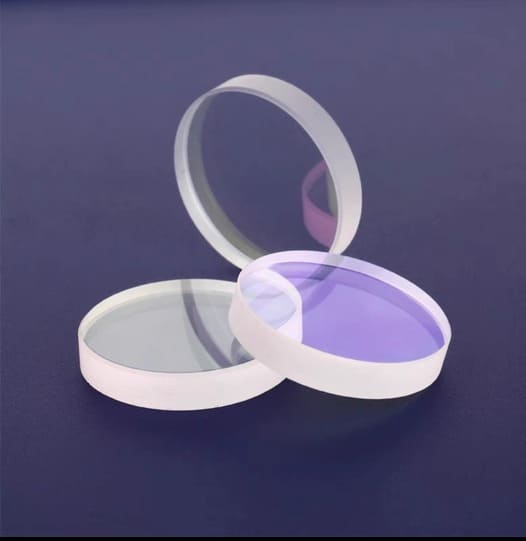
Protective lens contamination is the #1 hidden cost in laser cleaning. Chihalo solves it with a fully sealed optical path, dual air curtain, integrated fume extraction, and tool-free 3-minute lens swaps — extending lens life 3–5× and cutting optics-related downtime to near zero.
Key Takeaways
- The problem:Dust, smoke, and micro-particles rebound into the cleaning head and contaminate the protective lens. One speck of oil or moisture triggers laser scatter that burns through the lens — and can cascade into $3,000–$8,000+ in optical damage.
- The hidden cost:Annual consumable spend (lenses, nozzles, filters, gas) typically runs 15–25% of the equipment price. With downtime and quality losses included, true TCO reaches 5–2× the machine’s sticker price within 3 years.
- Chihalo’s engineered solution:Fully sealed optical path + positive-pressure air curtain + cross-jet deflection + integrated coaxial fume extraction — three independent barriers that keep contaminants away from your optics.
- Practical impact:3–5× longer lens life, 3-minute tool-free lens swaps (vs. 40–75 minutes conventional), no shielding gas needed in most applications, factory-direct consumables at 30–40% below dealer pricing.
- Trust signals:National High-Tech Enterprise certified, OEM supplier to European brands, serving military/government/university clients since 2016.
Why Laser Cleaning Machine Protective Lenses Fail — And What It Really Costs You
If you operate a laser cleaning machine, you’ve likely lived this cycle: install a fresh protective lens, run the machine for a few shifts, notice cleaning power dropping, inspect the lens — clouded, pitted, cracked. Another one goes in the bin.
“Lenses burn out every other week” is one of the most common complaints across forums, trade shows, and service calls in the laser cleaning industry. According to industry maintenance data, protective lens replacement accounts for over 40% of all unplanned service interventions on laser cleaning equipment.
The Root Cause: Fume and Debris Rebound
During laser ablation, the process generates intense plumes of vaporized material, metallic dust, smoke, and micro-particles that rebound toward the cleaning head. A single droplet of oil mist, a trace of condensation, or a few microns of metallic dust landing on the protective lens surface triggers localized laser absorption → thermal hotspot → lens fracture or coating failure.
The "Avalanche Effect" — When a $10 Lens Becomes a $5,000+ Repair
When a contaminated protective lens isn’t caught immediately, damage cascades inward:
- Protective lensburns through → scattered high-energy light enters the optical cavity
- Focusing lensabsorbs stray energy → coating degrades
- Collimating lensoverheats → permanent deformation
- Fiber output endfacesustains thermal damage → laser source itself is compromised
A $10–$50 lens replacement escalates into a $3,000–$8,000 optical assembly rebuild — or worse, laser source damage requiring factory repair. In our 15 years of field experience at Chihalo, we’ve seen customers lose entire production weeks to cascade failures that started with a single contaminated protective window.
The Consumable Cost Iceberg
Protective lenses are only the visible tip. The full annual consumable burden includes:
- Protective lenses— high-frequency replacement, $10–$80 each, 20–50+ per year on conventional systems
- Nozzles and gas tips— wear and clogging, $15–$60 each
- Filter cartridges— dust saturation requires regular swap-outs
- Nitrogen or shielding gas— continuous consumption at $200–$500+/month on many systems
- Seals and O-rings— degradation from heat and debris exposure
- Focusing and collimating optics— $500–$2,000+ each when cascade damage occurs
Many operators discover — after purchase — that annual consumable costs run 15–25% of the original equipment price. A machine listed at $20,000 may cost $3,000–$5,000 per year just in consumables and replacement parts.
Factor in unplanned downtime (a single 4-hour stoppage on an automotive welding prep line can cost tens of thousands in delayed production), quality defects from gradual lens degradation, the skilled technician labor required for lens changes and optical realignment, the spare parts inventory you must stockpile to avoid emergency wait times, and the safety risks from scattered laser energy endangering operators — and the true TCO reaches 1.5–2× the machine price within three years.
“When we first evaluated laser cleaning technology, the equipment quotes looked reasonable. It was 18 months into production that we realized the real cost — lenses, gas, downtime, the technician we had to hire just to maintain the optical system. That’s when we started looking for a better-engineered solution.” — Composite feedback from Chihalo’s European OEM partners during pre-adoption evaluation
This is exactly the problem Chihalo was engineered to solve.
How Chihalo Eliminates Lens Contamination at the Engineering Level
At Chihalo, we don’t treat protective lens failure as a maintenance issue to be managed. We treat it as a design flaw to be eliminated at the source. Every Chihalo laser cleaning system is built from the ground up with a single optical engineering principle: keep every contaminant — gas, liquid, and solid — permanently separated from the optical path.
Here’s exactly how we achieve this.
Fully Sealed Optical Path — Contamination Blocked Before It Starts
Unlike conventional laser cleaning heads that use semi-open optical assemblies — leaving gaps where dust, oil mist, and humidity infiltrate — Chihalo cleaning heads feature a fully sealed optical path from the fiber connector to the output window.
What this means in practice:
- Zero ingress pointsfor airborne contaminants, regardless of ambient conditions
- No gradual coating degradationfrom environmental exposure between operating sessions
- Consistent beam qualitythroughout the entire lens lifecycle, because internal optics never contact external pollutants
- Stable cleaning results from part #1 to part #10,000— critical for aerospace, military, and precision manufacturing where process consistency is non-negotiable
This isn’t a filter or a shield added after the fact. It’s a fundamental architectural decision that prevents contamination from ever reaching the optical cavity. Whether you’re operating in a climate-controlled lab or a dusty foundry floor, the optical path remains pristine.
With conventional designs, operators in harsh environments — foundries, shipyards, outdoor rust removal — report lens replacement rates 3–5× higher than spec sheet estimates. With Chihalo’s sealed architecture, the environment outside the cleaning head simply doesn’t affect the optics inside.
Positive-Pressure Air Curtain + Cross-Jet — A Double Barrier That Extends Lens Life 3–5×
Even with a sealed optical path, the output window — the final protective lens — still faces the working surface. This is where most lens damage occurs in any system. Chihalo addresses this with a dual-layer aerodynamic protection system:
Layer 1: Positive-Pressure Air Curtain
The interior of the Chihalo cleaning head maintains continuous positive pressure, generating an outward-flowing air curtain at the output window. This creates a persistent aerodynamic barrier that physically prevents smoke, debris, and vaporized particles from reaching the lens surface — even during high-power ablation of heavily contaminated substrates like thick rust layers or oil-caked industrial molds.
Layer 2: Cross-Jet Airflow
Positioned directly in front of the protective lens, a high-velocity lateral air jet (cross-jet) sweeps across the optical window surface. Any particles that penetrate the positive-pressure barrier are intercepted by this cross-flow and deflected away from the lens before contact.
The combined effect:
- Protective lens lifespan extended 3–5×compared to conventional single-barrier designs
- Eliminates the need for nitrogen or shielding gas in most applications— the engineered airflow provides equivalent or superior protection using filtered compressed air, saving $2,400–$6,000+ per year in gas costs alone
- Maintains lens clarity during extended high-duty-cycle operationswhere conventional systems would require mid-shift lens inspection or replacement
- Reduces consumable waste— fewer discarded lenses means less environmental impact and lower procurement overhead
“From an engineering standpoint, the dual air barrier was our answer to a problem the industry had been treating with band-aids for decades. Instead of making lenses cheaper or easier to replace, we asked: how do we keep the contamination from reaching the lens in the first place?” — Dawn Huang, CEO & Chief Engineer, Chihalo Laser
Integrated Coaxial Fume Extraction — Remove the Threat at Its Source
Most laser cleaning setups rely on external fume extraction systems positioned near — but not at — the point of ablation. The problem? By the time external extraction catches the plume, a portion has already rebounded into the cleaning head. Studies on laser processing fume dynamics show that particle rebound occurs within 2–5 milliseconds of ablation — far faster than peripheral extraction can capture.
Chihalo takes a fundamentally different approach: fume extraction is built directly into the cleaning head itself, with coaxial or para-axial extraction channels surrounding the laser output.
How this changes the equation:
- Ablation byproducts are captured at the point of generation, before they have any opportunity to travel toward the protective lens
- Extraction efficiency is dramatically higherthan external systems, because the suction acts on the plume at its smallest, most concentrated state
- Reduces dependence on large external fume extraction equipment, simplifying installation and lowering facility infrastructure costs by an estimated $2,000–$8,000per workstation
- Keeps the working environment cleaner, improving operator safety and helping meet increasingly strict workshop air quality regulations (OSHA PEL standards, EU Directive 2017/2398)
When you combine integrated extraction with the sealed optical path and dual air barrier, you get a system where contamination is intercepted at three independent stages — source capture, aerodynamic deflection, and physical sealing. No single failure point can compromise your optics.
Tool-Free Quick-Swap Lens Module — 60 Minutes Down to 3
Even with Chihalo’s multi-layer protection, protective lenses are still classified as consumable items with a finite service life. The difference is how long they last — and how painless replacement is when the time finally comes.
With conventional systems, a lens change requires:
- Shut down the machine and wait for cooldown (10–15 min)
- Disassemble the cleaning head housing (10–20 min)
- Remove and replace the lens in clean conditions (5–10 min)
- Reassemble and realign the optical path (10–20 min)
- Run test patterns to verify beam quality (5–10 min)
Total: 40–75 minutes of downtime, requiring a trained technician with optical alignment experience. If the new lens is contaminated during installation — a fingerprint, a stray particle — the process starts over.
Chihalo’s quick-swap module eliminates every one of these steps:
- Tool-free cartridge design— the protective lens sits in a self-contained, pre-aligned module that clicks in and out of the cleaning head
- No optical realignment required— the module is precision-machined to maintain exact optical axis positioning every time
- Any operator can perform the swap— no specialized training, no cleanroom procedures, no risk of installation contamination
- Total replacement time: 3–5 minutes, including verification
This transforms lens replacement from an unplanned production crisis into a routine 3-minute task that any line worker can handle during a scheduled break. For production managers, this means: no more emergency calls to the maintenance team, no more waiting for a specialist, no more production lines sitting idle while someone realigns optics.
Modular Optical Architecture — Stopping the Avalanche Before It Starts
Remember the cascade failure we described earlier — where one burned lens can destroy the entire optical assembly costing thousands? Chihalo’s modular optical architecture is specifically designed to break that chain.
Each optical element — protective lens, focusing lens, collimating lens — sits in its own independently sealed, independently replaceable module. If the protective lens does sustain damage:
- The sealed module boundary prevents energy scatter from reaching adjacent optics— the cascade stops at the module wall
- Only the affected module needs replacement— not the entire optical assembly
- Damage diagnosis is immediate— each module can be inspected independently without disassembling the full optical train
- Repair cost stays predictable— a module replacement is a known, budgetable expense, not a catastrophic surprise
This modular isolation is the structural reason Chihalo customers virtually never experience cascade optical failures — the failure mode that turns a $50 consumable expense into a multi-thousand-dollar capital repair on conventional systems.
Ready to see the difference in your operation? Contact Chihalo’s engineering team for a free optical system assessment and TCO comparison based on your specific workload and environment. No sales pressure — just engineering analysis.
Beyond the Lens — How Chihalo Cuts Your True Cost of Ownership
Solving the contamination problem is only half the equation. At Chihalo, we believe that total cost of ownership should be transparent, predictable, and as low as physically possible. Here’s how we deliver on that.
Factory-Direct Consumables at 30–40% Below Dealer Pricing
Chihalo is a manufacturer, not a reseller. We design and build our laser cleaning systems — including all optical components and consumables — in our own facility in Chengdu, China.
What this means for your consumable budget:
- Protective lenses, nozzles, filter cartridges, and sealssupplied at factory cost — no distributor markup, no regional dealer premium
- Pricing is typically 30–40% belowwhat you’d pay for equivalent consumables through brand-dealer channels
- Consumable subscription service— automated quarterly shipments ensure you never run out of critical spares, with volume pricing locked in at contract signing
Let’s do the math on a typical scenario:
Cost Factor | Conventional System (Annual) | Chihalo System (Annual) | Savings |
Protective lenses (unit cost × frequency) | $2,400 (50 × $48) | $80 (10 × $8 factory price) | $2320 |
Shielding gas | $3,600 ($300/month) | $0 (not required) | $3,600 |
Unplanned downtime (4 events × 2 hours × $500/hr) | $4,000 | $250 (1 event × 0.25 hr × $500/hr) | $3,750 |
Filter cartridges | $1600 | $700 (factory-direct pricing) | $900 |
Total annual optics-related cost | $11,600 | $1030 | $10570/year |
Note: Figures are illustrative based on mid-range industrial applications. Your actual savings will be calculated in your personalized TCO assessment.
When your lenses last 3–5× longer AND cost 30–40% less per unit, the compound savings on optics maintenance alone can offset a significant portion of the equipment investment within the first two years.
Full TCO Transparency — No Hidden Costs, Ever
One of the most damaging practices in the laser equipment industry is quoting a low machine price while burying the true operating costs. Customers discover the real numbers only after the purchase order is signed and the consumable invoices start arriving. This erodes trust — not just in the supplier, but in laser cleaning technology as a whole. We’ve met prospects who returned to manual grinding and chemical stripping because their first laser experience left them feeling deceived about the real costs.
At Chihalo, we do the opposite. Before you commit to a purchase, we provide:
- A detailed Total Cost of Ownership projectioncovering 1, 3, and 5-year horizons
- Itemized consumable consumption estimatesbased on your specific application, material, duty cycle, and environment
- Realistic lens replacement intervals— not best-case lab conditions, but projections calibrated to your actual operating scenario
- All-in pricingthat includes operator training, initial spare parts kit, and first-year consumable allocation
We would rather lose a deal to honest pricing than win a customer who feels deceived six months later. Transparency is not a marketing slogan at Chihalo — it’s a contractual commitment.
2-Year Core Optical Component Warranty
While protective lenses are consumable items, your focusing lens, collimating lens, and fiber output optics should not be. These are precision components that, in a properly designed system, should last the lifetime of the equipment.
Chihalo backs this with a 2-year warranty on all core optical components — not just the laser source, but the optics that conventional manufacturers quietly exclude from coverage.
This warranty exists because our sealed, modular optical architecture makes cascade damage virtually impossible. We’re not taking a risk by offering it. We’re demonstrating confidence in our engineering.
Industrial-Grade Protection for the Harshest Environments
Chihalo cleaning heads are rated to IP65/IP67 protection standards, meaning they are:
- Fully dust-tight(IP6x) — zero ingress of particulate matter under any conditions
- Protected against water jets and temporary immersion(IPx5/IPx7)
This isn’t an optional upgrade. It’s standard across Chihalo’s industrial cleaning head lineup, because we know where these machines actually operate: foundry floors with airborne casting sand, shipyards with salt spray and welding fumes, outdoor pipeline maintenance in rain and humidity, oil refineries with persistent hydrocarbon mist.
Equipment rated for harsh environments doesn’t just protect your optics — it protects your investment’s residual value. Machines that can’t handle real-world industrial conditions lose resale value rapidly. When you eventually upgrade, a well-maintained Chihalo system with intact optics and IP67-rated components commands significantly higher residual value than a conventional unit with a history of optical failures.
48-Hour Emergency Response with Global Spare Parts Pre-Positioning
Even with the most reliable equipment, operational surprises happen. When they do, response time is everything.
Chihalo maintains spare parts pre-positioning in key markets and commits to a 48-hour emergency response window for critical service requests. Combined with our consumable subscription service that keeps your spare parts inventory topped up automatically, you get:
- Minimized risk of extended downtimefrom parts unavailability
- No need to stockpile expensive optical assemblieson-site “just in case”
- Direct access to Chihalo engineers(not third-party service agents) who know the equipment intimately
- Remote diagnostic supportto triage issues before dispatching parts or technicians
Traditional Laser Cleaners vs. Chihalo — A Direct Comparison
Concern | Conventional Systems | Chihalo Solution |
Optical path design | Semi-open assembly; dust and humidity infiltrate | Fully sealed from fiber connector to output window |
Lens contamination defense | Single passive barrier or none | Dual-layer: positive-pressure air curtain + cross-jet |
Fume and debris management | External extraction only (often inadequate) | Integrated coaxial extraction built into cleaning head |
Lens replacement time | 40–75 min; trained technician; realignment required | 3–5 min; tool-free; any operator; no realignment |
Cascade damage risk | Single-point failure propagates to all downstream optics | Modular isolation — damage contained to individual module |
Shielding gas requirement | Continuous nitrogen/gas ($200–$500+/month) | Engineered airflow eliminates gas need in most scenarios |
Consumable pricing | Dealer markup 50–100%+ above manufacturing cost | Factory-direct at 30–40% below dealer channels |
TCO disclosure | Rarely provided before purchase | Full 1/3/5-year TCO projection before sale |
Environmental rating | Limited; lens failure rate spikes in harsh conditions | IP65/IP67 standard for foundry, shipyard, outdoor use |
Automation readiness | Frequent manual lens checks prevent unattended use | Reliable optics + PLC/robot interfaces enable 24/7 operation |
Core optics warranty | 6–12 months (if covered at all) | 2-year warranty on focusing, collimating, and fiber optics |
Spare parts response | Dependent on regional dealer stock | 48-hour emergency response + global pre-positioned inventory |
Operator skill required | Trained optical technician for lens changes | Any operator; 3-minute cartridge swap, no training needed |
Equipment residual value | Rapid depreciation from optical damage history | High residual value from maintained, sealed optics system |
Where Chihalo's Optical Reliability Matters Most
Automotive Manufacturing and Mold Cleaning — Zero Unplanned Downtime
In automotive production, a single hour of unplanned downtime on a welding preparation or mold cleaning line can cascade into hundreds of thousands of dollars in delayed assembly. Chihalo’s sealed optics and quick-swap modules ensure that laser cleaning never becomes the bottleneck. Lens-related stoppages are effectively eliminated from the production equation, and any operator on the line can perform the rare lens swap without waiting for a maintenance specialist.
Shipbuilding and Heavy Industry — Built for the Harshest Conditions
Shipyards, steel fabrication shops, and foundries represent some of the most optically hostile environments in industrial manufacturing — high particulate loads, oil mist, salt air, extreme humidity. Conventional laser cleaners struggle to survive in these conditions, with some operators reporting weekly lens replacements in foundry environments. Chihalo’s IP67-rated, fully sealed cleaning heads with integrated fume extraction are purpose-built for exactly these scenarios, delivering consistent performance where other systems fail within weeks.
Aerospace, Military, and Precision Applications — Consistency That Meets the Highest Standards
When surface preparation quality directly impacts structural integrity — as in aerospace bonding preparation, military ordnance maintenance, or nuclear decontamination — cleaning consistency is non-negotiable. Gradual lens degradation that subtly alters beam profile and energy distribution is unacceptable in these applications. Chihalo’s stable optical architecture ensures that the cleaning result on part #10,000 is identical to part #1, with documented process consistency that satisfies the most rigorous quality audit requirements.
Chihalo proudly serves military, university research, and government clients across multiple countries who demand this level of optical reliability and process repeatability.
Robotic Integration and Smart Manufacturing — Optics You Can Trust Unattended
If your roadmap includes integrating laser cleaning into automated production cells — whether with articulated robots, gantry systems, or inline conveyors — optical reliability is the non-negotiable prerequisite. A system that requires manual lens inspection every few hours cannot support unattended operation, no matter how sophisticated the robot integration.
Chihalo systems come with pre-integrated PLC communication interfaces (EtherCAT/Modbus TCP), robot mounting compatibility, and remote monitoring capability. The optical system’s proven reliability means you can confidently plan for 24/7 unattended operation without optics-related interruptions — a requirement that is impossible to meet with systems that burn through protective lenses weekly.
About Chihalo — The Engineering Behind the Promise
Chihalo (Chengdu Chihalo Technology Co., Ltd.) has been designing and manufacturing laser cleaning, welding, and marking equipment since 2016. We are a certified National High-Tech Enterprise in China, recognized for sustained investment in laser application R&D.
Why manufacturers worldwide choose Chihalo:
- Factory-direct model— We are the manufacturer. No middlemen, no markup chains. Equipment and consumables priced 30–40% below dealer-channel equivalents.
- European OEM heritage— Chihalo supplies OEM laser cleaning equipment to established European brands, meaning our systems meet the quality, safety, and reliability standards expected in EU industrial markets.
- Proven across demanding sectors— Active installations serving military, university, government, automotive, aerospace, shipbuilding, and heavy industrial clients.
- 15+ years of laser cleaning expertise— Our engineering team brings over 15 years of focused experience in laser surface processing, optical system design, and industrial application development.
- 48-hour emergency response— Global spare parts pre-positioning and rapid-response technical support to minimize any downtime event.
- Full TCO transparency— Every customer receives a detailed cost projection before purchase. No hidden fees, no surprise consumable costs.
Stop Burning Money on Protective Lenses — Take the First Step
Every week you operate with an inadequately protected optical system is a week of unnecessary consumable spend, avoidable downtime risk, hidden quality degradation, and potential safety exposure.
Here’s how to get started:
Request a free TCO assessment — Send us your current equipment specs, application details, and operating environment. We’ll provide a detailed side-by-side comparison showing your projected costs with your current system vs. a Chihalo solution over 1, 3, and 5 years.
Schedule a free sample test — Ship us your workpieces. We’ll run them on a Chihalo system in our application lab and send you the results — along with video documentation of the process and the protective lens condition after testing.
Talk to an engineer, not a salesperson — Every Chihalo consultation is led by a technical specialist who understands your application. No pressure, no scripted pitch — just honest engineering advice on whether Chihalo is the right fit for your operation.
Frequently Asked Questions
With Chihalo's sealed optical path, dual air barrier, and integrated fume extraction, protective lens replacement intervals are typically 3–5× longer than conventional systems. In standard industrial applications, many customers report going months between lens changes rather than weeks. Exact intervals depend on your application, material, and duty cycle — we provide application-specific estimates as part of our pre-sale TCO assessment.
Any operator can replace a Chihalo protective lens module in 3–5 minutes with no tools and no optical realignment. The cartridge is pre-aligned at the factory — it clicks in, and the system is ready to run. This eliminates the traditional dependency on skilled optical technicians and reduces your staffing overhead for equipment maintenance.
In most applications, no. Chihalo's positive-pressure air curtain and cross-jet system provide equivalent or superior optical protection using filtered compressed air, eliminating shielding gas costs that typically run $200–$500+ per month on conventional systems.
Chihalo's modular optical architecture isolates each optical element in its own sealed module. If the protective lens sustains damage, the failure is contained — it cannot cascade to the focusing lens, collimating lens, or fiber endface. Only the affected module is replaced, keeping repair costs predictable and minimal.
Protective lenses are consumable items covered by our factory-direct pricing and subscription supply service. Core optical components — focusing lens, collimating lens, and fiber output optics — carry a 2-year warranty, reflecting our confidence in the sealed, modular architecture that protects them.
Yes. All Chihalo industrial cleaning heads are rated IP65/IP67 as standard, designed for continuous operation in foundries, shipyards, outdoor work sites, oil refineries, and other high-particulate, high-humidity environments. The sealed optical path and integrated fume extraction maintain performance in conditions where conventional systems experience rapid lens degradation.
Absolutely. Chihalo systems include PLC communication interfaces (EtherCAT/Modbus TCP), robot mounting compatibility, and remote monitoring capability as standard features. The optical system's proven reliability — with dramatically reduced lens maintenance requirements — makes Chihalo the preferred choice for 24/7 unattended robotic cleaning cells and inline production integration.
As a factory-direct manufacturer, Chihalo prices both equipment and consumables 30–40% below dealer-channel brands offering comparable specifications. We provide a full TCO comparison before purchase so you can verify the value proposition with real numbers specific to your application.
Get Your Factory-Direct Quote
Ready to skip the dealer markup? Contact us:
Tell us about your application and we’ll recommend the perfect solution:
Contact Information:
- 📧 Email: [info@chihalo.com]
- 📱 WhatsApp: [+86 18608325040]
Our technical team will respond within 24 hours with personalized recommendations and competitive pricing.