
Is Laser Cleaning Safe? The Hidden Dangers That Viral Videos Won't Show You

Hi! I am Dawn. With 10 years of field experience, I specialize in laser cleaning systems—from optical sourcing to automation. I write here to turn complex specs into actionable buying guides.
Table of Contents
Bottom Line Up Front: Industrial laser cleaning systems are Class 4 devices—the highest hazard classification. They can cause permanent blindness in nanoseconds and third-degree burns in milliseconds. The viral videos showing operators casually passing lasers over bare hands are dangerously misleading. Treat these machines like loaded firearms, not power washers.
Quick Facts: Laser Cleaning Safety at a Glance
Question | Answer |
What class are industrial laser cleaners? | Class 4 (highest hazard level) |
Can they cause permanent blindness? | Yes, in as little as 10 microseconds |
Are reflected beams dangerous? | Yes, up to 80 meters (263 ft) away |
Is PPE legally required? | Yes, under OSHA, IEC 60825, and local regulations |
Typical safety investment | 15-30% of equipment cost ($8,000-$50,000+) |
Can you operate without a Laser Safety Officer? | No, LSO is mandatory for Class 4 systems |
Why This Article Exists
Every month, I receive calls from plant managers who watched YouTube videos of laser cleaning and concluded: “It looks safe enough—the guy’s hand passed right through the beam.”
After 15 years in laser surface treatment applications, I’ve investigated workplace incidents that started with exactly this assumption. The gap between social media demonstrations and industrial reality has become a safety crisis.
This guide provides the technical facts procurement teams and EHS managers need before deploying laser cleaning equipment.
The Viral Video Problem: 4 Ways Demonstrations Mislead Buyers
Direct Answer: Most online laser cleaning demonstrations use parameters that would be useless for actual industrial cleaning. They’re designed to look impressive, not to represent real-world operation.
Demonstration vs. Reality: The Numbers
Factor | Typical Demo Video | Actual Industrial Operation |
Power Setting | 50-200W (showcase mode) | 500-2000W (production mode) |
Exposure Duration | <0.1 second sweep | 2-10 seconds per area |
Focal Distance | Intentionally defocused | Precisely focused for ablation |
Surface Type | Pre-cleaned or light rust | Heavy scale, coatings, paint |
PPE Shown | Often minimal or absent | Full protective ensemble required |
Fume Extraction | Rarely shown | Mandatory for safe operation |
The Physics Behind the Deception
When a laser beam sweeps across skin at high speed with reduced power, the energy density (J/cm²) drops below the damage threshold. This creates the illusion of safety.
The math tells a different story:
.
- A 1000W pulsed fiber laser focused to a 50mm line delivers approximately 20 J/cm²per pass at production speeds
- Human skin damage threshold: 1-1.0 J/cm²depending on wavelength and exposure time
- That’s a 20-200x safety margin violationduring normal operation
5 Dangerous Myths From Online Content
Myth 1: “The laser only affects rust, not skin.”
Reality: The 1064nm wavelength used in most cleaning lasers penetrates 3-4mm into biological tissue. Skin absorbs this energy efficiently. The selectivity between rust and substrate works because of ablation threshold differences—not because skin is immune.
Myth 2: “Quick exposure can’t cause damage.”
Reality: Class 4 lasers can cause permanent retinal damage in 0.00001 seconds (10 microseconds). The human blink reflex takes 150-250 milliseconds. You cannot react fast enough to protect yourself.
Myth 3: “Reflections aren’t dangerous at distance.”
Reality: Hazardous reflections from a 1000W laser can cause eye injuries at distances up to 80 meters (263 feet)—equivalent to a 17-story building. Even diffuse reflections off matte surfaces retain enough energy to damage retinas.
Myth 4: “If it doesn’t hurt immediately, you’re fine.”
Reality: Photochemical eye damage has a 6-12 hour latency period. You may feel nothing during exposure but wake up with permanent vision impairment. Symptoms include headache, excessive eye watering, and sudden appearance of floaters.
Myth 5: “Low-cost machines from online marketplaces are just as safe.”
Reality: Unverified equipment often lacks proper safety interlocks, accurate power ratings, and regulatory certification. One forum user noted about a $30 “laser cleaner” listing: “Hope you have super laser goggles, because you will be blind in a nanosecond.”
Class 4 Laser Hazards: Why Safety Professionals Compare It to Firearms
Direct Answer: The “loaded gun” analogy is technically accurate. Both tools can cause instant, permanent, life-altering injury through a moment’s inattention. Both require designated safety zones, formal training, and zero tolerance for procedural shortcuts.
Understanding Laser Classification
Class | Power Output | Hazard Level | Examples |
Class 1 | <0.39mW | Safe under normal use | Laser printers, CD players |
Class 2 | <1mW | Eye-safe with blink reflex | Barcode scanners |
Class 3R | 1-5mW | Low risk, avoid direct viewing | Some laser pointers |
Class 3B | 5-500mW | Direct beam hazardous | Lab lasers |
Class 4 | >500mW | All beam paths hazardous | Industrial laser cleaners |
Industrial laser cleaning systems operate at 100W-3000W. They exceed the Class 4 threshold by 200-6000x.
Important: Class 4 laser systems are prohibited at trade shows and exhibitions due to the heightened safety risks in uncontrolled environments.
The Four Critical Hazard Categories
1. Eye Damage (Most Severe Risk)
The eye focuses incoming light onto the retina with approximately 100,000x concentration. A laser that seems moderately bright to peripheral vision becomes catastrophically intense at the focal point.
Statistics: According to the Laser Institute of America, approximately 60% of reported laser injuries affect the eyes. Most result in permanent vision impairment.
Injury types:
- Retinal burns (immediate, permanent)
- Corneal damage (painful, sometimes reversible)
- Cataracts (delayed onset, requires surgery)
- Vitreous hemorrhage (bleeding inside the eye)
Warning signs of laser eye exposure:
- Headache shortly after exposure
- Excessive eye watering
- Sudden appearance of floaters
- Flash blindness or afterimages
- Blurred or hazy vision
Critical: The 1064nm infrared wavelength is invisible to the human eye. You cannot see the beam that is damaging your vision.
2. Skin Burns and Long-Term Damage
High-power infrared lasers penetrate skin and convert to thermal energy.
Immediate effects:
- Third-degree burns within milliseconds from direct exposure
- Second-degree burns from reflected beams
- Sparks and hot particles causing additional burns
Long-term effects:
- Increased skin cancer risk from UV components
- Accelerated skin aging
- Permanent scarring from thermal damage
One equipment manufacturer explicitly warns: “Laser torches can give 3rd degree skin burns within milliseconds.”
3. Toxic Fume and Particle Hazards
Direct Answer: Laser cleaning doesn’t eliminate contaminants—it vaporizes them. What was rust, paint, or coating becomes airborne particles and fumes that pose serious inhalation risks.
Material Being Cleaned | Hazardous Emissions |
Lead-based paint | Lead vapor, toxic particulates |
Chrome coatings | Hexavalent chromium (carcinogen) |
Rust/oxide layers | Iron oxide particles |
Oil/grease | Hydrocarbon fumes |
Painted surfaces | VOCs, potentially toxic pigments |
Galvanized coatings | Zinc oxide fumes |
Without proper fume extraction:
- Operators inhale vaporized heavy metals
- Particulates accumulate in lungs
- Carcinogenic compounds enter bloodstream
- Workshop air quality degrades to hazardous levels
One study on laser cleaning food equipment found PAH (polycyclic aromatic hydrocarbon) concentrations far exceeding WHO safety limits of 1ng/m³ in laser exhaust—requiring dedicated extraction systems.
4. Fire and Electrical Hazards
Fire risks:
- Class 4 lasers ignite combustible materials
- Ablation creates hot sparks and particles
- Paper, cardboard, oil residues can catch fire
- Dust accumulation increases ignition risk
Electrical risks:
- Systems require 220V-480V power
- High-voltage capacitors in pulsed lasers
- Improper grounding causes shock hazards
- Lockout/tagout procedures essential for maintenance
Multiple fatalities have been documented from laser-related electrical accidents—incidents that “could have been avoided” with proper protocols.
The Firearm Comparison: Point-by-Point
Safety Characteristic | Firearm | Class 4 Laser Cleaner |
Instantaneous injury capability | Yes | Yes (milliseconds to permanent damage) |
Requires formal training | Yes | Yes (LSO certification required) |
Designated safe zone required | Yes | Yes (Nominal Hazard Zone) |
Indirect injury risk | Ricochet | Reflection (up to 80m range) |
Regulatory oversight | Strict | Strict (OSHA, FDA, IEC 60825) |
Zero tolerance for safety lapses | Yes | Yes |
Invisible hazard component | No | Yes (1064nm IR is invisible) |
The laser presents one additional hazard firearms don’t: the beam is invisible. Operators cannot see the danger they’re pointing.
Regulatory Requirements: What Compliance Actually Demands
Direct Answer: Operating a Class 4 laser cleaning system without proper safety infrastructure violates OSHA standards and exposes your organization to significant liability. Minimum requirements include a certified Laser Safety Officer, documented training programs, engineering controls, and administrative procedures.
Standards by Region
Region | Primary Standard | Enforcement Body |
United States | ANSI Z136.1 | OSHA |
European Union | EN 60825-1 | National authorities |
International | IEC 60825-1 | Various |
China | GB 7247 | Market supervision |
Canada | CSA Z386 | Provincial authorities |
Mandatory Safety Infrastructure
1. Laser Safety Officer (LSO) — Non-Negotiable
Every facility operating Class 4 lasers must designate a qualified LSO who:
- Has authority to enforce safety protocols
- Conducts hazard evaluations
- Approves operating procedures
- Manages incident response
- Conducts annual eye exams for operators
- Maintains training records
Training sources: Laser Institute of America (LIA), European Employer’s Insurance Liability Associations, or equivalent local programs.
This is not optional. It’s a regulatory requirement.
2. Nominal Hazard Zone (NHZ)
The NHZ defines the area where laser radiation exceeds Maximum Permissible Exposure (MPE).
For a typical 1000W fiber laser:
- Direct beam NHZ: Hundreds of meters
- Diffuse reflection NHZ: 10-50+ meters depending on surface
- Specular reflection NHZ: Similar to direct beam
Required controls within NHZ:
- Access restriction (interlocks, barriers)
- ANSI-compliant warning signage
- PPE requirements posted at all entry points
- Emergency stop accessibility
- No unauthorized personnel
3. Documentation Requirements
- Written Standard Operating Procedures (SOPs)
- Training records for all personnel
- Equipment maintenance logs
- Incident/near-miss reports
- Annual safety audits
- Medical surveillance records
The Cost of Non-Compliance
Consequence | Impact |
OSHA citations | Fines up to $156,259 per willful violation (2024) |
Workers’ compensation | Permanent disability claims for vision/burn injuries |
Litigation | Personal injury lawsuits, potentially unlimited damages |
Insurance | Coverage denial, premium increases |
Operations | Potential facility shutdown during investigation |
Criminal | Possible charges for willful negligence causing injury |
Complete Safety Investment Checklist with Budget Ranges
Direct Answer: Proper laser cleaning operation requires significant investment beyond the machine itself. Budget 15-30% of equipment cost for safety infrastructure, or $8,000-$50,000+ depending on system power and facility requirements.
Personal Protective Equipment (PPE)
Item | Specification | Budget Range |
Laser Safety Eyewear | OD 5+ at 1064nm, EN 207/ANSI certified | $200-$800 per pair |
Face Shield | Welding helmet, shade 3-5 | $100-$300 |
Protective Gloves | Flame-resistant leather | $50-$150 |
Protective Clothing | Flame-resistant, non-reflective | $200-$500 per set |
Respiratory Protection | P100 or appropriate for materials | $50-$500 |
PPE Total (per operator) |
| $600-$2,250 |
Critical Warning: Generic “laser safety glasses” from unverified sources may provide zero protection. Optical Density (OD) must match your specific wavelength. Using 532nm-rated glasses with a 1064nm laser is equivalent to wearing no protection.
Engineering Controls
System | Purpose | Budget Range |
Safety Enclosure (full) | Contains beam, converts to Class 1 | $5,000-$30,000 |
Interlock System | Prevents operation when access open | $1,000-$5,000 |
Warning Light System | Indicates laser active | $500-$2,000 |
Beam Termination | Absorbs stray beams | $500-$3,000 |
Barrier Systems | Defines controlled area | $1,000-$5,000 |
Engineering Total |
| $8,000-$45,000 |
Environmental Controls
System | Purpose | Budget Range |
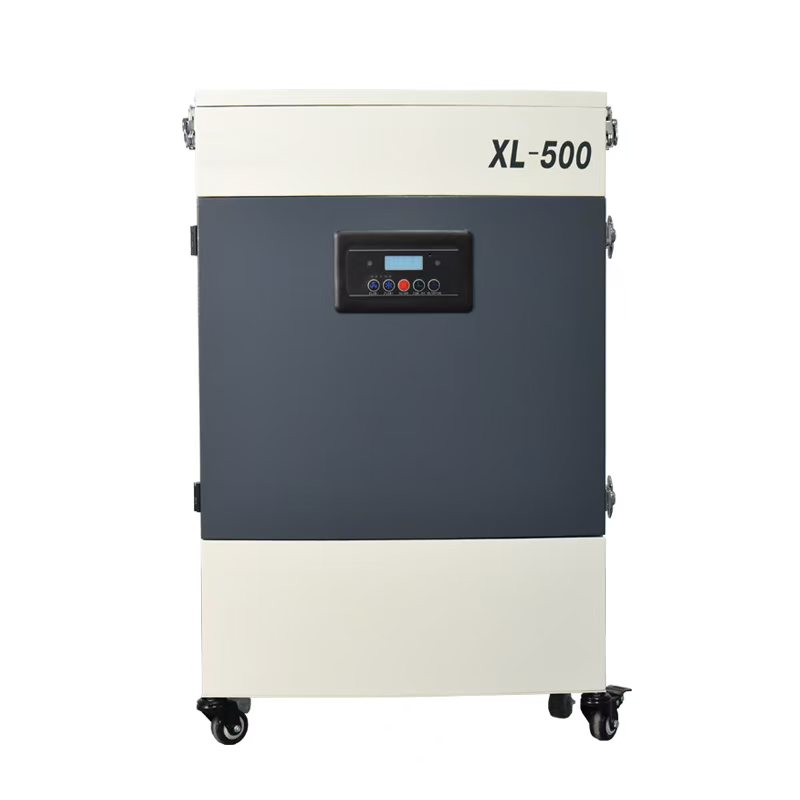
Fume Extraction Unit | Captures ablated materials | $3,000-$15,000 |
HEPA/Activated Carbon Filtration | Removes particles and fumes | $1,000-$5,000 |
Fire Suppression | CO2 or clean agent system | $2,000-$10,000 |
Air Quality Monitoring | Verifies safe conditions | $500-$3,000 |
Environmental Total |
| $6,500-$33,000 |
Training and Compliance
Item | Description | Budget Range |
LSO Certification | External training program | $1,500-$3,000 |
Operator Training | Per person, initial | $500-$1,500 |
Annual Refresher | Per person, ongoing | $200-$500 |
Medical Surveillance | Eye exams for operators | $200-$400/person/year |
Documentation System | SOPs, records management | $500-$2,000 |
Training Total (Year 1, 3 operators) |
| $4,600-$11,000 |
Total Safety Investment Summary
Equipment Cost | Recommended Safety Budget | Typical Range |
$50,000 | 20-30% | $10,000-$15,000 |
$100,000 | 18-25% | $18,000-$25,000 |
$200,000 | 15-22% | $30,000-$44,000 |
Note: Higher-power systems and hazardous material applications require proportionally greater safety investment.
What To Do If Laser Exposure Occurs: Emergency Response
Direct Answer: Laser injuries require immediate medical attention. Do not assume minor symptoms will resolve—delayed effects are common and early intervention improves outcomes.
Immediate Response Protocol
For Eye Exposure:
- Stop all laser operations immediately
- Do NOT rub eyes
- Cover affected eye loosely
- Seek emergency ophthalmologic care immediately—do not wait for symptoms
- Document incident details (power, duration, wavelength, distance)
- Report to LSO and complete incident forms
For Skin Burns:
- Remove from exposure area
- Cool affected area with clean, cool water
- Do not apply ice directly
- Cover with sterile, non-stick dressing
- Seek medical attention for any burn larger than a coin
- For severe burns, call emergency services
Symptoms That Require Immediate Medical Attention
Symptom | Possible Indication | Action |
Any vision change after exposure | Retinal damage | Emergency ophthalmology |
Persistent afterimage (>10 min) | Retinal burn | Emergency care |
Eye pain, especially delayed onset | Corneal/retinal injury | Same-day eye exam |
Excessive tearing | Multiple possible injuries | Medical evaluation |
Headache following exposure | Possible eye injury | Medical evaluation |
New floaters in vision | Vitreous damage | Urgent ophthalmology |
Skin blistering | Second-degree burn | Medical treatment |
Critical: Photochemical eye damage has a 6-12 hour latency period. An operator who “feels fine” immediately after exposure may have significant injury. When in doubt, seek evaluation.
Post-Incident Requirements
- Preserve the scene for investigation
- Document all details while fresh
- Notify supervisor and LSO immediately
- Complete incident report within 24 hours
- Review and update SOPs based on findings
- Report to OSHA if required (hospitalization, amputation, loss of eye)
Medical Contraindications: Who Should Not Work Near Laser Cleaners
Direct Answer: Certain medical conditions and devices create additional risks around Class 4 laser systems. Pre-employment and periodic medical screening should identify these factors.
Contraindications and Restrictions
Condition/Device | Risk | Recommendation |
Photosensitivity conditions | Increased skin damage risk | Medical clearance required |
Photosensitizing medications | Increased damage threshold | Review with physician |
Implanted electronic devices (pacemakers, defibrillators) | Device malfunction from electromagnetic interference | Exclude from NHZ |
Pregnancy | Unknown effects on fetus | Reassign during pregnancy |
History of retinal conditions | Increased vulnerability | Ophthalmologic clearance |
Seizure disorders triggered by light | Potential triggering | Individual assessment |
Note: Laser cleaning equipment should never be used directly over implanted medical devices, the thyroid, reproductive organs, or cancerous tissue.
10 Questions to Ask Before Purchasing
Direct Answer: Vendor responses to these questions reveal their commitment to customer safety. Evasive or dismissive answers are disqualification criteria.
Pre-Purchase Safety Evaluation
1.”What laser classification does your system carry, and can you provide certification documentation?”
- ✅ Acceptable: Class 4 with CE/FDA documentation available
- 🚩 Red flag: Vague answers or “safe for unprotected operation”
2.”What training program is included, and what certification do operators receive?”
- ✅ Acceptable: Documented curriculum, practical training, written assessment
- 🚩 Red flag: “It’s intuitive” or training not included
3.”What engineering safety controls are integrated?”
- ✅ Acceptable: Interlocks, emission indicators, key switch, E-stop, beam containment
- 🚩 Red flag: Minimal features, safety as optional add-on
4.”What are the exact PPE specifications required for your system?”
- ✅ Acceptable: Specific OD ratings at your wavelength, certified supplier list
- 🚩 Red flag: Generic recommendations or “regular safety glasses are fine”
5.”Can you provide the NHZ calculation for this system?”
- ✅ Acceptable: NHZ data in technical documentation
- 🚩 Red flag: Unfamiliar with the concept
6.”What fume extraction CFM rating do you recommend?”
- ✅ Acceptable: Specific requirements, compatible system recommendations
- 🚩 Red flag: “Not really needed” or no guidance
7.”Can you provide references from customers in similar applications?”
- ✅ Acceptable: Verifiable contacts willing to speak
- 🚩 Red flag: Unable or unwilling to provide
8.”What is your incident response support protocol?”
- ✅ Acceptable: 24/7 technical support, incident investigation assistance
- 🚩 Red flag: No established protocol
9.”What is the lead time for replacement safety components?”
- ✅ Acceptable: Stock availability, defined lead times
- 🚩 Red flag: Safety parts as afterthought
10.”What ongoing technical and safety support do you provide?”
- ✅ Acceptable: Defined support tiers, update notifications, refresher training
- 🚩 Red flag: Limited post-sale engagement
Red Flags: When to Walk Away From a Vendor
Direct Answer: These behaviors indicate inadequate safety culture. They are disqualification criteria, not negotiable concerns.
Immediate Disqualifiers
🚩 “It’s not really that dangerous”
Any vendor downplaying Class 4 hazards is either ignorant or deceptive. Both are unacceptable when lives are at stake.
🚩 No included training program
Selling Class 4 equipment without comprehensive training prioritizes revenue over customer safety—and suggests inadequate post-sale support.
🚩 Missing certification documentation
Legitimate equipment carries:
- FDA accession number (USA)
- CE marking with notified body number (EU)
- IEC 60825 compliance documentation
If unavailable, the equipment may not meet safety standards.
🚩 “OSHA requirements don’t really apply to you”
Vendors suggesting you can sidestep regulations are creating liability exposure for your organization.
🚩 Pressure to skip due diligence
Safety-conscious vendors welcome thorough evaluation. Those pushing rapid decisions may be concealing problems.
🚩 Dramatically lower pricing than established competitors
If a laser cleaner is priced 50-70% below comparable equipment, question what’s been cut. Often it’s safety features, documentation, support—or the equipment doesn’t perform as specified.
Frequently Asked Questions
Yes, but "safer" doesn't mean "safe." Laser cleaning eliminates silica dust inhalation, flying debris, and surface damage risks associated with abrasive blasting. However, it introduces Class 4 laser hazards (eye damage, burns, fire) and toxic fume exposure from vaporized contaminants. Different hazards require different controls—not fewer controls.
No. Diffuse reflections from the work surface can cause eye damage without direct viewing. The beam is invisible (1064nm infrared), so you cannot see what's entering your eyes. Reflections remain hazardous at distances up to 80 meters.
Those demonstrations typically use:
- Reduced power settings (10-20% of industrial levels)
- Rapid movement (minimizing energy delivery)
- Defocused beams (spreading energy over larger area)
- Careful staging (controlled conditions)
They demonstrate what's possible under specific parameters—not what happens during actual industrial cleaning at production settings.
Budget 15-30% of your equipment cost for safety infrastructure:
- PPE: $600-$2,250 per operator
- Engineering controls: $8,000-$45,000
- Environmental systems: $6,500-$33,000
- Training/compliance: $4,600-$11,000 (Year 1)
A $100,000 laser cleaner typically requires $18,000-$25,000 in safety investment.
Yes. Under OSHA standards and ANSI Z136.1, any facility operating Class 4 lasers must designate a qualified LSO. This is a regulatory requirement, not a recommendation. The LSO has authority to enforce protocols, conduct evaluations, and manage incidents.
Immediate steps:
- Stop operations and secure the area
- Provide first aid / call emergency services
- Document everything
- Notify your LSO
- Report to OSHA if required (hospitalization, amputation, loss of eye)
Long-term: Investigation, potential citations, workers' compensation claims, possible litigation, and mandatory protocol review.
Extremely challenging. Outdoor operation makes NHZ control nearly impossible—you cannot contain reflections or restrict access in open environments. Most regulatory frameworks effectively prohibit unenclosed Class 4 operation in uncontrolled spaces. If outdoor use is required, consult with a laser safety professional for site-specific controls.
Origin doesn't determine safety—compliance does. Chinese manufacturers produce equipment ranging from uncertified to fully compliant. Key questions:
- Does it carry valid CE/FDA certification?
- Is documentation complete and verifiable?
- Does the vendor provide training and support?
- Are safety interlocks properly implemented?
Apply the same evaluation criteria regardless of origin.
Conclusion: Respecting the Technology
Laser cleaning represents a genuine advancement in surface preparation. It eliminates chemical waste, reduces consumable costs, and enables precision impossible with mechanical methods.
None of these benefits justify compromising on safety.
The viral videos showing casual laser operation aren’t demonstrations of safety—they’re demonstrations of luck and carefully controlled parameters. Industrial reality operates at power levels 10-20x higher than these showcases.
Three Principles for Responsible Deployment
- Treat Class 4 lasers with the same respect as other potentially lethal equipment.
The comparison to firearms isn’t marketing—it’s accurate hazard classification. These tools can cause permanent injury in milliseconds.
- Budget for safety infrastructure before operation begins.
PPE, engineering controls, training, and documentation aren’t optional additions. They’re operational prerequisites. Plan for 15-30% of equipment cost.
- Select vendors who prioritize safety culture.
The cheapest equipment often carries hidden costs in safety gaps, inadequate support, and regulatory non-compliance. Quality vendors welcome rigorous evaluation.
Laser Cleaning Safety Quick Reference Checklist
✅ Before Equipment Arrives
- Laser Safety Officer designated and certified
- Nominal Hazard Zone calculated and documented
- Room modifications completed (non-reflective surfaces, barriers)
- Fume extraction installed and tested
- Fire suppression appropriate for operations
- PPE procured (wavelength-matched, certified)
- Warning signage prepared (ANSI-compliant)
- SOPs written and approved
- Emergency procedures documented
- Insurance carrier notified
- Medical baseline established for operators
✅ Before Each Operation
- All personnel in NHZ wearing required PPE
- Interlocks tested and functional
- Reflective objects removed from area
- Fume extraction operating
- Fire extinguisher accessible
- Unauthorized personnel excluded
- Warning lights/signs activated
- Emergency stop accessible
- Communication method established
✅ After Each Operation
- System properly shut down (follow sequence)
- Area inspected for damage or hazards
- Equipment condition noted
- Any anomalies documented
✅ Periodic Requirements
- Annual safety audit
- Training refresher (annually recommended)
- Equipment maintenance per schedule
- PPE inspection and replacement
- Incident/near-miss review
- Medical surveillance for operators
- SOP updates as needed
Get Your Free Quote
Ready to improve marking quality and eliminate consumable costs?
Contact us:
Tell us about your application and we’ll recommend the perfect solution:
Contact Information:
- 📧 Email: [info@chihalo.com]
- 📱 WhatsApp: [+86 18608325040]
Our technical team will respond within 24 hours with personalized recommendations and competitive pricing.