
3-in-1 Laser Welder: Weld, Cut & Clean Metal with One Machine

Hi! I am Dawn. With 10 years of field experience, I specialize in laser cleaning systems—from optical sourcing to automation. I write here to turn complex specs into actionable buying guides.
Table of Contents
Quick Answer: What You Need to Know
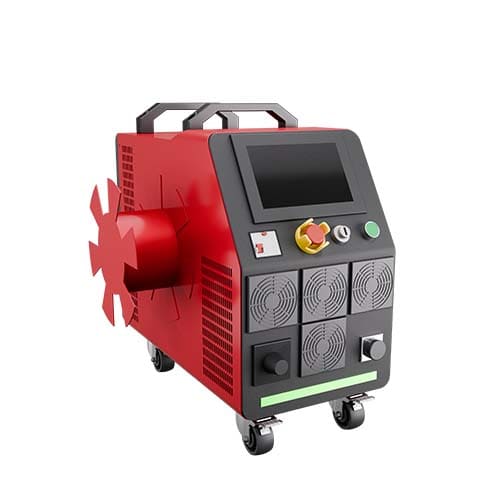
A 3-in-1 laser welder combines laser welding, cutting, and cleaning into one handheld machine. Rather than buying three separate tools, you get all capabilities in a single portable unit that weighs under 100kg.
Most buyers choose the 2000W model ($6000-$8,000) because it handles 90% of typical fabrication work without overpaying for power you won’t use.
The basics at a glance:
Spec | Range |
Price | $3,600 – $9,500 |
Power options | 1500W, 2000W, 3000W |
Welding thickness | Up to 6mm steel |
Speed vs TIG | 3-8 times faster |
Time to learn | 1-2 days |
What Exactly Is a 3-in-1 Laser Welder?
Think of it as three machines packed into one cabinet with wheels.
A fiber laser generates a concentrated beam of light. That beam travels through a flexible cable to a handheld gun weighing about 750 grams. Depending on which nozzle you attach and which mode you select, the same beam can:
Weld metal – The laser melts edges together, creating joints stronger than the original material. Works on stainless steel, carbon steel, aluminum, copper, and more.
Cut sheet metal – Cranking up the power density vaporizes metal along a path. Good for trimming, cutting holes, or slicing thin sheets on-site.
Clean surfaces – The laser blasts away rust, paint, oil, and oxide layers without touching the base metal. No chemicals, no abrasives, no mess.
Switching between functions takes under a minute. Swap the nozzle, change the mode on the touchscreen, and you’re ready.
Who Actually Uses These?
Walk into any busy metal shop and you’ll find potential applications:
- Fabrication shops doing custom stainless work
- Auto body and exhaust repair
- HVAC contractors joining ductwork
- Sign makers working with metal letters
- Furniture manufacturers welding frames
- Maintenance crews handling on-site repairs
The common thread? They all need clean welds on thin-to-medium material, and they’re tired of grinding, polishing, and waiting.
The Real Reasons People Switch from TIG and MIG
Nobody buys a $5,000 machine just because it’s shiny. Here’s what actually drives the decision:
"My TIG welds look great but take forever"
We hear this constantly. TIG produces beautiful results, but you’re moving at maybe 6 inches per minute on thin stainless. The same joint with a laser welder? 18-24 inches per minute, sometimes faster.
One shop owner in Ohio told us he went from completing 8 railings per day to 25 after switching. Same quality, different century of technology.
"Burn-through on thin material is killing my rejection rate"
Traditional welding dumps heat into a wide area. On material under 1mm, that heat warps and burns through before you can blink.
Laser welding focuses energy into a spot smaller than a pencil tip. The heat-affected zone measures 0.3-0.5mm instead of 3-5mm. We regularly weld 0.5mm stainless with zero distortion—try that with a MIG gun.
"I'm buying separate machines for welding, cleaning, and cutting"
Add up what you’re spending:
- Decent TIG welder: $2,000-3,500
- Plasma cutter: $1,500-2,500
- Sandblaster or chemical cleaning setup: $800-1,500
- Floor space for three machines
- Training time on three different tools
A 3-in-1 unit at $4,800 starts looking reasonable pretty quickly.
"Training new welders takes months and they keep leaving"
The skilled trades shortage is real. Finding someone who can lay down consistent TIG beads takes months of training and years of practice.
Laser welding has a flatter learning curve. The machine does most of the work—you’re guiding a beam, not managing a puddle. Most operators produce acceptable welds within two days. Production-quality work takes a week or two.
That’s not an exaggeration. It’s just how the technology works.
Choosing the Right Power Level
Power determines what thickness you can weld and how fast you can work. Here’s the practical breakdown:
1500W – Entry Level
Best for: Thin sheet metal, light fabrication, hobbyists, shops doing mostly 2mm and under
Welding capacity:
- Steel/stainless: up to 4mm
- Aluminum: up to 3mm
Price range: $3,600 – $4,500
Honest assessment: Handles most thin work fine. You’ll feel limited on anything over 3mm and slower on aluminum. Good starting point if budget is tight.
2000W – The Sweet Spot
Best for: General fabrication, auto repair, signage, most commercial applications
Welding capacity:
- Steel/stainless: up to 5mm
- Aluminum: up to 4mm
Price range: $4,800 – $6,000
Honest assessment: This is what 70% of buyers choose, and for good reason. Enough power for typical fabrication without paying for industrial capacity you won’t use. If you’re unsure, start here.
3000W – Heavy Duty
Best for: Thicker material, high-volume production, industrial settings
Welding capacity:
- Steel/stainless: up to 6mm
- Aluminum: up to 5mm
Price range: $7,000 – $9,500
Honest assessment: Overkill for most small shops. Worth it if you regularly work with 4mm+ material or need maximum speed on production runs. Requires 380V power, which some facilities don’t have.
Quick Decision Guide
Your situation | Recommended |
Mostly thin sheet metal, budget matters | 1500W |
General fab work, mix of materials | 2000W |
Thick plates, industrial volume | 3000W |
Lots of aluminum work | 2000W minimum |
Not sure | 2000W |
Real Performance: What We Actually Measured
Marketing specs are one thing. Actual performance is another. Here’s data from testing we conducted on a 2000W unit in our facility:
Welding Test Results
Material | Thickness | Speed | Penetration | Weld Strength | Notes |
304 Stainless | 2mm | 2.1 m/min | 2.3mm | 515 MPa (97% of base) | Mirror finish, no grinding needed |
304 Stainless | 3mm | 1.4 m/min | 3.2mm | 508 MPa (96% of base) | Slight surface oxidation |
Q235 Carbon Steel | 2mm | 2.4 m/min | 2.2mm | 445 MPa (98% of base) | Clean result |
Q235 Carbon Steel | 4mm | 0.9 m/min | 4.1mm | 438 MPa (96% of base) | Required slower speed |
6061 Aluminum | 2mm | 1.3 m/min | 2.0mm | 276 MPa (95% of base) | Used argon shielding |
6061 Aluminum | 3mm | 0.8 m/min | 3.1mm | 271 MPa (93% of base) | Slight porosity at edges |
What this means: Weld strength consistently hits 93-98% of base material. That’s as strong as or stronger than properly executed TIG welds. The speed numbers are realistic working speeds, not maximum theoretical values.
Cutting Test Results
Material | Thickness | Speed | Edge Quality |
Stainless | 2mm | 1.8 m/min | Clean, minimal dross |
Carbon steel | 3mm | 1.5 m/min | Clean cut |
Aluminum | 2mm | 1.2 m/min | Some edge oxidation |
Reality check: Laser cutting on a handheld welder isn’t replacing a dedicated cutting table. It’s for trimming, notching, and on-site cuts where dragging out the plasma cutter isn’t practical.
Cleaning Test Results
Contaminant | Removal Speed | Passes Required |
Light surface rust | 15 cm²/second | 1 |
Heavy rust scale | 8 cm²/second | 2-3 |
Paint (single layer) | 12 cm²/second | 1 |
Oil/grease | 20 cm²/second | 1 |
Weld discoloration | 18 cm²/second | 1 |
How It Stacks Up Against Traditional Methods
Let’s compare honestly, including where laser welding falls short:
Factor | 3-in-1 Laser | TIG | MIG |
Speed | Fast (3-8x TIG) | Slow | Medium |
Weld appearance | Excellent | Excellent | Good |
Thin material (<1mm) | Excellent | Good with skill | Poor |
Thick material (>8mm) | Limited | Good | Excellent |
Heat distortion | Minimal | Moderate | Significant |
Post-weld grinding | Rarely needed | Sometimes | Usually |
Learning time | Days | Months | Weeks |
Equipment cost | $3,600-9,500 | $500-3,000 | $300-2,000 |
Consumables cost | Low (lenses only) | Medium | Medium-high |
Portability | Good (wheels) | Excellent | Good |
Gap bridging | Limited | Excellent | Good |
Where Laser Welding Wins
- Thin material with no burn-through
- Speed on production work
- Minimal cleanup afterward
- Fast training for new operators
- Three functions in one machine
Where Traditional Methods Win
- Very thick material (over 8-10mm)
- Large gaps that need filling
- Lowest possible equipment cost
- Outdoor work in windy conditions
- Situations requiring maximum puddle control
The Honest Take
If most of your work involves thin to medium material (say, 0.5-5mm) and appearance matters, laser welding will probably make you more money through faster throughput and less finishing labor.
If you’re primarily welding thick structural steel or doing heavy repair work with inconsistent fit-up, stick with what you know.
Many shops end up keeping their TIG/MIG equipment for specific jobs while using the laser welder for 70-80% of daily work.
Full Technical Specifications
Specification | 1500W | 2000W | 3000W |
Laser source | Raycus/MAX fiber | Raycus/MAX fiber | Raycus/MAX fiber |
Wavelength | 1080nm ±10 | 1080nm ±10 | 1080nm ±10 |
Max weld depth (steel) | 4mm | 5mm | 6mm |
Max weld depth (aluminum) | 3mm | 4mm | 5mm |
Max cutting thickness | 3mm | 5mm | 6mm |
Cleaning width | 10-80mm | 10-100mm | 10-120mm |
Wobble amplitude | 0-5mm | 0-6mm | 0-6mm |
Fiber cable length | 10m (15m optional) | 10m (15m optional) | 10m (15m optional) |
Cooling | Water chiller (built-in) | Water chiller (built-in) | Water chiller (built-in) |
Wire feeder | Auto, 0.8-1.6mm wire | Auto, 0.8-1.6mm wire | Auto, 0.8-1.6mm wire |
Input voltage | 220V ±10%, single phase | 220V ±10%, single phase | 380V, three phase |
Power consumption | ~5.5 kW | ~7.5 kW | ~11 kW |
Machine dimensions | 530×960×700mm | 530×960×700mm | 600×1100×800mm |
Total weight | ~85kg | ~92kg | ~115kg |
Operating temp | 10-40°C | 10-40°C | 10-40°C |
Humidity | <70% non-condensing | <70% non-condensing | <70% non-condensing |
What's Included
Standard package with most manufacturers:
- Main laser unit with built-in chiller
- Handheld welding/cutting gun
- Cleaning head attachment
- Auto wire feeder
- Assorted nozzles (typically 15-20 pieces)
- Protective lenses (starter pack)
- Ground clamp and cable
- Foot pedal
- Basic tool kit
- User manual and training materials
What You'll Need to Add
- Shielding gas (argon for most work, nitrogen for some cutting)
- Regulator and gas line
- Safety glasses (OD5+ rating for 1080nm)
- Welding wire (if using filler)
- Replacement protective lenses (they’re consumable)
- Proper ventilation/extraction
What Materials Can You Actually Weld?
Works Well
Stainless steel – All common grades (304, 316, 201, etc.). This is where laser welding really shines. Clean, bright welds with minimal heat coloring.
Carbon steel – Mild steel, medium carbon, high carbon. Excellent results across the board. Some high-carbon grades may need preheat on thicker sections.
Galvanized steel – Yes, it works. The laser vaporizes the zinc coating during welding. Proper ventilation is mandatory—zinc fumes are nasty.
Aluminum alloys – 6061, 5052, 1100, and most common alloys. Requires higher power (2000W+ recommended) and argon shielding. Slightly more technique-sensitive than steel.
Copper and brass – Doable but challenging due to high reflectivity and thermal conductivity. Works best with higher power settings and adjusted parameters.
Titanium – Excellent results with proper argon shielding. Common in medical and aerospace applications.
Works with Limitations
Cast iron – Possible with preheat and proper technique, but not ideal. The rapid cooling of laser welding can cause cracking.
Tool steels – Some grades work, others crack. Test first.
Dissimilar metals – Stainless to carbon steel works well. Other combinations vary—some work, some don’t. Consult your metallurgist for critical applications.
Not Recommended
Very thick material – Over 6-8mm, you’re fighting physics. Multiple passes help, but you’re better off with traditional methods.
Poor fit-up situations – Gaps over 1mm are problematic. The laser beam needs material to fuse. Unlike TIG, you can’t manipulate a puddle to bridge gaps.
Industry Applications
Metal Fabrication Shops
Custom fabrication is the bread and butter. Whether it’s one-off prototypes or short production runs, the speed advantage compounds quickly. Shops report 40-60% reduction in total job time when switching from TIG on appropriate work.
Automotive
Body panels, exhaust systems, brackets, custom parts. The minimal heat distortion is critical for thin automotive sheet metal. Many restoration shops now use laser welding for patch panels.
Kitchen and Food Equipment
Stainless sinks, countertops, commercial kitchen fixtures. The cosmetic weld quality eliminates grinding on visible surfaces. Sanitary welds with full penetration meet food industry standards.
Signage and Displays
Metal channel letters, light boxes, display fixtures. Intricate work on thin material where traditional welding would destroy the piece.
HVAC and Ductwork
Galvanized sheet metal joints, transitions, fittings. Fast enough for production volume, clean enough to look professional.
Furniture Manufacturing
Metal frames, chair bases, table legs, shelving. Speed matters when you’re producing dozens or hundreds of units.
Maintenance and Repair
On-site repairs where portability matters. The 3-in-1 capability means you bring one machine instead of three.
Mold and Die Repair
Precision repairs on expensive tooling. The minimal heat input prevents warping of carefully machined surfaces.
Pricing: What to Actually Expect
Factory Direct vs. Dealer Prices
There’s typically a 30-40% markup going through dealers and resellers. Here’s the comparison:
Power | Typical dealer price | Factory direct |
1500W | $5,500 – $7,000 | $3,600 – $4,500 |
2000W | $7,000 – $9,000 | $4,800 – $6,000 |
3000W | $10,000 – $14,000 | $7,000 – $9,500 |
The price difference comes from eliminating the middleman. You’re buying from the people who actually build the machine, not a distributor adding margin.
Total Cost of Ownership
Equipment cost is just the beginning. Here’s a five-year view:
Cost category | 3-in-1 laser welder | Equivalent traditional setup |
Equipment | $4,800 | $6,500+ (welder + cutter + cleaning) |
Consumables (5 years) | ~$750 (mostly lenses) | ~$4,000 (tips, wire, chemicals, gases) |
Maintenance | ~$500 | ~$1,500 |
Floor space value | 1 sqm | 3 sqm |
Training time cost | 2 days | 3-4 weeks |
5-year total | ~$6,050 | ~$12,000+ |
The consumables difference is significant. Laser welding doesn’t eat through tips, doesn’t require expensive shielding gas for most work (argon for aluminum, nothing for most steel), and doesn’t need chemical cleaners.
Hidden Costs to Budget For
- Shipping:$300-800 depending on location and speed
- Spare lenses:Budget $200/year for replacement protective lenses
- Gas setup:Argon bottle, regulator, and line if welding aluminum (~$300 initial)
- Safety equipment:OD5+ glasses for all operators (~$50-150 each)
- Training time:Factor in 1-2 days of non-production time per operator
Frequently Asked Questions
Basic Questions
A handheld fiber laser machine that performs welding, cutting, and cleaning operations using interchangeable nozzles and operating modes. One machine, three functions, typically weighing 85-115kg with built-in water cooling.
Factory direct prices range from $3,600 for 1500W units to $9,500 for 3000W units. Most buyers spend $4,800-$6,000 for a 2000W model, which handles typical fabrication work. Dealer prices run 30-40% higher.
When done correctly, yes—or at least equal. Our testing shows weld strength at 93-98% of base material tensile strength. The smaller heat-affected zone actually preserves more of the original material's properties than traditional methods.
Technical Questions
Stainless steel (all grades), carbon steel, galvanized steel, aluminum alloys, copper, brass, and titanium. Some dissimilar metal combinations work well (stainless to carbon steel, for example). Cast iron and some tool steels are problematic.
Depends on power: 1500W handles up to 4mm steel, 2000W up to 5mm, 3000W up to 6mm. Aluminum capacity is about 1mm less. Beyond these thicknesses, you'll need multiple passes or different equipment.
Generally 1-2mm less than welding capacity. A 2000W unit cuts up to 3-4mm steel cleanly. This is auxiliary cutting—trimming, notching, on-site cuts. It won't replace a dedicated plasma table or fiber cutting system.
Water-cooled is standard for 1500W and above. Air-cooled units exist for lower powers but can't sustain continuous operation. For professional use, water-cooling is the only realistic choice.
Comparison Questions
Laser if: You work mostly with thin-to-medium material, speed matters, you want minimal post-processing, and you're willing to spend more upfront.
TIG if: You weld thick material regularly, need maximum gap-filling ability, have a limited budget, or already have skilled TIG welders.
Many shops use both—laser for most production work, TIG for specific applications.
For light cutting (under 3-4mm), it can handle many tasks. For serious cutting work or thicker material, keep the plasma cutter. The laser welder's cutting function is supplementary, not primary.
Usage Questions
Basic operation: a few hours. Acceptable production welds: 1-2 days. Optimized technique for your specific applications: 1-2 weeks. Compare that to 3-6 months for TIG proficiency.
Yes, with proper precautions. Built-in safety features include dual triggers, emergency stops, ground detection, and temperature monitoring. Operators need OD5+ rated safety glasses specifically designed for 1080nm wavelength. Standard welding safety practices apply—proper ventilation, protective clothing, fire prevention.
Less than traditional welding equipment. Weekly: clean protective lenses (main consumable, ~$5-10 each). Monthly: check fiber cable for damage, inspect water level and quality. Every 3-6 months: replace coolant. The laser source itself is essentially maintenance-free with 100,000+ hour expected life.
Buying Questions
- 1500W: Budget-conscious, mostly thin material (<3mm)
- 2000W: Most versatile, handles 90% of typical work (recommended for most buyers)
- 3000W: Heavy industrial, thick material, high volume
When in doubt, 2000W covers the widest range of applications without overpaying.
Key factors: Established company (5+ years), quality laser sources (Raycus, MAX, or IPG), CE certification, clear warranty terms (minimum 1 year, preferably 2), available technical support, and spare parts availability. Factory-direct typically offers better value and support than resellers.
Reputable manufacturers offer sample welding. Send your actual materials, they weld samples under video, you evaluate results before committing. This is standard practice—be wary of anyone who won't accommodate it.
Making the Decision
You Should Probably Buy a 3-in-1 Laser Welder If:
- Most of your work involves material under 5mm thick
- Weld appearance matters to your customers
- You’re spending significant time on post-weld grinding
- Training new welders is a constant challenge
- You need welding, cutting, AND cleaning capability
- Speed directly impacts your profitability
You Should Probably Stick with Traditional Methods If:
- Your primary work involves thick structural steel (10mm+)
- You frequently weld poor fit-up situations with large gaps
- Your budget absolutely cannot stretch beyond $2,000
- You already have highly skilled TIG welders who are happy
- Most of your work is field welding in adverse conditions
The Middle Ground
Many shops buy a laser welder without selling their existing equipment. They use the laser for 70-80% of work where it excels, and keep the TIG/MIG setup for specific applications. Over time, they figure out exactly where each tool makes sense.
About Chihalo
Chengdu Chihalo Technology Co., Ltd. has manufactured laser equipment since 2016. We’re a certified National High-Tech Enterprise in China, specializing in laser cleaning machines, laser marking systems, and handheld laser welders.
Why factory direct matters:
We build these machines. When you buy from us, you’re getting manufacturer pricing—typically 30-40% below what you’d pay through dealers or resellers. You’re also getting direct access to the engineers who designed the equipment, not a sales rep reading from a script.
What we offer:
- 2-year warranty on complete machine
- Lifetime technical support
- Sample welding service before purchase
- Spare parts shipped worldwide
- Remote troubleshooting via video call
- Training materials and ongoing guidance
Contact:
- Email: sales@chihalo.com
- WhatsApp: +86 187 6614 8818
- Website: www.chihalo.com
We’re happy to answer questions, provide quotes, or arrange sample welding on your materials. No pressure, no obligation—just straight information to help you make the right decision for your shop.
This guide was prepared by the Chihalo technical team based on our manufacturing experience and customer feedback from installations across 50+ countries. Last updated January 2025.
Get Your Factory-Direct Quote
Get factory-direct pricing on professional handheld laser welders.
Our engineers will help you select the right power and configuration—no obligation.
Tell us about your application and we’ll recommend the perfect solution:
Contact Information:
- 📧 Email: [info@chihalo.com]
- 📱 WhatsApp: [+86 18608325040]
Our technical team will respond within 24 hours with personalized recommendations and competitive pricing.