
Laser Wood Restoration: Costs, Methods & Is It Worth It? [2026 Guide]

Hi! I am Dawn. With 10 years of field experience, I specialize in laser cleaning systems—from optical sourcing to automation. I write here to turn complex specs into actionable buying guides.
Table of Contents
Wondering if laser wood restoration is the right choice for your antique furniture, cabinets, or woodwork project? You’re not alone. This advanced cleaning technology has transformed how professionals restore wood surfaces—but is it worth the investment for your specific needs?
In this comprehensive guide, we’ll compare laser cleaning to traditional methods, reveal real pricing data, and help you decide whether laser wood restoration makes sense for your project.
⚡ Quick Answer: What is Laser Wood Restoration?
Definition: Laser wood restoration uses focused light to remove coatings from wood without contact or damage to the surface.
Key Benefits at a Glance:
- ✓ Preserves wood grain, carvings, and fine details
- ✓ No chemicals, minimal dust, eco-friendly
- ✓ 3-5x faster than manual sanding
- ✓ Safe for antiques and delicate woodwork
Typical Cost Range:
- Professional service: $75–$150 per hour
- DIY equipment: $5,000–$50,000
Best For: Antique furniture, detailed carvings, cabinet refinishing, historical preservation
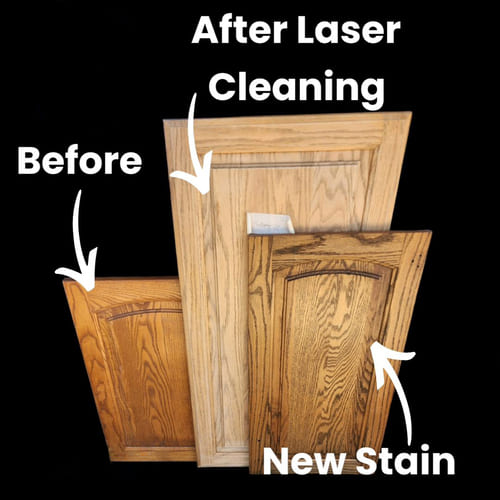
Laser vs Sanding vs Chemical Stripping: Which Method Wins?
Before investing in any wood restoration method, you need to understand how they compare. Here’s an honest, side-by-side breakdown based on real-world performance.
Head-to-Head Comparison Table
Factor | Laser Cleaning | Sanding | Chemical Stripping |
Precision | ★★★★★ | ★★☆☆☆ | ★★★☆☆ |
Speed | ★★★★★ | ★★☆☆☆ | ★★★☆☆ |
Wood Protection | ★★★★★ | ★★☆☆☆ | ★★★☆☆ |
Eco-Friendly | ★★★★★ | ★★★☆☆ | ★☆☆☆☆ |
Upfront Cost | ★★☆☆☆ | ★★★★★ | ★★★★☆ |
Detail Preservation | ★★★★★ | ★☆☆☆☆ | ★★★☆☆ |
DIY Friendly | ★★☆☆☆ | ★★★★★ | ★★★☆☆ |
Health & Safety | ★★★★☆ | ★★★☆☆ | ★★☆☆☆ |
When to Choose Each Method
Choose Laser Cleaning When:
- Working with antique or valuable furniture
- Wood has intricate carvings or details
- You need to preserve original wood character
- Project requires professional-quality results
- Environmental concerns are a priority
Choose Sanding When:
- Budget is the primary constraint
- Surface is flat and simple
- You’re comfortable with DIY work
- Minor coating removal needed
- Wood can tolerate some material loss
Choose Chemical Stripping When:
- Dealing with specific coating types
- Working on small, isolated areas
- Proper ventilation is available
- Cost must stay minimal
- Willing to handle toxic materials
Real Cost Comparison: Same Project, Different Methods
To illustrate the true cost difference, here’s what a typical dresser restoration project might cost:
Method | Material Cost | Labor Hours | Total Cost | Result Quality |
Laser Cleaning | $0 | 3-4 hrs | $225-$600 | Excellent |
Manual Sanding | $30-50 | 8-12 hrs | $280-$500* | Good |
Chemical Stripping | $40-80 | 6-8 hrs | $200-$400* | Good |
*DIY labor valued at $25/hour; professional rates would be 2-3x higher
💡 Key Takeaway: Laser cleaning often costs similar to or less than traditional methods when you factor in labor time—while delivering superior results on detailed woodwork.
FAQ: Is laser better than sanding for wood restoration?
Answer: For antiques, carvings, or detailed woodwork—yes. Laser cleaning preserves fine details that sanding destroys, produces no dust, and doesn’t remove wood material. For simple flat surfaces on a tight budget, sanding remains practical.
How Much Does Laser Wood Restoration Really Cost?
Cost is often the deciding factor. Here’s transparent pricing data to help you budget accurately.
Professional Service Pricing
Based on 2025-2026 industry surveys and service provider data
Project Type | Price Range | Typical Duration |
Small furniture (chair, side table) | $150–$400 | 2-4 hours |
Medium furniture (dresser, desk) | $300–$800 | 4-8 hours |
Large furniture (armoire, dining table) | $600–$1,500 | 8-16 hours |
Kitchen cabinets (full set) | $1,500–$4,500 | 2-4 days |
Wood flooring (per 100 sq ft) | $200–$500 | 3-6 hours |
Architectural elements | Custom quote | Varies |
Hourly Rates by Region: (2025-2026 market rates)
- United States: $75–$150/hour
- United Kingdom: £60–£120/hour
- European Union: €70–€140/hour
- Australia: $90–$180 AUD/hour
DIY Equipment Investment
If you’re considering purchasing equipment for business or frequent personal use:
Equipment Level | Price Range | Best For |
Entry-level (100-200W pulsed) | $5,000–$8,000 | Light cleaning, small projects |
Professional (200-300W pulsed) | $6,000–$9,000 | Regular restoration work |
Industrial (300W+ continuous) | $9,000–$30,000 | High-volume commercial use |
Hidden Costs to Consider
Beyond the obvious expenses, factor in:
- Training:$0 for proper certification
- Safety equipment:$50 (laser safety glasses, ventilation)
- Maintenance:5-10% of equipment cost annually
- Insurance:May increase for laser equipment operation
- Electricity:Minimal, approximately $1-3 per hour of operation
Cost Calculator: Estimate Your Project
To estimate your laser wood restoration cost:
- Identify project size:Small / Medium / Large
- Assess coating complexity:Single layer / Multiple layers / Heavy buildup
- Note detail level:Flat surface / Some detail / Intricate carvings
Quick Formula:
- Small + Single layer + Flat = $150-250
- Medium + Multiple layers + Some detail = $400-700
- Large + Heavy buildup + Intricate = $800-1,500+
For an accurate quote, contact a professional service provider with photos of your project.
💡 Key Takeaway: Professional laser restoration costs $75-150/hour. Most furniture projects run $150-$1,500. Kitchen cabinets: $1,500-$4,500 complete.
FAQ: How much does laser wood restoration cost?
Answer: Professional service costs $75-$150 per hour. Furniture projects range from $150 (small chair) to $1,500+ (large armoire). Kitchen cabinet refinishing runs $1,500-$4,500 for a complete set.
What is Laser Wood Restoration and How Does It Work?
Now that you understand the cost and comparison landscape, let’s dive into how this technology actually works.
The Science Made Simple
How it works: Laser cleaning uses selective absorption—coatings absorb laser energy and vaporize, while wood reflects the energy and stays undamaged.
The process works in four stages:
- Energy Absorption:The laser beam hits the coating surface
- Rapid Heating:Coating material heats to vaporization point in microseconds
- Ablation:Material converts to gas and dissipates
- Wood Preservation:Underlying wood stays cool and undamaged
This happens in pulses lasting billionths of a second, allowing heat to dissipate between pulses and preventing wood damage.
What Coatings Can Laser Remove from Wood?
Laser cleaning effectively removes:
- ✓ Paint(including multiple layers and lead-based paint)
- ✓ Varnish and lacquer
- ✓ Wood stain
- ✓ Polyurethane and shellac
- ✓ Mold, mildew, and biological growth
- ✓ Soot and fire damage
- ✓ Oxidation and weathering
- ✓ Adhesive residue
What Laser Cannot Do (Honest Limitations)
For transparency, here’s what laser wood restoration struggles with:
- Deep penetrating stains:If stain has soaked deep into wood grain, laser may only remove surface layers
- Structural damage:Laser cleans surfaces; it cannot repair rot, cracks, or physical damage
- Color changes:Cannot reverse natural wood aging or sun bleaching
- Certain finishes:Some modern synthetic coatings may require specific laser wavelengths
💡 Key Takeaway: Laser removes surface coatings effectively but cannot repair physical damage or reverse deep staining.
FAQ: Will laser cleaning damage my wood?
Answer: When properly calibrated, no. The technology targets coatings while leaving wood intact. Improper settings can cause surface discoloration on softwoods. Always test on an inconspicuous area first.
Best Applications for Laser Wood Restoration
Laser technology excels in specific applications where traditional methods fall short.
Antique Furniture Restoration
Antique furniture represents the ideal use case for laser wood restoration. Here’s why experts prefer it:
Advantages for Antiques:
- Preserves original patina and character
- Protects delicate veneers and inlays
- Maintains value by avoiding material removal
- Cleans intricate carvings impossible to sand
- No chemical absorption into aged wood
Real Case Study: Victorian Oak Dresser Restoration
Project Date: November 2025
Client: Private collector, San Francisco Bay Area (shared with permission)
Piece: c.1885 Victorian Eastlake oak dresser with ornate carved drawer pulls
Aspect | Details |
Problem | 5 layers of paint, mold spots in carved recesses |
Dimensions | 48″ × 36″ × 20″ with ornate carved pulls |
Laser Settings | 200W pulsed, 35-45% power |
Time Required | 5.5 hours |
Result | All paint removed, carvings pristine, original grain revealed |
Cost | $425 (professional service) |
Comparison quotes received:
Provider | Method | Quote | Risk Assessment |
Refinisher A | Chemical + sanding | $850 | “Carved details may not survive” |
Refinisher B | Sanding only | $750 | “Some loss of detail expected” |
Laser Service | Laser cleaning | $425 | “Full preservation expected” |
Client Feedback:
“We had quotes from three traditional refinishers ranging from $750-$1,200, all warning that the carved pulls might not survive sanding. The laser service cost half as much and the details came out better than when we bought the piece 20 years ago.” — J.M., Verified Client
Kitchen Cabinet Refinishing
Cabinet restoration represents a growing market for laser cleaning:
Cost Comparison: Laser Refinishing vs. Replacement
Option | Typical Cost | Timeline | Disruption |
Full cabinet replacement | $15,000–$35,000 | 2-4 weeks | High |
Traditional refinishing | $3,000–$8,000 | 1-2 weeks | Medium |
Laser-based refinishing | $1,500–$4,500 | 3-5 days | Low |
💡 Key Takeaway: Laser cabinet refinishing saves 50-70% compared to replacement and completes 2-3x faster than traditional refinishing.
Historical Building Preservation
For heritage conservation projects, laser cleaning meets strict preservation requirements:
- Non-invasive (no material removal from original structure)
- Documented and reversible approach
- Compliant with historic preservation guidelines (recognized by the American Institute for Conservation)
- Effective on large structural elements (beams, paneling)
- Removes decades of buildup without damage
When NOT to Use Laser (Save Your Money)
Be honest with yourself—laser isn’t always the answer:
- Simple flat surfaces:Sanding is cheaper and adequate
- Disposable furniture:Not worth the investment
- Severely damaged wood:Repair/replace is better
- Tight budgets under $150:Traditional methods more practical
- Single small item:Service minimums may not justify cost
FAQ: Can laser safely clean antique furniture?
Answer: Yes—laser is one of the safest methods for antiques. Unlike sanding (removes wood) or chemicals (can penetrate aged wood), laser only affects surface coatings while preserving original character and patina.
How to Choose a Laser Wood Restoration Service
Finding a qualified service provider ensures you get results worth the investment.
Essential Questions to Ask Before Hiring
1、”How many years of laser wood restoration experience do you have?”
Look for: 2+ years specifically with wood (not just metal/rust removal)
2、”Can you show me before/after examples of similar projects?”
Look for: Projects matching your wood type and coating situation
3、”What type of laser equipment do you use?”
Look for: Pulsed laser (better for wood) rather than continuous wave only
4、”Do you offer a test patch before full treatment?”
Look for: Yes—reputable providers always test first
5、”What’s your pricing structure?”
Look for: Clear hourly rate or project-based quote with defined scope
6、”Are you insured for this type of work?”
Look for: Liability coverage specifically for laser operations
Red Flags to Watch Out For
⚠️ Avoid providers who:
- Cannot show wood-specific portfolio examples
- Use only continuous wave lasers for detailed work
- Quote without seeing the project (photos minimum)
- Offer prices significantly below market rate ($40-50/hr is suspicious)
- Lack proper insurance documentation
- Rush to start without surface testing
What to Expect: The Service Process
Step 1: Initial Consultation
- Submit photos and project description
- Receive preliminary quote and timeline
- Discuss expectations and concerns
Step 2: On-Site Assessment (if needed)
- Provider examines piece in person
- Tests inconspicuous area
- Finalizes pricing and approach
Step 3: Cleaning Process
- Setup and safety preparation
- Systematic laser cleaning
- Progress checks throughout
Step 4: Completion
- Final inspection together
- Surface ready for finishing (stain, oil, sealant)
- Care instructions provided
Service Provider Checklist
Before hiring, confirm:
- Minimum 2 years wood restoration experience
- Portfolio with similar projects
- Pulsed laser equipment for detail work
- Written quote with clear scope
- Liability insurance certificate
- Test patch policy
- Clear communication and responsiveness
- Positive reviews or references
FAQ: How do I find a reliable laser restoration service?
Answer: Search for “laser wood restoration” in your area. Verify wood-specific experience (not just industrial rust removal), request portfolios, confirm pulsed laser equipment, and always ask for a test patch before committing.
Laser Equipment Guide: For Professionals and Serious DIYers
Considering equipment investment for business or extensive personal use? Here’s what you need to know.
Pulsed vs. Continuous Wave: Which to Buy?
Feature | Pulsed Laser | Continuous Wave |
Operation | Short bursts with cooling intervals | Steady beam output |
Heat Control | Excellent | Requires more skill |
Wood Safety | Higher | Risk of burning |
Detail Work | Superior | Adequate for flat areas |
Speed on Large Areas | Moderate | Faster |
Price | Higher | Lower |
Best For | Antiques, carvings, varied projects | Large flat surfaces, industrial |
Recommendation: For wood restoration, pulsed lasers are strongly recommended due to superior heat control and reduced risk of wood damage.
Power Selection Guide
Power Level | Best Applications | Coating Handling |
100-150W | Light cleaning, thin single coatings, delicate work | 1-2 layers |
200-300W | General restoration, multiple coating layers | 2-4 layers |
300-500W | Heavy buildup, commercial volume, architectural | 4+ layers |
Rule of Thumb: Start with more power than you think you need—you can always reduce settings, but underpowered equipment creates frustration and inefficiency.
ROI Analysis for Restoration Businesses
Sample Business Case:
Factor | Calculation |
Equipment Investment | $25,000 |
Monthly Operating Costs | $800 (power, maintenance, insurance) |
Average Project Revenue | $400 |
Projects per Month | 15 |
Monthly Gross Revenue | $6,000 |
Monthly Net Profit | $5,200 |
Break-Even Point | ~5 months |
💡 Key Takeaway: Laser equipment typically pays for itself within 4-8 months for active restoration businesses handling 15+ projects monthly.
FAQ: What laser power do I need for wood restoration?
Answer: 200-300W pulsed laser provides the best balance for most wood restoration. This handles multiple coating layers while allowing precise work on details. Entry-level: 100-200W. Commercial/heavy buildup: 300W+.
Step-by-Step: The Laser Wood Restoration Process
Understanding the process helps you evaluate service providers and set proper expectations.
Step 1: Assessment and Preparation
What Happens:
- Evaluate wood type and condition
- Identify coating types and thickness
- Check for problem areas (damage, veneer lifting)
- Clean loose debris from surface
- Mask adjacent areas if needed
Duration: 15-30 minutes for furniture, longer for large projects
Step 2: Parameter Configuration
What Happens:
- Select appropriate power level
- Set scan speed based on coating type
- Adjust focal distance for optimal ablation
- Perform test patch on inconspicuous area
- Fine-tune settings based on test results
Critical Parameters:
- Power: 20-80% depending on coating and wood sensitivity
- Speed: 500-2000mm/s (faster = gentler, slower = more aggressive)
- Frequency: Pulse repetition rate for heat management
Step 3: Systematic Cleaning
What Happens:
- Work in organized sections
- Overlap passes by 10-20% for complete coverage
- Adjust for varying coating thickness
- Monitor for any adverse reactions
- Multiple passes for heavy buildup
Technique Tips:
- Keep consistent distance from surface
- Move steadily—don’t linger in one spot
- Follow wood grain direction when possible
- Clean dust periodically for visibility
Step 4: Finishing and Protection
What Happens:
- Final inspection for remaining coating
- Light sanding if needed (typically minimal)
- Clean surface of any residue
- Apply finish: oil, stain, or sealant
- Document with photos
Post-Cleaning Surface: Laser-cleaned wood typically needs minimal preparation for finishing—the surface is clean and pores are open for optimal absorption.
Safety and Environmental Considerations
Responsible laser operation protects both operators and the environment.
Operator Safety Essentials
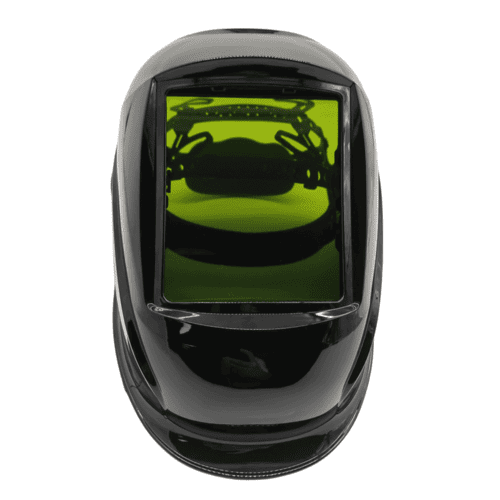
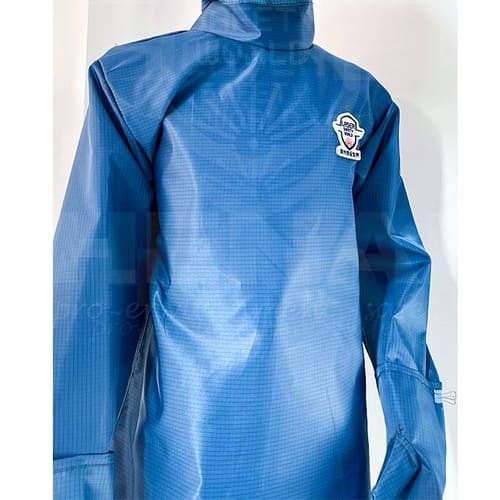
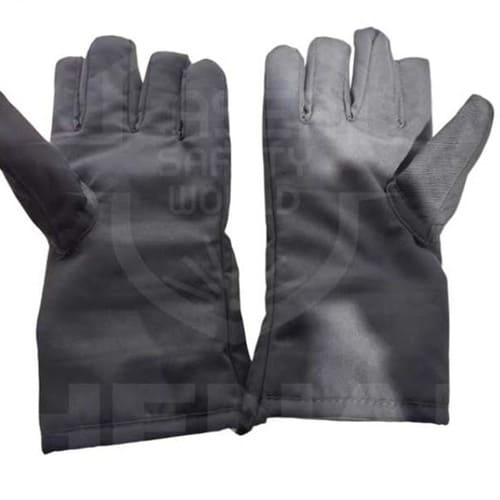
Required Safety Equipment:
- Laser safety glasses (OD 5+ for 1064nm wavelength)
- Long sleeves and pants (no exposed skin)
- Proper ventilation or fume extraction
- Fire extinguisher nearby
Safety Protocols:
- Never look directly at the laser beam
- Keep bystanders outside the work area
- Use proper signage during operation
- Follow manufacturer guidelines precisely
Environmental Impact: Is Laser Cleaning Eco-Friendly?
Yes—laser cleaning is among the most environmentally responsible restoration methods:
Environmental Factor | Laser | Sanding | Chemical |
Chemical waste | None | None | Significant |
Airborne particles | Minimal (with extraction) | High dust | Moderate fumes |
Water usage | None | None | Often required |
Disposable materials | None | Sandpaper waste | Container disposal |
Energy consumption | Moderate | Low | Low |
💡 Key Takeaway: Laser cleaning produces no chemical waste and minimal environmental impact—significantly greener than chemical stripping.
FAQ: Is laser wood cleaning safe?
Answer: Yes, when proper protocols are followed. Requirements include laser safety glasses, adequate ventilation, and manufacturer guidelines. Safer than chemical stripping (no toxic fumes) and creates less particulate than sanding.
Frequently Asked Questions
General Questions
A: Laser cleaning removes surface contaminants while preserving the substrate. Laser engraving intentionally removes material to create marks or designs. Cleaning uses lower power and faster movement to avoid material removal.
A: The cleaning itself is permanent—removed coatings don't return. Longevity depends on the protective finish applied afterward. Properly finished and maintained wood can last decades.
A: No—laser cleaning only affects surface coatings. Physical damage requires separate repair. However, laser cleaning often reveals that apparent "damage" was actually coating imperfections.
Technical Questions
A: Most wood types work well. Extra caution needed with very soft woods (balsa, some pines), charred wood (may re-ignite), and extremely thin veneers. Always test first.
A: Yes, with proper fume extraction. Laser cleaning vaporizes coating material, creating particles and gases that should be captured.
A: Laser reveals the wood's natural color beneath coatings—sometimes lighter than aged, coated wood. Minimal color change may occur with aggressive settings, which is why testing is essential.
Business Questions
A: Yes, with sufficient project volume. Equipment typically pays for itself within 4-8 months at 15+ projects monthly. Key success factors: steady client base and appropriate pricing.
A: Rental options exist but are limited for wood-appropriate pulsed lasers. Daily rates: $500-$1,500. For one-time projects, professional service is usually more cost-effective.
The Verdict: Should You Choose Laser Wood Restoration?
After examining the costs, comparisons, and applications, here’s the honest assessment:
Laser Wood Restoration is IDEAL For:
✅ Antique furniture with original value to preserve
✅ Intricate carvings that would be damaged by sanding
✅ Cabinet refinishing projects seeking professional results
✅ Historical preservation requiring non-invasive methods
✅ Multiple coating layers needing efficient removal
✅ Environmentally conscious clients avoiding chemicals
✅ Time-sensitive projects requiring faster completion
Laser Wood Restoration is NOT Recommended For:
❌ Tight budgets under $150 (traditional methods more practical)
❌ Simple flat surfaces where sanding works fine
❌ Disposable furniture not worth the investment
❌ Severely damaged wood needing structural repair first
❌ One-time small projects (service minimums may not justify)
Making Your Decision
Ask yourself:
- Is the piece valuable enough to justify professional restoration?
- Does it have details that traditional methods would damage?
- Is the cost within my budget for this project?
- Am I prioritizing quality over minimum cost?
If you answered “yes” to most of these questions, laser wood restoration is likely your best choice.
Get Your Factory-Direct Quote
Ready to skip the dealer markup? Contact us:
Tell us about your application and we’ll recommend the perfect solution:
Contact Information:
- 📧 Email: [info@chihalo.com]
- 📱 WhatsApp: [+86 18608325040]
Our technical team will respond within 24 hours with personalized recommendations and competitive pricing.