
Wood Laser Cleaning Machine: Remove Paint & Restore Wood Without Damage

Hi! I am Dawn. With 10 years of field experience, I specialize in laser cleaning systems—from optical sourcing to automation. I write here to turn complex specs into actionable buying guides.
Table of Contents
Quick Facts: Wood laser cleaning machines use precision pulsed laser beams to remove paint, varnish, mold, and stains from wood surfaces without chemicals or damage to the substrate. Prices range from $5,599 to $18,000+ depending on power level (100W-1000W). Ideal for furniture restoration, antique conservation, and industrial wood surface preparation.
See It In Action: Before & After Results
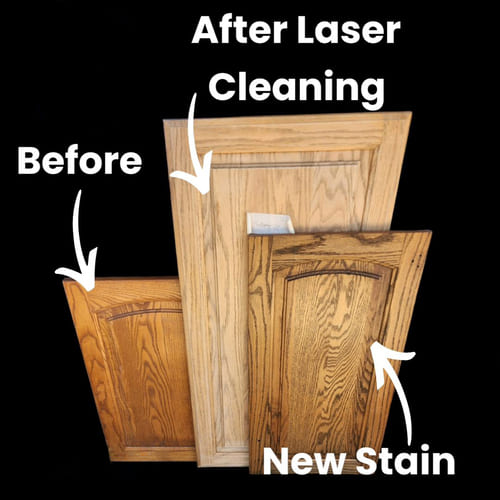
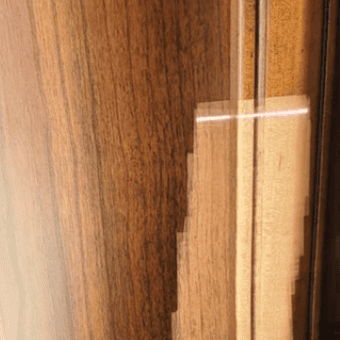
Nothing proves laser cleaning effectiveness like real results. These images show actual wood surfaces cleaned with our laser machines:
Key observation: Notice how the wood grain remains perfectly intact after laser cleaning. This is impossible to achieve with sandpaper or chemical strippers.
Wood Laser Cleaning Machine Price & Cost Guide
Let’s address the question everyone asks first: How much does it cost?
Price by Power Level (2026 Market Prices)
Power | Price Range (USD) | Best For | Cleaning Speed |
100W | $4,599 – $6,000 | Small projects, delicate antiques | 5-10 m²/hour |
200W | $7,000 – $9,500 | Home workshops, furniture restoration | 10-20 m²/hour |
300W | $8,000 – $11,500 | Professional restoration services | 20-35 m²/hour |
500W | $15,000 – $20,000 | Commercial operations, high volume | 35-50 m²/hour |
1000W | $28,000 – $35,000 | Industrial applications, large surfaces | 50-100 m²/hour |
Factory-direct pricing available — contact us to save 15-30% compared to retail.
Total Cost of Ownership: Laser vs Traditional Methods
Many buyers only look at the upfront cost. Here’s the real comparison over 5 years:
Cost Factor | Laser Cleaning | Sandblasting | Chemical Stripping |
Equipment Cost | $8,000 (one-time) | $2,000 (one-time) | $500 (one-time) |
Consumables/Year | $0 | $3,000 (media) | $2,500 (chemicals) |
Labor Hours (same job) | 1 hour | 4 hours | 6 hours |
Waste Disposal/Year | $0 | $1,500 | $2,000 |
Maintenance/Year | $200 | $800 | $300 |
5-Year Total Cost | $9,000 | $23,500 | $24,500 |
Bottom line: Laser cleaning pays for itself within 18-24 months for regular users.
ROI Calculator Example
For a furniture restoration business doing 20 pieces per month:
- Traditional method: 4 hours × $50/hour × 20 pieces = $4,000/month labor
- Laser method: 1 hour × $50/hour × 20 pieces = $1,000/month labor
- Monthly savings: $3,000
- Annual savings: $36,000
- Machine cost: $8,000
- ROI achieved: 2.7 months
Which Power Level Do You Need?
Choosing the right power level is the most important decision. Use this guide:
Quick Selection Chart
Your Application | Recommended Power | Why |
Delicate antiques / Museum pieces | 100W-200W Pulsed | Maximum control, zero risk |
Furniture restoration / Paint removal | 200W-300W Pulsed | Best balance of speed & safety |
Commercial restoration service | 300W-500W Pulsed | Professional speed, handles variety |
Industrial / High-volume production | 500W-1000W | Maximum throughput |
Mixed materials (wood + metal) | 500W+ adjustable | Versatility for different substrates |
100W-200W: Precision & Safety First
Best for:
- Museum-grade antique restoration
- Delicate veneers and inlays
- Small decorative items
- Beginners learning the technology
Typical results:
- Light paint: 1 coat removed in single pass
- Mold/stains: Complete removal
- Processing speed: 5-20 m²/hour
300W-500W: The Professional Sweet Spot
Best for:
- Furniture restoration businesses
- Cabinet refinishing
- Architectural woodwork
- Mixed project workshops
Why professionals choose this range:
- Handles 90% of wood cleaning jobs
- Fast enough for commercial viability
- Safe enough for valuable pieces
Our Wood Laser Cleaning Machines
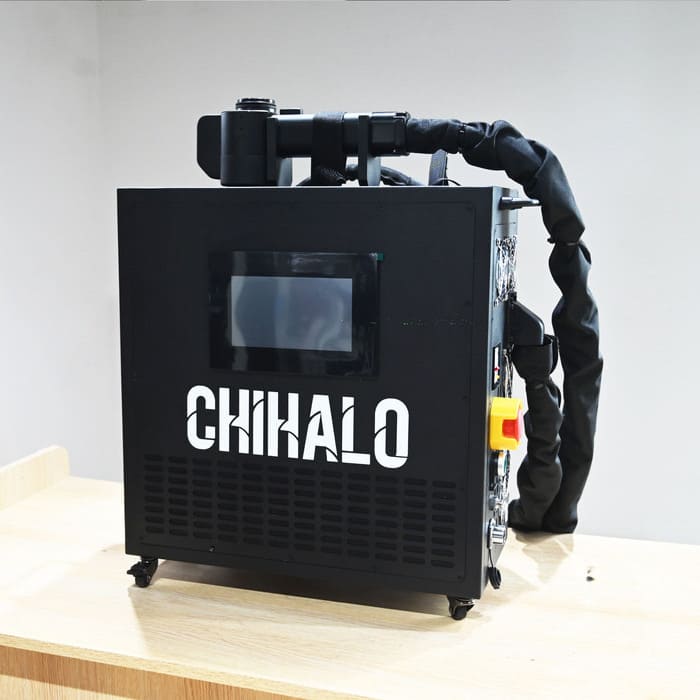
Specifications:
- Power: 200W Pulsed Fiber Laser
- Laser Source: JPT/Raycus (selectable)
- Wavelength: 1064nm
- Pulse Frequency: 1-4000 kHz
- Cleaning Width: 10-160mm adjustable
- Cooling: Air-cooled
- Weight: 30kg (portable)
- Lifespan: 100,000+ hours
Key Features:
- ✅ Ideal for wood restoration
- ✅ Handheld gun design (850g)
- ✅ No damage to wood grain
- ✅ Zero consumables
- ✅ 2-year warranty
Price: $8,999 (Factory Direct)
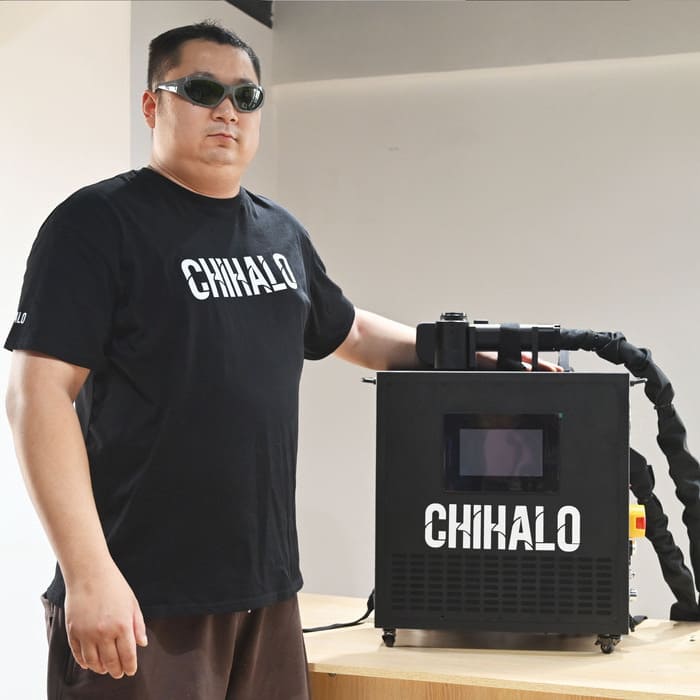
Specifications:
- Power: 500W Pulsed Fiber Laser
- Laser Source: JPT Series
- Wavelength: 1064nm
- Pulse Frequency: 1-4000 kHz
- Pulse Width: 2-500ns adjustable
- Cleaning Width: 10-200mm adjustable
- Cooling: Air-cooled
- Weight: 35kg
- Lifespan: 100,000+ hours
Key Features:
- ✅ Best seller for restoration businesses
- ✅ Handles wood, metal, stone
- ✅ High-speed scanning (30,000mm/s)
- ✅ Ergonomic design for extended use
- ✅ 2-year warranty
Price: $19,999 (Factory Direct)

Specifications:
- Power: 1000W (Pulsed or CW selectable)
- Laser Source: JPT
- Wavelength: 1064nm
- Cleaning Width: 10-300mm adjustable
- Cooling: Water-cooled
- Weight: 120kg
- Automation: Robot integration ready
Key Features:
- ✅ Maximum cleaning speed
- ✅ 24/7 industrial operation
- ✅ Dual-mode (pulsed/CW)
- ✅ PLC automation compatible
- ✅ 2-year warranty + 5-year laser source
Price: $30,000 (Factory Direct)
Quick Model Comparison
Feature | CHL-M200 | CHL-M500 | CHL-M1000 |
Power | 200W | 500W | 1000W |
Speed | 20 m²/h | 50 m²/h | 100 m²/h |
Cooling | Air | Air | Water |
Portability | ★★★★★ | ★★★★☆ | ★★☆☆☆ |
Wood Safety | ★★★★★ | ★★★★★ | ★★★★☆ |
Price | $8,999 | $19,999 | $29,999 |
Best For | Antiques | General | Industrial |
What Can You Clean? Real Application Examples
Paint & Varnish Removal
Wood laser cleaners excel at removing all types of coatings:
Removable coatings:
- Oil-based paints (all thicknesses)
- Water-based paints
- Spray paint / aerosol
- Varnish and lacquer
- Polyurethane finishes
- Shellac
- Wood stains
Real example: A restoration company removed 6 layers of lead paint from a Victorian-era staircase in 3 hours. Traditional methods would have taken 2+ days with significant health risks.
Mold, Mildew & Stain Removal
Laser cleaning penetrates where chemicals cannot:
Removable contamination:
- Surface mold and mildew
- Deep-set mold staining
- Water stains and rings
- Smoke and fire damage
- UV weathering/graying
- Oxidation layers
Advantage over chemicals: Chemical mold removers only kill surface mold. Laser cleaning vaporizes mold completely—including spores embedded in wood pores—without introducing moisture that could cause re-growth.
Glue, Adhesive & Residue Cleaning
Removable substances:
- Wood glue (PVA, animal, epoxy)
- Contact cement
- Tape residue
- Sticker adhesive
- Label backing
- Industrial coatings
Why laser beats solvents: Solvents can soak into wood grain, causing swelling and discoloration. Laser cleaning works only on the surface layer—no penetration, no damage.
Fire & Smoke Damage Restoration
Treatable damage:
- Surface charring (light)
- Smoke staining
- Soot deposits
- Creosote buildup
- Heat discoloration
Real example: After a kitchen fire, laser cleaning restored smoke-damaged oak cabinets that the insurance company had written off as total losses. Saved $15,000 in replacement costs.
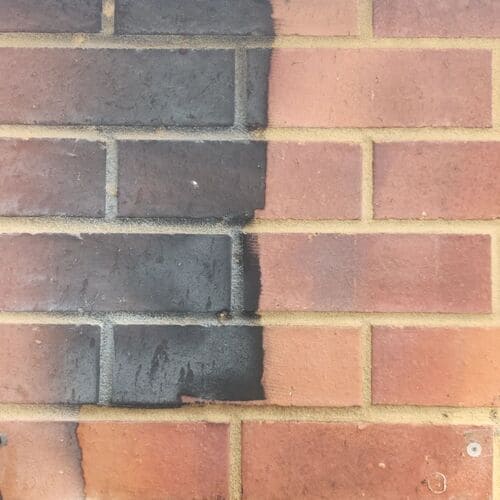
Laser Cleaning vs Traditional Methods: Complete Comparison
Factor | Laser Cleaning | Sandpaper/Sanding | Chemical Strippers | Sandblasting |
Wood Damage Risk | None | High (scratches) | Medium (grain raising) | High (erosion) |
Precision Control | Excellent | Poor | Poor | Poor |
Speed (per m²) | 10-30 min | 60-120 min | 30-60 min + dry | 15-30 min |
Consumables | None | Paper, pads | Chemicals | Media, parts |
Health Hazards | Minimal | Dust inhalation | Chemical fumes | Silicosis risk |
Environmental Impact | Zero waste | Dust, paper | Chemical disposal | Media disposal |
Antique Safe? | Yes | No | Risky | No |
Initial Cost | High | Low | Low | Medium |
Long-term Cost | Very Low | Medium | High | High |
When to Choose Laser Cleaning
✅ Choose laser when:
- Working with valuable or antique pieces
- Precision matters more than speed
- Environmental compliance is required
- Repeatability and consistency are important
- Long-term cost savings are a priority
Who Uses Wood Laser Cleaners?
Restoration Professionals
- Typical users: Furniture restorers, antique dealers, refinishing specialists
- Business impact: Restoration businesses report 50-70% reduction in prep time, allowing more projects and higher revenue.
Museum Conservators
- Typical users: Museum conservation departments, art restoration studios, archaeological teams
- Why museums choose laser: The non-contact, non-chemical nature meets strict conservation ethics and reversibility standards.
Furniture Manufacturers
- Typical users: Custom furniture makers, cabinet shops, millwork companies
- Production impact: Eliminates sanding dust, improves finish adhesion, reduces rework rates.
DIY & Home Renovators
- Typical users: Serious DIY enthusiasts, house flippers, home workshop owners
- Entry point: The 200W models make professional results accessible to dedicated hobbyists.
How Laser Cleaning Works: Technical Deep-Dive
The Science Behind Laser Wood Cleaning
Wood laser cleaning operates on a principle called selective absorption:
- Laser beam emission:The fiber laser generates concentrated light at 1064nm wavelength
- Selective absorption:Contaminants (paint, rust, mold) absorb this wavelength strongly; wood absorbs it minimally
- Rapid heating:Absorbed energy heats contaminants to thousands of degrees in nanoseconds
- Ablation:Contaminants vaporize, fracture, or spall off the surface
- Substrate protection:Wood stays cool because it reflects/transmits most of the laser energy
Pulsed vs Continuous Wave Lasers for Wood
This is the most important technical distinction for wood applications:
Pulsed Lasers (Recommended for Wood)
How they work: Deliver energy in extremely short bursts (nanoseconds) with rest periods between pulses.
Advantages for wood:
- Precise heat control
- Contamination removed before heat spreads
- No thermal damage to substrate
- Adjustable pulse parameters for fine-tuning
Continuous Wave Lasers
Wood applications: Generally NOT recommended except for very thick coatings on thick wood or industrial applications where some surface effect is acceptable.
Risk: Continuous heat input can scorch, discolor, or damage wood surfaces.
Our recommendation: For wood cleaning, always choose pulsed laser technology.
Safety Parameters for Wood
Parameter | Safe Range for Wood | Risk if Exceeded |
Power density | <10 J/cm² | Scorching, charring |
Pulse duration | 10-200ns | Heat accumulation |
Repetition rate | 20-200kHz | Surface overheating |
Scan speed | >1000mm/s | Localized burning |
Best practice: Always test on a hidden area first, starting with lower power settings.
Buyer's Checklist: 7 Things to Verify Before Purchase
Laser cleaning is safe when proper precautions are followed. This equipment is non-negotiable:
✅ 1. Laser Type Verification
☐ Confirm it’s a pulsed fiber laser (not CW for wood work)
☐ Check pulse width range (2-500ns is ideal)
☐ Verify frequency adjustability (1-4000kHz recommended)
✅ 2. Laser Source Quality
☐ Identify the laser source brand (JPT, Raycus, MAX, IPG)
☐ Confirm warranty on laser source specifically
☐ Ask about expected lifespan (should be 100,000+ hours)
✅ 3. Cleaning Head Design
☐ Check weight (under 1kg for extended handheld use)
☐ Verify cable length (5m minimum recommended)
☐ Confirm safety interlock features
✅ 4. Control System
☐ Interface language options
☐ Parameter preset storage
☐ Ease of adjustment during operation
✅ 5. Cooling System
☐ Air-cooled vs water-cooled (match to your power needs)
☐ Operating temperature range
☐ Humidity requirements
✅ 6. Safety Certifications
☐ CE certification (required for EU)
☐ FDA registration (required for US)
☐ ISO compliance documentation
✅ 7. After-Sales Support
☐ Warranty terms (machine and laser source separately)
☐ Technical support availability
☐ Parts availability and lead times
☐ Training included?

Frequently Asked Questions
A: No, when using correct parameters. Pulsed fiber lasers at 1064nm wavelength are selectively absorbed by contaminants (paint, mold, stains) while wood reflects most of the energy. The key is using pulsed lasers (not continuous wave) and starting with conservative settings. In over 10,000 wood cleaning applications, we've seen zero substrate damage when guidelines are followed.
A: Wood laser cleaning machines effectively remove: all paint types (oil, latex, spray, lead-based), varnish, lacquer, shellac, polyurethane, mold, mildew, fungal stains, water stains, smoke damage, soot, glue and adhesive residue, oxidation, UV weathering, and graffiti.
A: Yes, laser cleaning is the preferred method for museum-grade conservation work worldwide. Major institutions including the Smithsonian, British Museum, and Louvre use laser cleaning for wooden artifacts. The non-contact, non-chemical process meets strict conservation ethics because it's reversible and doesn't introduce foreign materials.
A: Pulsed lasers deliver energy in short bursts (nanoseconds), allowing precise heat control—essential for wood. Continuous wave (CW) lasers output constant energy, creating heat buildup that can damage wood. For wood cleaning, pulsed lasers are strongly recommended. CW lasers are better suited for heavy rust removal on thick metal.
A: 2025 market prices: 100W entry models: $3,599-$5,000; 200W professional: $5,000-$7,500; 300W commercial: $7,000-$9,500; 500W industrial: $9,000-$12,000; 1000W heavy-duty: $12,000-$18,000+. Factory-direct pricing can save 15-30%. Contact us for custom quotes.
A: Power recommendations by application: Light paint (1-2 coats): 100-200W; Standard paint (3-5 coats): 200-300W; Heavy/industrial coatings: 300-500W; High-volume production: 500W+. When in doubt, start lower. You can always increase power, but you can't undo damage from excessive power.
A: Cleaning speed by power level: 100W: 5-10 m²/hour; 200W: 10-20 m²/hour; 300W: 20-35 m²/hour; 500W: 35-50 m²/hour; 1000W: 50-100 m²/hour. Actual speed depends on contamination type and thickness. Light stains clean faster than thick paint layers.
A: Laser cleaning has minimal ongoing costs: Electricity: ~$0.50-2.00/hour of operation; Protective lens replacement: ~$50 every 6-12 months; No media, chemicals, or disposal costs. Compare this to sandblasting ($3,000+/year in media) or chemical stripping ($2,500+/year in chemicals and disposal).
A: Basic operation can be learned in 1-2 hours. Our machines include: comprehensive user manual, video training tutorials, free online training session, and intuitive control interface. No specialized certifications required. For optimal results with valuable items, we recommend starting with practice pieces.
A: Required safety measures: laser safety goggles (1064nm specific, included with machine), proper ventilation or fume extraction, safety interlocks (built into our machines), operator training on safe procedures. Our machines comply with CE, FDA, and IEC 60825-1 laser safety standards.
A: Yes, wood laser cleaners work on multiple materials: metals (rust, paint, oxide removal), stone and masonry, concrete, ceramics, and some plastics. This versatility makes them valuable for mixed-material workshops and restoration services.
A: Minimal maintenance schedule: Weekly—clean protective lens; Monthly—check optical alignment; Annually—professional calibration (recommended). Fiber laser sources require no alignment, no gas fills, and no consumable parts. Expected laser lifespan: 100,000+ hours (11+ years at 8 hours/day).
Get Your Factory-Direct Quote
Ready to skip the dealer markup? Contact us:
Tell us about your application and we’ll recommend the perfect solution:
Contact Information:
- 📧 Email: [info@chihalo.com]
- 📱 WhatsApp: [+86 18608325040]
Our technical team will respond within 24 hours with personalized recommendations and competitive pricing.