
UV Laser Marking Machines

Hi! I am Dawn. With 10 years of field experience, I specialize in laser cleaning systems—from optical sourcing to automation. I write here to turn complex specs into actionable buying guides.
Table of Contents
A UV laser marking machine is an industrial marking system that uses 355nm ultraviolet wavelength to create permanent, high-contrast marks through a “cold marking” photolytic process — without heat damage. Unlike fiber or CO2 lasers that rely on thermal ablation, UV lasers break molecular bonds directly at the atomic level, making them the only laser type capable of marking glass without cracking and heat-sensitive plastics without burning or discoloration.
Quick facts about UV laser marking:
- Wavelength:355nm (ultraviolet spectrum)
- Spot size:10-20μm (30x smaller than CO2 lasers)
- Process:Cold/photolytic marking (no heat affected zone)
- Best for:Glass, plastics, medical devices, electronics, ceramics
- Price range:$8,000 – $60,000+ depending on power and configuration
UV Laser Marking Machine Models & Pricing
Choose the right UV laser system for your production needs:
UV-3S Desktop Series | 3W-5W | Starting at $8,000
Best for: Small businesses, R&D labs, prototyping, low-volume production
Specification | Value |
Power Options | 3W, 5W |
Marking Area | 110×110mm |
Best Materials | Plastics, glass, coated metals |
Cooling | Air-cooled |
Footprint | Compact desktop (600×500mm) |
Ideal if you need: Prototyping, small batch marking, testing UV capabilities before scaling.
UV-5P Professional Series | 5W-10W | Starting at $18,000
Best for: Production environments, precision marking, medical device manufacturing
Specification | Value |
Power Options | 5W, 10W |
Marking Area | 175×175mm (300×300mm optional) |
Best Materials | Glass, all plastics, PCBs, medical devices |
Features | Autofocus, red light preview, industrial I/O |
Cooling | Air-cooled (water-cooled optional for 10W) |
⭐ Most Popular Choice — Covers 80% of industrial applications
Ideal if you need: Production-ready marking for electronics, medical devices, consumer products.
UV-10X Industrial Series | 10W-15W | Starting at $35,000
Best for: High-volume manufacturing, 24/7 operation, automation integration
Specification | Value |
Power Options | 10W, 15W |
Marking Area | Up to 300×300mm |
Best Materials | All materials including reflective metals |
Features | Water cooling, automation I/O, vision system ready |
Duty Cycle | Continuous 24/7 operation |
Ideal if you need: High-speed marking integrated into automated production lines.
Model Comparison Table
Model | Power | Marking Area | Best For | Speed | Price Range |
UV-3S | 3-5W | 110×110mm | R&D, small batch | Standard | $8,000-15,000 |
UV-5P | 5-10W | 175×175mm | Production, precision | Fast | $18,000-30,000 |
UV-10X | 10-15W | 300×300mm | High-volume, 24/7 | Fastest | $35,000-60,000 |
Not sure which model? Get a free consultation — our engineers will recommend the right system based on your materials and production volume.
Why Choose UV Laser Marking?
UV laser marking solves three critical problems that other marking technologies cannot:
1. Damage-Free Marking on Heat-Sensitive Materials
UV laser marking uses “cold marking” technology. The 355nm wavelength breaks molecular bonds through photolytic reaction rather than heat, resulting in:
- ✅ No heat-affected zone (HAZ)— Materials maintain structural integrity
- ✅ No burning or discoloration— Clean, professional marks every time
- ✅ No micro-cracking— Essential for glass and brittle materials
- ✅ No warping— Critical for thin plastics and films
Real-world example: Medical device manufacturers choose UV lasers because marks must survive autoclave sterilization at 134°C without degradation. Heat-based marking creates stress points that fail during repeated sterilization cycles.

2. Ultra-High Precision (10μm Spot Size)
The UV laser beam focuses to just 10-20μm — that’s 3x smaller than fiber lasers and 30x smaller than CO2 lasers.
Laser Type | Spot Size | Minimum Line Width | Precision Level |
UV Laser (355nm) | 10-20μm | 0.01mm | Highest |
Fiber Laser (1064nm) | 30-50μm | 0.03mm | High |
CO2 Laser (10,600nm) | 100-300μm | 0.1mm | Standard |
What this enables:
- Mark QR codes on 3mm electronic components
- Add serial numbers to microchips and connectors
- Create detailed logos on jewelry and precision parts
- Achieve marking precision impossible with other laser types
3. Universal Material Compatibility
UV wavelength has extremely high absorption across virtually all materials:
Material Category | UV Laser Performance | Other Lasers |
Glass | ✅ Only laser that works without cracking | ❌ Crack or can’t mark |
Clear plastics | ✅ High contrast on transparent materials | ⚠️ Poor visibility |
White plastics | ✅ Excellent dark marks | ⚠️ Low contrast |
Reflective metals | ✅ Copper, gold, silver — no reflection issues | ⚠️ Reflection problems |
Sensitive materials | ✅ Silicone, rubber, thin films | ❌ Heat damage |
Bottom line: One UV laser marking machine can replace multiple marking systems, reducing equipment investment and floor space requirements.

Materials Compatible with UV Laser Marking
Glass and Ceramics
UV laser is the only laser type that reliably marks glass without cracking.
Material | Marking Effect | Typical Applications |
Borosilicate glass | Frosted white, smooth finish | Lab equipment, medical vials |
Soda-lime glass | Frosted white | Bottles, containers, cosmetic packaging |
Quartz glass | Fine frosted detail | Optical components, semiconductors |
Ceramics | High contrast white | Electronic substrates, insulators |
Crystal | Precision engraving | Awards, luxury gifts |
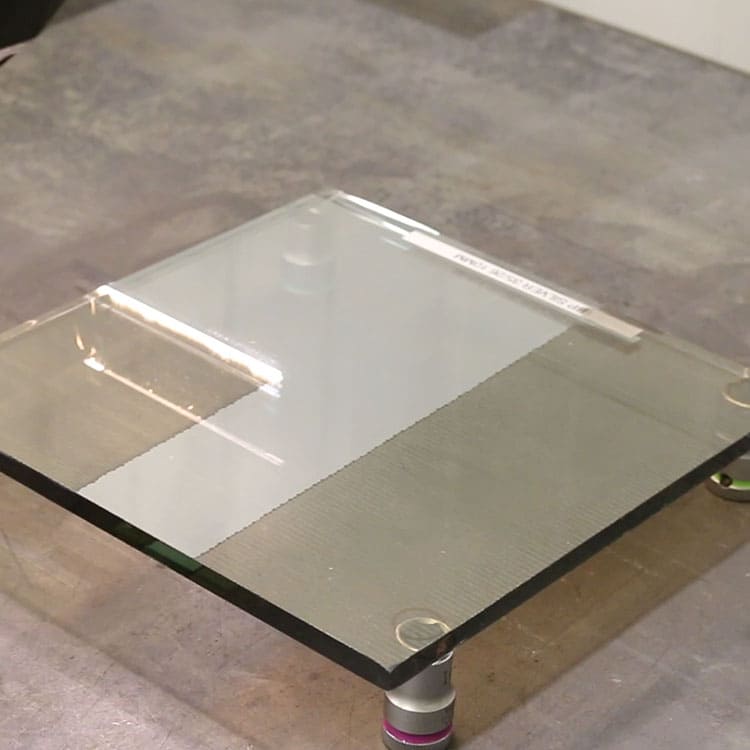
Why UV works on glass: Glass absorbs 355nm UV wavelength at over 90% efficiency. The photolytic process vaporizes microscopic surface particles, creating a frosted appearance without thermal stress that causes cracking in CO2 laser marking.
Plastics and Polymers
UV lasers produce high-contrast marks on plastics without burning, melting, or yellow discoloration.
Plastic Type | Marking Result | Typical Applications |
ABS | Color change (dark on light) | Electronic housings, automotive interior |
PC (Polycarbonate) | White/gray marking | Medical devices, safety equipment |
PE/PP | Surface color change | Packaging, food containers |
PVC | High contrast | Pipes, cable identification |
PEEK | Fine detail marking | Aerospace, medical implants |
Silicone | Color change, no ablation | Baby products, medical seals |
Tritan | Food-safe marking | Water bottles, food containers |
Acrylic (PMMA) | Frosted engraving | Displays, signage |
Nylon | Clean marking | Industrial components |
Key advantage for silicone: UV marking produces color change without removing material — no debris, no cleaning required, no odor. This is impossible with fiber or CO2 lasers.
Metals and Alloys
While fiber lasers dominate metal deep-engraving, UV lasers excel in specific metal applications:
Metal | UV Laser Advantage | Best Applications |
Stainless steel | High-contrast annealing without HAZ | Medical instruments, food equipment |
Aluminum | Clean marking on anodized surfaces | Consumer electronics, aerospace |
Copper/Brass | No reflection issues | PCB, electronics, decorative items |
Gold/Silver | Precision micro-marking | Jewelry, luxury goods |
Titanium | Biocompatible marking | Medical implants, aerospace |
When to choose UV over fiber for metals: When marking anodized surfaces, requiring zero heat input, or marking thin metal parts where heat warping is a concern.
Other Materials
Material | UV Laser Notes |
Wood | Low-heat marking, minimal charring compared to CO2 |
Leather | Clean edges, fine detail without burning |
Paper/Cardboard | No burn-through on thin materials |
PCB substrates | FR4, flexible circuits, no electrical damage |
3D printed parts | Resin, nylon, composites |
Rubber | High contrast without material degradation |
Find Your Solution in 3 Steps
Step 1: What's Your Primary Material?
Your Material | Recommendation |
Glass or ceramics | UV laser is your only reliable option |
Heat-sensitive plastics (medical, thin-wall) | UV laser strongly recommended |
Mixed materials (plastic + metal + glass) | UV laser for versatility |
Metals only (deep engraving needed) | Consider fiber laser instead |
Step 2: What's Your Production Volume?
Daily Volume | Recommended Power | Recommended Model |
Under 100 parts | 3W-5W | UV-3S Desktop |
100-500 parts | 5W-10W | UV-5P Professional |
500+ parts | 10W-15W | UV-10X Industrial |
Step 3: What Content Will You Mark?
Content Type | Minimum Power | Typical Speed |
Text, serial numbers | 3W | 1-3 seconds/mark |
QR codes, 2D barcodes | 3-5W | 2-5 seconds/mark |
Logos, detailed graphics | 5W+ | 5-15 seconds/mark |
Large area marking | 10W+ | Varies by size |
Still unsure? Send us your sample material — we’ll test it free and recommend the exact configuration.
UV Laser vs Fiber Laser vs CO2 Laser
Choosing the wrong laser type wastes money and produces poor results. Here’s the definitive comparison:
Feature | UV Laser (355nm) | Fiber Laser (1064nm) | CO2 Laser (10,600nm) |
Wavelength | 355nm (ultraviolet) | 1064nm (infrared) | 10,600nm (far infrared) |
Marking process | Cold (photolytic) | Hot (thermal) | Hot (thermal) |
Spot size | 10-20μm | 30-50μm | 100-300μm |
Glass marking | ✅ Excellent | ❌ Cannot mark | ⚠️ Cracks easily |
Metal marking | ✅ Good | ✅ Excellent | ❌ Cannot mark |
Plastic marking | ✅ Excellent | ⚠️ Limited types | ✅ Good |
Heat damage risk | Minimal | Moderate | Significant |
Precision | Highest | High | Standard |
Speed on metals | Moderate | Fastest | N/A |
Equipment cost | Higher | Medium | Lower |
Operating cost | Low | Lowest | Low |
Source lifespan | 20,000+ hours | 100,000+ hours | 20,000+ hours |
Quick Decision Guide
✅ Choose UV laser if:
- You need to mark glass, ceramics, or crystal
- You mark heat-sensitive plastics (medical-grade, thin-wall)
- You require ultra-fine precision (< 0.03mm line width)
- You mark transparent or white materials needing high contrast
- Material cannot tolerate heat-affected zones
- You want one machine for multiple material types
✅ Choose fiber laser if:
- You mark metals only (steel, aluminum, brass)
- You need deep engraving into metal surfaces
- Maximum marking speed on metals is priority
- Lowest operating cost is primary concern
✅ Choose CO2 laser if:
- You cut and engrave wood, acrylic, leather
- You mark organic materials at high speed
- Lowest equipment investment for non-metals
The verdict: If your application involves ANY glass or heat-sensitive plastics, UV laser is your only viable option. For metal-only applications prioritizing speed and cost, fiber laser is more effective.
Industry Applications
Medical Device Manufacturing
UV laser marking is the gold standard for medical device identification.
Regulatory compliance enabled:
- FDA 21 CFR Part 11 compliant marking
- UDI (Unique Device Identification) code requirements
- EU MDR traceability requirements
- ISO 13485 quality management
Materials commonly marked:
- Surgical instruments (stainless steel, titanium)
- Implantable devices (PEEK, titanium, ceramics)
- Single-use plastics (syringes, tubing, containers)
- Glass vials and ampoules
- Diagnostic device housings
Critical requirement: Marks must survive repeated sterilization:
- ✅ Autoclave (134°C steam) — 1,000+ cycles
- ✅ EtO (ethylene oxide) sterilization
- ✅ Gamma radiation
- ✅ Chemical disinfection
Why UV wins for medical: Cold marking creates no stress points. Marks remain legible after 1,000+ sterilization cycles. Heat-based marking often fails after 100-200 cycles.
Electronics and Semiconductors
UV laser enables traceability on components too small for other marking methods.
Applications:
- PCB board marking (QR codes, lot numbers, date codes)
- IC chip package identification
- Connector and component marking (0402 size and smaller)
- Flexible printed circuits (FPC)
- LED and display components
- Sensor housings
Why UV for electronics: The 10μm spot size allows marking on components as small as 1.0mm × 0.5mm without affecting electrical performance or creating thermal damage to sensitive circuits.
Standards compliance: IPC-610, IATF 16949, AS9100
Automotive Parts
UV laser supports lifetime traceability requirements in automotive manufacturing.
Applications:
- VIN (Vehicle Identification Number) marking
- Component serial numbers for recall management
- Sensor and relay housing identification
- Dashboard button backlight engraving (through-marking)
- Safety system component marking (airbags, seatbelts)
Material challenges solved:
- Mark on black plastic without white residue
- Mark on transparent lenses without distortion
- High contrast on textured surfaces
- No heat damage to electronic components inside housings
Consumer Products and Packaging
UV laser enables brand differentiation and anti-counterfeiting.
Applications:
- Cosmetic bottle personalization (glass and plastic)
- Fragrance bottle decoration
- Food and beverage container date coding
- Promotional product customization
- Gift and award personalization
- Anti-counterfeiting micro-marks
Business advantage: Offer personalization services with instant turnaround. Mark customer names, dates, or custom messages on products at point of sale or fulfillment.
Technical Specifications
Detailed System Specifications
Parameter | UV-3S Desktop | UV-5P Professional | UV-10X Industrial |
Laser type | DPSS UV | DPSS UV | DPSS UV |
Wavelength | 355nm ±1nm | 355nm ±1nm | 355nm ±1nm |
Output power | 3W / 5W | 5W / 10W | 10W / 15W |
Beam quality (M²) | < 1.3 | < 1.2 | < 1.2 |
Pulse frequency | 20-100 kHz | 20-150 kHz | 20-200 kHz |
Pulse width | < 15ns | < 12ns | < 10ns |
Marking speed | Up to 5,000 mm/s | Up to 7,000 mm/s | Up to 10,000 mm/s |
Repeat accuracy | ±0.005mm | ±0.003mm | ±0.002mm |
Minimum line width | 0.02mm | 0.01mm | 0.01mm |
Cooling | Air cooled | Air / Water cooled | Water cooled |
Expected lifespan | >15,000 hours | >20,000 hours | >25,000 hours |
Power supply | 220V/110V, 50/60Hz | 220V/110V, 50/60Hz | 220V/380V, 50/60Hz |
Operating temp | 15-35°C | 15-35°C | 10-40°C |
Humidity | < 70% RH | < 70% RH | < 70% RH |
Lens Options
Focal Length | Marking Area | Working Distance | Best Application |
110mm | 70×70mm | 110mm | Micro-marking, highest detail |
160mm | 110×110mm | 160mm | Small parts, standard detail |
254mm | 175×175mm | 254mm | General purpose (most popular) |
330mm | 220×220mm | 330mm | Larger parts |
420mm | 300×300mm | 420mm | Maximum coverage |
Communication & Integration
- RS232 serial communication
- Ethernet TCP/IP
- USB 2.0
- Digital I/O (24V, 8 inputs / 8 outputs)
- Optional: EtherNet/IP, PROFINET, Modbus TCP
- Vision system integration ready
- Robot/PLC integration support
Why Choose Chihalo?
Proven Performance
- [2000]+ machinesinstalled globally
- [10]+ yearsin laser marking industry
- [1500]+ customersacross [40] countries
- [98]% customer satisfactionrate
Quality Assurance
- ✅ ISO 9001:2015certified manufacturing
- ✅ CE markedfor European compliance
- ✅ FDA registeredfacility (21 CFR 1040.10)
- ✅ Every machine 100% testedbefore shipment
- ✅ Full documentation and calibration certificates
Industry-Leading Warranty & Support
2-Year Comprehensive Warranty
- Full parts and labor coverage
- Laser source included(most competitors exclude this)
- Free software updates during warranty period
- Extendable to 3-5 years
Lifetime Technical Support
- 24/7 remote diagnostics available
- Response within 4 business hours for critical issues
- Free phone and email support — forever
- On-site service available worldwide through partner network
Training Included
- Online video training library (50+ tutorials)
- Live remote training session with application engineer
- On-site training available (various packages)
- Operator certification program
Customer Testimonials
“We switched from inkjet to UV laser marking on our medical devices. Mark quality improved dramatically, and we eliminated $18,000/year in consumable costs. The ROI was under 10 months.”
— Quality Manager, Medical Device Manufacturer, California
“The UV laser is the only solution we found that could mark our glass vials without cracking. We tested 5 different brands — [Your Brand] had the best mark quality and the most responsive support team.”
— Production Engineer, Pharmaceutical Company, New Jersey
“We’ve been running our UV-5P for 3 years, 2 shifts per day, with zero unplanned downtime. The machine paid for itself in the first year through labor savings alone.”
— Operations Director, Electronics Manufacturer, Texas
How to Choose the Right UV Laser Power
Power Selection Matrix
Power | Best Materials | Best Applications | Daily Volume | Price Range |
3W | Most plastics, films, paper | Prototyping, surface marking, small batch | < 100 parts | $8,000-12,000 |
5W | Glass, all plastics, coated metals | General production, precision marking | 100-300 parts | $15,000-22,000 |
10W | Dense plastics, thick materials, metals | High-speed production, deeper marks | 300-800 parts | $28,000-40,000 |
15W | All materials, reflective metals | Maximum speed, 24/7 industrial | 800+ parts | $45,000-60,000 |
Decision Framework
Choose 3W if:
- Primary material is common plastics (ABS, PC, PP)
- Production volume under 100 parts/day
- Marking content is simple (text, basic codes)
- Budget is primary constraint
- You’re testing UV laser for first time
Choose 5W if: ⭐ Most Recommended
- You need to mark glass or ceramics
- Mix of plastic and metal parts
- Production volume 100-500 parts/day
- Require flexibility for multiple applications
- Want best balance of capability and cost
Choose 10W if:
- High-speed production is required
- Marking on thick or dense materials
- Production volume over 500 parts/day
- Need faster cycle times for automation
Choose 15W if:
- 24/7 industrial production environment
- Maximum marking speed is critical
- Challenging materials (highly reflective metals, filled plastics)
- Integration with high-speed automated lines
Free Sample Testing
Unsure about the right power? We offer complimentary sample marking:
- Send usyour material samples (we cover return shipping)
- We testwith multiple power levels and parameters
- You receivemarked samples with detailed parameter recommendations
- We providea customized quote based on actual test results
Frequently Asked Questions
UV laser marking is a permanent marking process that uses 355nm ultraviolet light to create marks through photolytic (cold) processing rather than heat.
The high-energy UV photons directly break chemical bonds in the material surface, causing color change or controlled material modification without significant heat transfer. This is achieved by frequency-tripling a 1064nm infrared laser through nonlinear crystals, which is why UV lasers are called "third harmonic" lasers.
Key characteristics:
- 355nm wavelength (ultraviolet spectrum)
- Cold/photolytic marking process
- No heat-affected zone (HAZ)
- 10-20μm spot size for ultra-fine detail
UV laser marking machines range from $8,000 to $60,000+ depending on power, features, and configuration.
Configuration | Price Range |
3W desktop/entry-level | $8,000 - $15,000 |
5W professional grade | $15,000 - $25,000 |
10W industrial | $25,000 - $40,000 |
15W+ high-power systems | $40,000 - $60,000+ |
Custom automated systems | $50,000 - $100,000+ |
Factors affecting price: Laser power, brand/quality, automation features, software capabilities, included accessories, warranty terms.
Warning: Extremely low-priced machines (under $5,000) often use inferior laser sources with 2,000-5,000 hour lifespans versus 20,000+ hours for quality systems.
Yes. UV laser is the only laser type that can reliably mark glass without cracking.
The 355nm wavelength is absorbed by glass at over 90% efficiency. The photolytic process removes micro-particles through vaporization, not thermal shock, creating a frosted white appearance without thermal stress.
Laser Type | Glass Marking Result |
UV Laser | ✅ Excellent — smooth frosted marks, no cracking |
CO2 Laser | ❌ Causes thermal stress and cracking |
Fiber Laser | ❌ Cannot mark — beam passes through glass |
UV laser produces excellent results on borosilicate glass, soda-lime glass, quartz, crystal, and ceramics.
Quality UV laser sources last 15,000 to 30,000+ hours of operation.
Quality Level | Expected Lifespan | At 8 Hours/Day |
Budget/Entry | 5,000-10,000 hours | 2-3 years |
Professional | 15,000-20,000 hours | 5-7 years |
Industrial | 20,000-30,000 hours | 7-10+ years |
Factors affecting lifespan:
- Operating temperature (optimal: 20-25°C)
- Cooling system maintenance
- Duty cycle (continuous vs. intermittent)
- Power level usage (running at max power reduces life)
Our guarantee: [Your Brand] UV laser sources include 2-year warranty coverage, with industrial-grade sources rated for 25,000+ hours.
Choose UV laser when:
- ✅ Marking glass, ceramics, or crystal
- ✅ Marking heat-sensitive plastics
- ✅ Need ultra-fine precision (< 0.03mm)
- ✅ Marking transparent or white materials
- ✅ Zero heat-affected zone required
- ✅ One machine for multiple material types
Choose fiber laser when:
- ✅ Marking metals only
- ✅ Deep engraving into metal required
- ✅ Maximum speed on metals needed
- ✅ Lowest operating cost priority
Quick rule: If your application involves ANY glass or heat-sensitive plastics, UV is your only option. For metal-only applications, fiber is more cost-effective.
Yes. UV laser marks are permanent and highly resistant to:
- ✅ Chemical exposure (solvents, acids, cleaning agents)
- ✅ Abrasion and mechanical wear
- ✅ UV light and outdoor weathering
- ✅ Temperature extremes (-40°C to +200°C)
- ✅ Sterilization (autoclave, EtO, gamma — 1,000+ cycles)
UV laser marking changes material at the molecular level — it's not a coating, ink, or label that can be removed or fade over time.
Power | Speed vs 3W | Material Capability | Best For |
3W | Baseline | Most plastics, thin materials | Prototyping, small batch |
5W | ~1.5x faster | All plastics, glass, light metals | General production |
10W | ~2.5x faster | Dense materials, thicker parts | High-volume |
15W | ~3x faster | All materials, fastest | Industrial automation |
Note: Higher power doesn't always mean better. For delicate materials like thin plastics or medical films, 3W often produces better results because lower power reduces damage risk.
Recommendation: If unsure, 5W is the safest choice — it handles approximately 80% of applications effectively.
Factor | UV Laser Marking | Inkjet Printing |
Permanence | Permanent, cannot be removed | Can fade, smear, or wipe off |
Consumables | None | Ink, solvents, print heads |
Annual operating cost | ~$500 | $5,000-20,000 |
Mark quality | High contrast, precise | Variable quality |
Speed | 1-5 seconds/mark | Similar |
Material flexibility | Nearly universal | Limited by ink adhesion |
Environmental | No waste, no VOCs | Ink disposal required |
Upfront cost | Higher ($15,000-40,000) | Lower ($5,000-15,000) |
ROI calculation: Despite higher upfront cost, UV laser achieves ROI in 12-24 months through consumable elimination. A facility marking 500 parts/day saves $10,000-15,000 annually on ink costs alone.
UV laser marking machines require minimal maintenance:
Daily (5 minutes):
- Wipe lens with appropriate cleaning tissue
- Check work area for debris
- Verify mark quality on test piece
Weekly (15 minutes):
- Clean galvo mirrors if accessible
- Check cooling system (fan filters or water level)
- Inspect exhaust/fume extraction
Monthly (30 minutes):
- Deep clean optical components
- Check cable connections
- Verify alignment with calibration target
Annually (professional service):
- Full optical path alignment
- Laser power calibration
- Firmware/software updates
No consumables required — unlike inkjet (ink, solvents, print heads) or labeling (rolls, ribbons), laser marking has zero ongoing consumable costs.
Yes, with appropriate equipment:
For cylindrical objects (bottles, tubes, rings):
- Rotary axis attachment
- Continuous 360° marking capability
- Synchronized rotation with galvo scanning
For complex 3D surfaces (spheres, irregular shapes):
- 3-Axis dynamic focusing system
- Real-time focal distance adjustment
- Consistent mark quality across varying heights (±20mm typical)
Our UV-5P and UV-10X models support optional 3D marking heads that automatically map surface geometry and adjust focus point-by-point.
UV laser marking equipment can be used for FDA-compliant medical device marking when proper procedures are followed.
Key compliance points:
- Marking process must be validated per FDA 21 CFR Part 820
- UDI codes must meet FDA formatting requirements
- Marks must remain legible through device lifecycle including sterilization
- Documentation and traceability required
UV laser is preferred for medical devices because:
- Cold marking doesn't affect material biocompatibility
- Marks survive 1,000+ sterilization cycles
- No inks or additives that could contaminate
- Precise enough for small implants and instruments
Our systems include software features supporting FDA 21 CFR Part 11 compliance (audit trails, user authentication, electronic signatures).
Marking speed depends on content complexity and material:
Content Type | Typical Time |
Simple text (10 characters) | 1-2 seconds |
Serial number + date | 2-3 seconds |
QR code (2cm) | 3-5 seconds |
Detailed logo (2cm) | 8-15 seconds |
Data Matrix code | 2-4 seconds |
Maximum galvo scanning speed: Up to 10,000 mm/s (UV-10X model)
Actual throughput depends on marking content, quality requirements, and part handling time. Contact us with your specific requirements for cycle time estimates.
Get Your Free Quote
Ready to improve marking quality and eliminate consumable costs?
Contact us:
Tell us about your application and we’ll recommend the perfect solution:
Contact Information:
- 📧 Email: [info@chihalo.com]
- 📱 WhatsApp: [+86 18608325040]
Our technical team will respond within 24 hours with personalized recommendations and competitive pricing.