Mobile Laser Cleaning: Portable Machines & Professional On-Site Services

Hi! I am Dawn. With 10 years of field experience, I specialize in laser cleaning systems—from optical sourcing to automation. I write here to turn complex specs into actionable buying guides.
Table of Contents
|
KEY FACTS: MOBILE LASER CLEANING AT A GLANCE • Technology: Non-contact laser ablation using 1064nm fiber lasers • Power Range: 50W to 3000W+ (portable backpack to industrial mobile units) • Price Range: $4,000 – $12,000+ depending on power and features • Cleaning Speed: 10-100+ square feet per hour (varies by power and application) • Applications: Rust removal, paint stripping, mold cleaning, weld prep, heritage restoration • Environmental: Chemical-free, no waste media, electricity only |
Mobile laser cleaning is a portable, non-contact surface treatment technology that uses concentrated laser beams to remove rust, paint, coatings, and contaminants from surfaces without chemicals or abrasives.
Unlike stationary industrial systems, mobile laser cleaners can be transported directly to job sites in vehicles or carried by hand. This makes them ideal for on-site maintenance, field repairs, and restoration projects where moving the workpiece is impractical or impossible.
1. Our Mobile Laser Cleaning Solutions
We offer two ways to access mobile laser cleaning technology: purchase equipment for in-house use, or hire our professional on-site service team. Both options deliver the same exceptional cleaning results.
Portable Laser Cleaning Machines for Sale
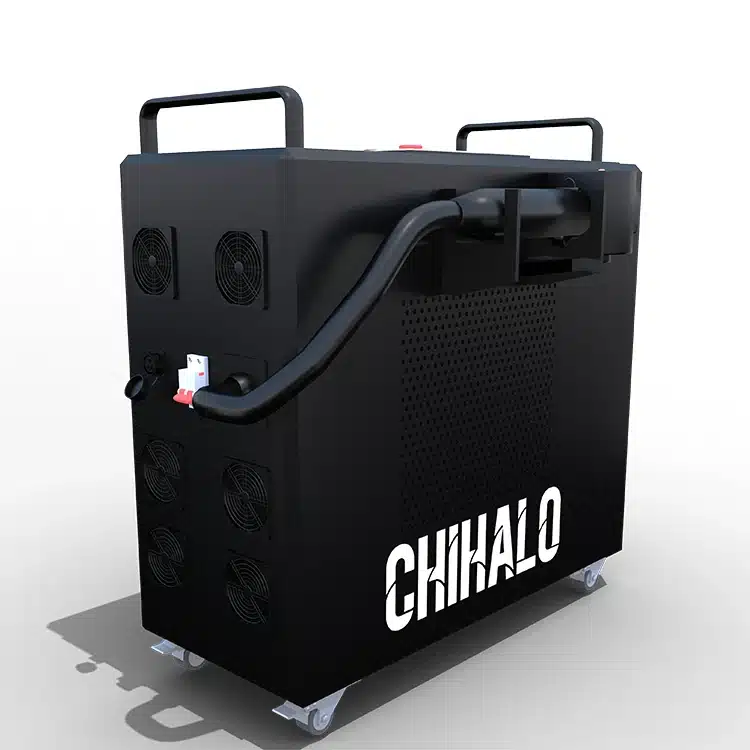
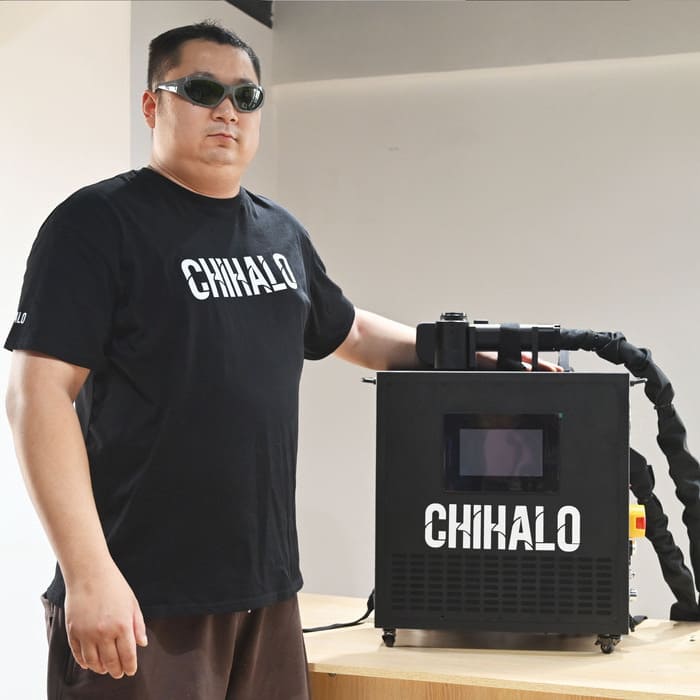
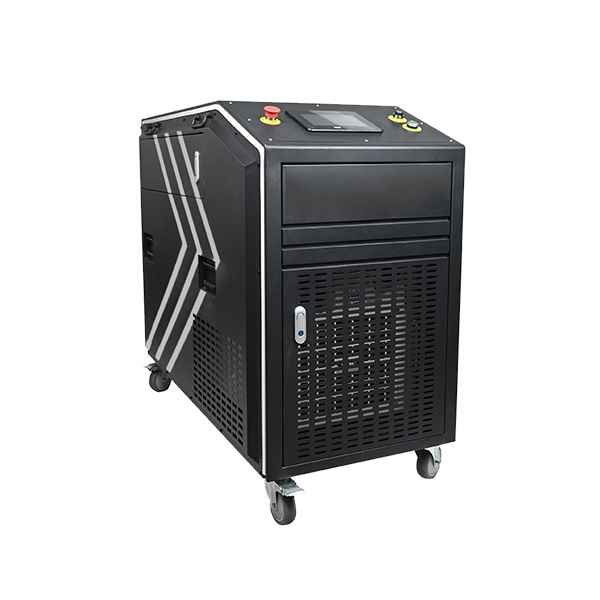
Our portable laser cleaners range from lightweight backpack units to industrial mobile workstations. Each system is designed for specific applications and budgets.
Type | Power | Weight | Best For | Price Range |
MINI Laser | 20-50W | 8-15 kg | Field work, small parts, detail cleaning | $3,000 – $4,000 |
Backpack System | 100-500W | 30 kg | Workshops, automotive, general maintenance | $5,000 – $20,000 |
Mobile CW Laser | 1000-2000W | 100 kg | Industrial scale, heavy rust, large areas | $4,000 – $10,000+ |
Professional On-Site Laser Cleaning Services
For businesses that need occasional cleaning without capital investment, our mobile service team brings professional equipment directly to your location. We serve industrial, commercial, and residential clients.
2. What Can Mobile Laser Cleaning Do?
Mobile laser cleaning removes rust, paint, coatings, grease, oxides, and biological growth from metal, stone, and concrete surfaces. Here are the most common applications:
Rust Removal
Laser rust removal vaporizes iron oxide while leaving base metal intact. The process works on all ferrous metals including steel, stainless steel, cast iron, and iron alloys.
Typical projects: Industrial equipment maintenance, automotive restoration, structural steel bridges, storage tanks, pipelines, and marine vessels.
Speed reference: Light rust: 20-30 sq ft/hour (200W). Heavy rust: 50-100 sq ft/hour (1000W).
Paint and Coating Removal
Laser cleaning strips paint, powder coatings, and protective films without damaging substrates. Unlike sandblasting, you can selectively remove coatings from specific areas.
Typical projects: Aerospace component refinishing, automotive body panels, industrial machinery repainting, aircraft paint stripping, and graffiti removal from buildings.
Other Applications
- Mold and Die Cleaning: Remove residue from injection molds without disassembly. Reduces downtime from days to hours.
- Weld Preparation: Clean base metals before welding for stronger joints. Remove oxidation after welding for better coating adhesion.
- Heritage Restoration: Gently clean historical stone, bronze statues, and architectural metalwork without damaging original surfaces.
- Surface Preparation: Prepare concrete and metal for epoxy coatings, adhesive bonding, and thermal spray coatings.
- Oil and Grease Removal: Degrease engine components, machinery parts, and industrial equipment without solvents.
3. Laser Cleaning vs. Traditional Methods: Which Is Better?
How does mobile laser cleaning compare to sandblasting, chemical stripping, and dry ice blasting?
This comparison helps you choose the right method.
Factor | Laser Cleaning | Sandblasting | Chemical Stripping | Dry Ice Blasting |
Environmental Impact | ★★★★★ No waste, no chemicals | ★★☆☆☆ Dust, media disposal | ★☆☆☆☆ Hazardous waste | ★★★★☆ CO2 sublimates |
Substrate Damage Risk | ★★★★★ Zero – non-contact | ★★☆☆☆ High – abrasive | ★★★☆☆ Medium – etching | ★★★★☆ Low |
Precision & Control | ★★★★★ Micron-level | ★★☆☆☆ Broad only | ★★☆☆☆ Hard to mask | ★★★☆☆ Moderate |
Operating Cost (per job) | ★★★★★ Low – electricity | ★★☆☆☆ Media + disposal | ★★☆☆☆ Chemicals | ★☆☆☆☆ Dry ice expensive |
Initial Equipment Cost | ★★☆☆☆ $5K-$150K+ | ★★★★★ $500-$5K | ★★★★★ $200-$2K | ★★★☆☆ $10K-$50K |
Operator Safety | ★★★★★ Eye protection only | ★★☆☆☆ Full PPE required | ★☆☆☆☆ Chemical hazards | ★★★☆☆ Frostbite risk |
Cleanup Required | ★★★★★ Minimal dust only | ★☆☆☆☆ Extensive | ★☆☆☆☆ Neutralization | ★★★★★ None |
When Should You Choose Laser Cleaning?
Laser cleaning is the best choice when:
- Precision: Precision matters – you need to clean specific areas without affecting surrounding surfaces
- Protection: Surface protection is critical – the substrate cannot tolerate any abrasion or chemical exposure
- Environment: Environmental compliance – your facility has strict regulations or sustainability requirements
- Frequency: High-frequency use – regular cleaning needs make long-term savings more important than initial cost
- Mobility: On-site requirements – equipment cannot be transported to a separate cleaning facility
Choose sandblasting for: very large areas with heavy contamination where precision is not needed and equipment cost must be minimal.
Choose chemical stripping for: complex geometries with specific coating types that respond well to chemical removal.
4. How to Choose a Mobile Laser Cleaner: Complete Buyer's Guide
Follow these five steps to select the right portable laser cleaning system for your needs.
Step 1: Match Power Level to Your Application
Laser power determines cleaning speed and capability. Here’s a quick reference:
- 50-100W: Light surface rust, thin coatings, delicate cleaning: 50-100W pulsed laser
- 100-300W: Moderate rust, paint removal, automotive parts: 100-300W pulsed or CW laser
- 300-1000W: Heavy rust, thick coatings, industrial equipment: 300-1000W CW laser
- 1000W+: Mill scale, large surface areas, production environments: 1000W+ CW laser
Step 2: Understand Pulsed vs. Continuous Wave Lasers
Pulsed lasers deliver energy in short, high-intensity bursts (nanoseconds). They offer precise control and minimal heat input. Best for: delicate surfaces, heritage restoration, electronics, thin materials, and applications requiring fine detail work.
Continuous wave (CW) lasers emit a constant beam for aggressive material removal. They clean faster but generate more heat. Best for: heavy rust, mill scale, thick coatings, and large surface areas where speed is the priority.
Step 3: Consider Your Portability Needs
- Backpack (8-15kg): Fits in car trunk, 6+ hour battery life, carried on shoulder. For: field technicians, remote locations, maximum mobility.
- Trolley (30-60kg): Wheeled for easy movement, fits through standard doors, 4-8 hour continuous operation. For: workshops, factories, on-site service.
- Mobile Workstation (100-300kg): Vehicle-transported, highest power, longest run times. For: industrial facilities, shipyards, large infrastructure.
Step 4: Calculate Your Budget and ROI
| Category | Power | Price Range (USD) | Typical ROI | Best For |
| Entry-Level | 50-100W | $4,000 – $8,000 | 6-12 months | Small shops |
| Mid-Range | 100-500W | $6,000 – $20,000 | 12-18 months | Service businesses |
| Industrial | 1000-3000W | $4,000 – $12,000 | 18-24 months | Manufacturers |
Step 5: Evaluate Service and Warranty
Before purchasing, confirm:
- Minimum 2-year warranty on laser source and components
- Local service availability (not overseas-only support)
- Operator training included or available
- Spare parts availability and lead times
- Technical support response time (same-day ideal)
5. How Does Laser Cleaning Work?
Laser cleaning uses a process called laser ablation to remove unwanted material from surfaces. Here’s how it works:
1.Laser Generation: The laser source generates a focused beam of light at 1064nm wavelength (infrared).
2.Beam Delivery: The beam is directed at the contaminated surface through a handheld scanning head.
3.Energy Absorption: Contaminants (rust, paint, etc.) absorb the laser energy and heat rapidly.
4.Material Removal: The material vaporizes instantly or breaks free due to thermal shock and expansion.
5.Substrate Protection: The base material reflects most laser energy and remains undamaged.
6.Extraction: A fume extraction system captures vaporized particles and dust.
The key principle is selective absorption: contaminants absorb laser energy much more efficiently than clean metal. This allows precise removal of unwanted layers without affecting the base material.
💡 Key Takeaway: Laser cabinet refinishing saves 50-70% compared to replacement and completes 2-3x faster than traditional refinishing.
6. Seven Key Benefits of Mobile Laser Cleaning
- Environmentally Friendly: No chemicals, no blast media, no secondary waste. Only electricity required. Meets ISO 14001 and EPA requirements. Ideal for facilities with strict environmental compliance.
- Zero Substrate Damage: Non-contact process never touches the surface. No abrasive wear, no chemical etching, no heat distortion. Critical for precision components and historical artifacts.
- True Portability: From backpack units that fit in a car trunk to wheeled systems for factory floors. Bring the cleaning to the workpiece instead of moving heavy equipment.
- Precision Control: Adjust parameters for different materials and contamination types. Remove specific layers while preserving others. Clean exact areas without masking.
- Low Operating Costs: No consumable media to purchase. No chemicals to buy and dispose. No waste disposal fees. Only electricity cost. Typical operating cost: $2-5 per hour.
- 5-10x Faster Than Manual Methods: A 500W laser cleans more area per hour than a crew with wire brushes. Add zero setup time, no masking, and no cleanup for even greater productivity gains.
- Safe Operation: Quiet (no hearing protection needed). No silica dust (no respirators). No chemical exposure. Only laser safety eyewear required. Lower insurance and compliance costs.

Frequently Asked Questions
Mobile laser cleaning is a portable surface treatment technology that uses concentrated laser beams to remove rust, paint, coatings, and contaminants without chemicals or abrasives. Unlike stationary industrial systems, mobile units can be transported to job sites for on-site cleaning of equipment, structures, and components that cannot be easily moved.
Portable laser cleaning machines cost between $5,000 and $150,000+ depending on power and features. Entry-level backpack units (50-100W): $5,000-$10,000. Mid-range trolley systems (100-500W): $10,000-$30,000. Industrial mobile workstations (500W+): $30,000-$150,000+. Contact us for current pricing and financing options.
Yes, for most precision applications. Laser cleaning offers zero substrate damage, no waste media, no cleanup, higher precision, and safer operation. However, sandblasting has lower equipment costs and may be faster for very large, heavily contaminated areas where precision is not required.
Laser cleaning works on steel, stainless steel, aluminum, copper, brass, iron, titanium, stone, brick, concrete, and certain plastics. It removes rust, paint, powder coating, grease, oil, oxides, weld residue, mold release agents, and biological growth. The key requirement is that the contaminant absorbs laser energy more efficiently than the substrate.
Yes, laser cleaning is one of the safest industrial cleaning methods. It requires only laser safety eyewear - no respirators, hearing protection, or full-body protective suits. The process is quiet, produces minimal fumes (easily captured by extraction), and poses no chemical exposure risks. All operators should receive laser safety training.
Cleaning speed depends on power and application. A 200W laser cleans 10-20 square feet per hour for moderate rust. A 1000W system processes 50-100+ square feet per hour. Laser cleaning is typically 5-10x faster than manual wire brushing, with additional time savings from zero setup and cleanup requirements.
We offer mobile laser cleaning services throughout [Your Service Region - be specific, e.g., Southern California, the Greater Houston Area, etc.]. Our fully-equipped service vehicles travel to your location for on-site projects of any size. Contact us with your location and project details for availability and pricing.
Light surface rust: 50-100W. Moderate rust on automotive or industrial parts: 100-300W. Heavy rust and mill scale: 300-1000W. Large-scale industrial applications: 1000W+. We recommend a demonstration or sample testing to determine optimal power for your specific application.
Yes, laser cleaning is one of the most environmentally friendly cleaning methods available. It uses no chemicals, produces no secondary waste, requires no water, and generates only minimal airborne particles (easily captured by fume extraction). The only input is electricity. This makes it ideal for facilities with strict environmental regulations.
No, when properly configured. The technology works because contaminants absorb laser energy at different rates than base materials. With correct parameter settings, the laser removes only unwanted layers while leaving substrates completely intact. This makes laser cleaning safe for delicate applications including heritage restoration and precision components.
Pulsed lasers deliver energy in short bursts - ideal for delicate surfaces, precision work, and heat-sensitive materials. Continuous wave (CW) lasers emit a constant beam - better for aggressive rust removal and large surface areas where speed is priority. Pulsed systems offer more control but typically cost more. The choice depends on your specific application.
Laser cleaning machines require minimal maintenance compared to other industrial cleaning equipment: weekly lens inspection and cleaning, periodic protective window replacement, fume extraction filter changes, and occasional calibration checks. There are no consumable media to replenish and no chemicals to manage. Most quality systems include 2-year warranties and lifetime service support.
Business Questions
Get Your Factory-Direct Quote
Ready to skip the dealer markup? Contact us:
Tell us about your application and we’ll recommend the perfect solution:
Contact Information:
- 📧 Email: [info@chihalo.com]
- 📱 WhatsApp: [+86 18608325040]
Our technical team will respond within 24 hours with personalized recommendations and competitive pricing.