
Laser Paint Stripper: Is It Right for Your Project? [2025 Guide]
Dawn Huang
I'm a passionate engineer and the founder of Chihalo Laser Factory. With an M.Sc. from HKU and 10 years in the field, I've mastered the laser craft from the ground up — from selecting parts to automating systems. Here, I translate complex industry updates into actionable knowledge. Join our community to stay ahead!
Table of Contents
A laser paint stripper is a non-contact device that uses pulsed light to vaporize paint from surfaces without damaging the substrate. Cost: $5,000-$40,000. Typical payback: 10-18 months for operations processing 200+ sq ft monthly.
Buy if: High volume (200+ sq ft/month), hazardous coatings, precision requirements
Rent if: One-time project, testing before purchase
Skip if: Under 50 sq ft/month, budget below $3,000
What Is a Laser Paint Stripper?
A laser paint stripper is a non-contact paint removal device that uses high-intensity pulsed light to vaporize coatings from metal and wood surfaces without damaging the underlying material. The process, called laser ablation, heats paint to 2,000-3,000°C in microseconds—so fast that the coating vaporizes while the substrate stays cool and undamaged.
Unlike sandblasting or chemical strippers, laser paint removal produces 90% less waste, works 5-15x faster, and eliminates exposure to toxic chemicals. It’s now the professional standard in industries from aerospace to antique restoration.
If you’re tired of dealing with toxic chemical fumes, hours of manual labor, or the surface damage from sandblasting, laser technology offers a cleaner, faster, and safer alternative. But with machines ranging from $8,000 to over $60,000, the real question is: does it make financial sense for YOUR specific situation?
This guide will help you answer that question with real numbers, honest comparisons, and practical buying advice.
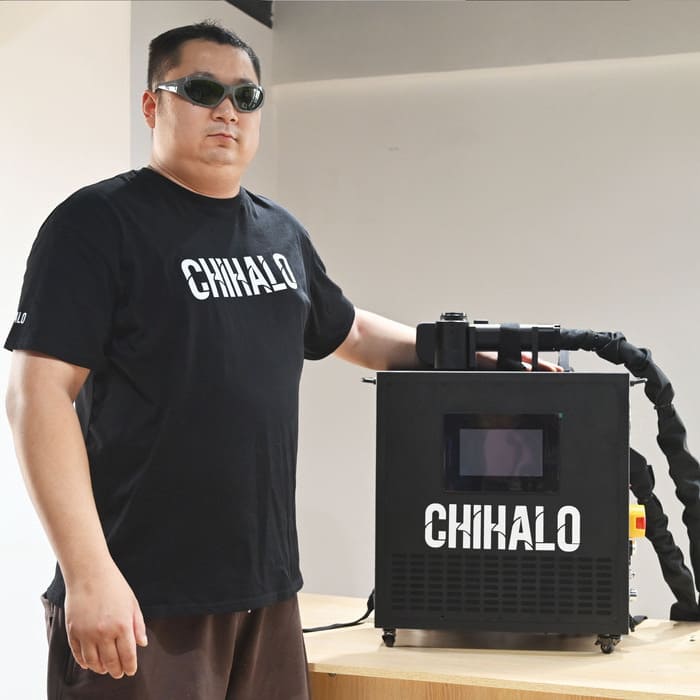
Is a Laser Paint Stripper Worth the Investment?
The short answer: Yes, if your monthly paint removal volume exceeds 200 square feet OR you work with hazardous coatings OR you need precision cleaning on valuable items.
Here’s a quick decision framework:
✅ BUY a Laser Paint Stripper If:
- You process 200+ sq ft of paint removal monthly
- You work with hazardous coatings(lead paint, chromate primers, asbestos-containing materials)
- You need precision cleaningon valuable items (antiques, aerospace parts, cultural artifacts)
- Your facility must meet strict environmental regulations(EPA, OSHA compliance)
- You’re spending $1,500+/monthon chemicals, labor, and waste disposal combined
🔄 RENT a Laser Paint Stripper If:
- You have a one-time large project(ship hull, building renovation)
- You want to test the technologybefore committing to purchase
- Your volume is seasonal or unpredictable
❌ SKIP Laser Paint Stripping If:
- Your monthly needs are under 50 sq ft
- You’re working with non-hazardous paints on simple flat surfaces
- Your budget is below $5,000(entry-level professional units start at $8,000)
- You only strip paint once or twice per year
Who Uses Laser Paint Strippers? (Industry Applications)
Best For These Situations ✓
High-Volume Operations Automotive shops, shipyards, and industrial facilities processing hundreds of square feet monthly see the fastest ROI. One automotive restoration shop we work with reduced their paint prep time by 75% after switching to laser.
Hazardous Coating Removal Lead-based paints, chromate primers, and industrial coatings containing heavy metals require special handling. Laser eliminates the chemical exposure risks and simplifies compliance with hazardous material regulations.
Precision Work on Valuable Items Antique furniture restorers, aerospace maintenance crews, and museum conservators choose laser because it removes coatings without any risk of surface damage. The non-contact process preserves original materials perfectly.
Environmentally-Regulated Facilities Operations that must minimize chemical waste and meet strict environmental standards benefit from laser’s zero-chemical, minimal-waste process.
Welding and Coating Preparation When coating adhesion or weld quality depends on perfectly clean surfaces, laser provides the consistency that sandblasting and chemicals can’t match.
Not Ideal For These Situations ✗
Occasional Small Projects Stripping one chair or a small section of deck every few months doesn’t generate enough savings to justify equipment purchase. Consider renting instead.
Tight Budgets Professional laser strippers start around $8,000. While operating costs are minimal, the upfront investment is significant.
Certain Materials Some thermoplastics can melt. Highly reflective polished metals may require surface preparation. Very thin substrates need careful parameter control.
Untrained Operators Modern machines are user-friendly, but optimal results and safety require proper training. Budget 1-2 days for basic proficiency.
Laser vs Your Current Method: Honest Comparison
The value of laser depends heavily on what you’re replacing. Here’s how it compares to each traditional method:
Laser vs Sandblasting
Sandblasting uses abrasive particles propelled at high speed to physically scrape paint away. It works, but creates problems that laser eliminates entirely.
Factor | Laser Paint Stripper | Sandblasting |
Surface Damage | None (non-contact) | High risk—pitting, profile changes |
Waste Generated | Minimal dust (captured by extraction) | Tons of spent media requiring disposal |
Processing Speed | 10-100 sq ft/hour | 5-15 sq ft/hour |
Precision | Micron-level control | Limited—blast pattern is imprecise |
Health Hazards | Eye protection required | Silicosis risk, severe respiratory hazard |
Cleanup Time | Minutes | Hours |
Consumable Costs | Zero | $200-500/month in media |
Key insight: Laser is 5-15x faster than sandblasting. A job that takes 8 hours with sandblasting can be completed in 30-90 minutes with laser. Plus, you eliminate the massive cleanup and media disposal costs.
Real example: A metal fabrication shop switched from sandblasting to a 1000W laser. Previous sandblasting costs: $450/month in media + $300/month disposal + 20 hours labor. After laser: electricity only ($40/month) + 5 hours labor. Monthly savings: $1,700+.
Laser vs Chemical Strippers
Chemical paint strippers use solvents like methylene chloride, NMP, or caustic solutions to dissolve paint bonds. They’re effective but come with serious drawbacks.
Factor | Laser Paint Stripper | Chemical Strippers |
Toxic Chemical Exposure | Zero | High—fumes, skin contact risks |
Waste Disposal | Simple dust collection | Hazardous waste disposal required |
Surface Residue | Clean, ready for coating | Requires thorough rinsing |
Processing Time | Minutes per piece | Hours to days (dwell time required) |
Substrate Safety | Safe for all metals | Can corrode aluminum, damage wood grain |
Regulatory Compliance | Simple | Complex OSHA/EPA requirements |
Key insight: Laser produces 90% less hazardous waste than chemical stripping. For facilities handling lead paint or industrial coatings, this dramatically simplifies compliance and reduces liability.
Real example: A furniture restoration business was spending $400/month on chemical strippers plus $300/month on hazardous waste disposal. After switching to a 200W pulse laser, their only ongoing cost is approximately $30/month in electricity. Annual savings: $8,000+.
Laser vs Heat Guns and Manual Scraping
For small DIY projects, heat guns and scrapers seem economical. But they’re extremely slow and create significant lead paint exposure risks.
Factor | Laser Paint Stripper | Heat Gun + Scraper |
Speed | 10-100 sq ft/hour | 0.5-2 sq ft/hour |
Labor Intensity | Low—point and scan | High—manual scraping |
Lead Paint Safety | Contained, extracted | Airborne particles, high exposure risk |
Surface Quality | Pristine, consistent | Gouges, scratches common |
Operator Fatigue | Minimal | Severe on large projects |
Key insight: Laser is 20-50x faster than manual methods. For any project larger than a single piece of furniture, the time savings alone can justify renting a laser unit.
Real Cost Breakdown: What You'll Actually Pay
Understanding true cost requires looking beyond the machine price tag. Here’s the complete picture.
Machine Cost by Application
Power Level | Price Range | Best Applications | Typical Buyers |
100-200W (Pulse) | $8,000-$15,000 | Small parts, wood, precision detail work | Restorers, small workshops, artisans |
300-500W (Pulse/CW) | $12,000-$25,000 | General industrial, automotive parts | Auto shops, fabricators, mid-size operations |
1000-1500W (CW) | $20,000-$40,000 | Large surfaces, production environments | Shipyards, aerospace, heavy equipment |
2000-3000W (CW) | $35,000-$60,000+ | Maximum throughput, automation integration | Large manufacturing facilities |
Operating Costs: The Hidden Advantage
Laser’s biggest financial advantage is what you don’t pay for:
Consumables: $0/month Unlike sandblasting ($200-500/month in media) or chemicals ($300-800/month), laser uses only electricity. No ongoing material costs.
Maintenance: $500-1,500/year Annual maintenance includes optical cleaning and occasional part replacement. Compare to sandblasting equipment requiring frequent nozzle replacement, compressor maintenance, and media handling systems.
Electricity: $30-50/month typical A 1000W laser running 6 hours daily costs approximately $40/month in electricity (at $0.12/kWh). Even heavy use rarely exceeds $100/month.
Waste Disposal: $0-100/month Laser produces only small amounts of dust captured by the extraction system. Chemical stripping can cost $2,000-10,000/year in hazardous waste disposal alone.
ROI Calculator: When Does It Pay Off?
Let’s calculate payback for a real scenario—a fabrication shop currently using chemical stripping:
Cost Category | Current: Chemical Stripping | After: Laser (500W unit) |
Equipment | N/A | $18,000 (one-time) |
Chemicals/Media | $400/month | $0 |
Labor (stripping) | $1,600/month (8 hrs/week × $50/hr) | $400/month (2 hrs/week) |
Waste Disposal | $300/month | $0 |
PPE/Safety Equipment | $100/month | $25/month |
Electricity | $20/month | $45/month |
Maintenance | $50/month | $75/month |
Monthly Total | $2,470 | $545 |
Monthly Savings: $1,925 Payback Period: 9.4 months Year 2+ Annual Savings: $23,100
Data based on customer surveys conducted by [Your Company], 2024. Individual results vary based on volume, coating types, and labor costs.
Quick Payback Estimator
Use this formula to estimate your payback period:
Payback (months) = Machine Cost ÷ (Current Monthly Costs – Laser Monthly Costs)
Rule of thumb: If your payback is under 18 months, laser is almost certainly the right choice. Under 12 months, it’s a clear win.
How Laser Paint Stripping Works (Technical Overview)
The 60-Second Explanation
Pulsed light hits the surface — The laser fires 20,000-200,000 pulses per second, each lasting only 100-200 nanoseconds.
Paint absorbs energy rapidly — The coating heats to 2,000-3,000°C in microseconds—too fast for heat to transfer to the substrate.
Ablation occurs — Paint molecules vaporize (sublimate) directly from solid to gas, ejecting from the surface.
Extraction captures particles — A fume extraction system removes vaporized paint particles, keeping the air clean.
Substrate stays cool — Because energy delivery is so fast and precise, the metal or wood beneath barely warms up.
Why It Doesn't Damage the Substrate
Every material has two critical thresholds:
- Cleaning Threshold:The energy density needed to vaporize the coating (typically 1-5 J/cm² for most paints)
- Damage Threshold:The energy density that would harm the substrate (10+ J/cm² for steel, lower for wood)
Laser parameters are set to exceed the cleaning threshold while staying well below the damage threshold. This “processing window” is why laser can remove paint without touching the base material.
For wood specifically: The processing window is narrower. Pulse lasers are essential because they deliver energy in short bursts, preventing heat accumulation that would scorch the wood. Continuous wave lasers on wood often cause burning.
Material Compatibility Guide
Metals: Excellent Results
Laser paint strippers excel on virtually all metals:
Metal | Performance | Notes |
Steel / Stainless Steel | ★★★★★ Excellent | Ideal substrate. Removes paint, rust, oxide layers cleanly. |
Aluminum | ★★★★★ Excellent | Widely used in aerospace. No risk of warping. |
Copper / Brass | ★★★★☆ Very Good | May need parameter adjustment for reflective surfaces. |
Cast Iron | ★★★★★ Excellent | Perfect for engine blocks, machinery, industrial equipment. |
Galvanized Steel | ★★★★☆ Very Good | Can remove paint while preserving zinc coating if desired. |
Wood: Good Results with Proper Technique
Wood requires more careful parameter control but delivers excellent results with pulse lasers:
Wood Type | Performance | Notes |
Hardwoods (Oak, Maple, Walnut) | ★★★★☆ Very Good | Preserves grain while removing paint. |
Softwoods (Pine, Cedar) | ★★★☆☆ Good | Lower power settings required. |
Antique / Delicate Wood | ★★★★★ Excellent | Ideal application—no chemical damage to aged wood. |
Plywood / Veneers | ★★★☆☆ Good | Requires careful power control on thin layers. |
Critical: For ANY wood application, use a pulse laser, not continuous wave. The pulsed energy prevents heat buildup that causes scorching.
Materials Requiring Caution
Material | Issue | Solution |
Polished/Reflective Metals | May reflect laser energy | Light oxide layer or coating improves absorption |
Thermoplastics | Can melt or warp | Test first; may not be suitable |
Very Thin Substrates (<0.5mm) | Risk of distortion | Use lowest effective power settings |
Flammable Substrates | Fire risk | Not recommended |
How to Choose the Right Laser Paint Stripper
Decision 1: Pulse Laser vs Continuous Wave (CW)
This is often the most important choice:
Pulse Lasers
- Fire in short, high-energy bursts (nanoseconds)
- 3-5x more efficient at paint removal per watt
- Minimal heat buildup—safe for wood and delicate materials
- Higher precision for detail work
- Premium price point
Best for: Wood, antiques, aerospace, thin substrates, precision applications, mixed material work
Continuous Wave (CW) Lasers
- Emit constant beam
- Lower cost per watt
- Excellent for heavy-duty metal applications
- Higher heat input—not ideal for heat-sensitive materials
- Better for large-area, high-speed coverage on metal
Best for: Heavy industrial, thick rust removal, large metal surfaces, dedicated metal-only operations
Our recommendation: If you’ll work on ANY wood, composites, or delicate materials, invest in a pulse laser. The versatility and precision are worth the premium. CW lasers make sense only for dedicated heavy metal applications.
Decision 2: Power Level
Match power to your typical workload:
Power | Processing Speed | Best Applications | Investment Level |
100-200W | 5-20 sq ft/hr | Detail work, small parts, furniture, instruments | Entry: $8K-$15K |
300-500W | 20-50 sq ft/hr | General industrial, auto parts, medium equipment | Mid: $12K-$25K |
1000-1500W | 50-80 sq ft/hr | Large surfaces, production, ships, aircraft | Professional: $20K-$40K |
2000W+ | 80-100+ sq ft/hr | Maximum throughput, automation lines | Industrial: $35K-$60K+ |
Common mistake: Buying more power than needed. A furniture restorer doesn’t need 1500W—a 200W pulse laser will be more precise and costs $15,000+ less.
Decision 3: Handheld vs Stationary
Handheld Units
- Maximum flexibility—bring laser to the workpiece
- Ideal for on-site work, large immovable objects, varied locations
- Scanning head weight: 1-3 kg
- Requires operator skill for consistent results
Stationary / Automated Systems
- Consistent, repeatable results
- Integration with production lines
- Higher throughput for batch processing
- Requires bringing workpieces to the machine
Most buyers choose handheld for flexibility. Stationary systems make sense for high-volume manufacturing with consistent part sizes.
Common Mistakes to Avoid
Based on feedback from hundreds of laser paint stripper users, here are the mistakes we see most often:
Mistake #1: Overspending on Power
What happens: A furniture restorer buys a 1500W industrial unit thinking “more power is better.”
The problem: They use it at 15-20% power constantly. They could have achieved better results with a 300W pulse laser at half the cost—and the pulse laser would actually be more precise for their wood applications.
Lesson: Match power to your actual needs. More watts doesn’t mean better results for precision work.
Mistake #2: Skipping Fume Extraction
What happens: Buyer tries to save $2,000 by not purchasing proper fume extraction.
The problem: Vaporized paint contains hazardous particles—especially from lead paint, chromate primers, or industrial coatings. Without extraction, these particles contaminate the workspace and create serious health hazards.
Lesson: Fume extraction isn’t optional. It’s essential for safety and often required for regulatory compliance.
Mistake #3: Using CW Laser on Wood
What happens: Buyer chooses a continuous wave laser because it’s cheaper, planning to use it on both metal and wood projects.
The problem: CW lasers cause heat buildup on wood, resulting in scorching and burn marks. One cabinetmaker ruined several valuable antique pieces before learning this lesson.
Lesson: For wood applications, pulse lasers are not optional—they’re required.
Mistake #4: Insufficient Training
What happens: Operator assumes the machine is “point and shoot” and skips manufacturer training.
The problem: Suboptimal parameter settings lead to slow processing, incomplete paint removal, or substrate damage. Months of frustration before learning proper technique.
Lesson: Invest 1-2 days in proper training. Most manufacturers offer it free with purchase.
Mistake #5: Ignoring Facility Requirements
What happens: Buyer purchases a 2000W water-cooled unit without checking facility capabilities.
The problem: Facility lacks adequate electrical supply, water cooling infrastructure, or ventilation. Retrofit costs add thousands to the project.
Lesson: Before purchasing, verify your facility can support the unit’s electrical, cooling, and ventilation requirements.
Safety Requirements
Laser paint strippers are significantly safer than chemical or abrasive methods, but proper precautions are essential:
Required Safety Equipment
Equipment | Requirement | Notes |
Laser Safety Glasses | Mandatory | Must be rated for your laser’s wavelength (typically 1064nm for fiber lasers). Regular safety glasses are NOT sufficient. |
Fume Extraction | Mandatory for indoor use | Captures vaporized paint particles. Essential for lead paint and industrial coatings. |
Designated Work Area | Required | Clearly marked laser operation zone. Prevent unauthorized access during operation. |
Fire Extinguisher | Required nearby | While rare, some coatings can ignite. |
Training Certification | Strongly Recommended | Most manufacturers offer training; some jurisdictions require certification. |
Best Practices
Never operate without proper eye protection—even brief exposure to reflected laser light can cause permanent eye damage.
Ensure adequate ventilation even with fume extraction—backup airflow provides additional safety margin.
Post warning signs at all entry points to the laser operation area.
Maintain equipment regularly—dirty optics can cause unpredictable beam behavior.
Know your substrate—unexpected materials (lead paint, asbestos) require additional precautions.
Frequently Asked Questions
A laser paint stripper is a device that uses high-intensity pulsed light to remove paint and coatings from surfaces through a process called laser ablation. The laser energy heats paint to 2,000-3,000°C in microseconds, causing it to vaporize directly from the surface. Because the energy delivery is so fast, the underlying material stays cool and undamaged. Unlike sandblasting or chemical strippers, it's a non-contact method that produces minimal waste and requires no consumables.
Entry-level professional laser paint strippers (100-200W pulse) cost $8,000-$15,000. Mid-range industrial models (300-1000W) range from $15,000-$40,000. High-power industrial systems (1500W+) cost $35,000-$60,000+. Operating costs are minimal—primarily electricity ($30-50/month typical) and annual maintenance ($500-1,500). Most operations see payback within 10-18 months through reduced labor, eliminated consumables, and waste disposal savings.
Yes, when using a pulse laser with properly adjusted parameters. Pulse lasers deliver energy in short bursts (nanoseconds), preventing the heat accumulation that causes scorching. Continuous wave lasers are NOT recommended for wood—they cause burning. With pulse lasers, furniture restorers and antique specialists routinely strip paint from delicate wood while perfectly preserving the grain and patina. Power and scan speed must be calibrated for the specific wood species and coating type.
Laser paint removal is significantly safer than chemical stripping or sandblasting when proper precautions are followed. It eliminates exposure to toxic chemicals and silica dust. Required safety measures include: laser-rated eye protection (specific to your laser's wavelength), fume extraction to capture vaporized particles, designated work areas with restricted access, and operator training. The main hazards—eye injury from reflected laser light and inhalation of vaporized coatings—are easily managed with proper equipment and procedures.
Laser is 5-15x faster than sandblasting and dramatically faster than chemical stripping. Typical processing speeds: 100-200W pulse lasers process 5-20 sq ft/hour; 500-1000W units process 30-60 sq ft/hour; 1500W+ systems can exceed 80 sq ft/hour. Chemical strippers require hours of dwell time before paint can even be removed. A paint removal job taking 8 hours with sandblasting typically takes 30-90 minutes with laser.
Laser strippers effectively remove virtually all coating types: water-based paints, oil-based paints, powder coatings, e-coatings, epoxy primers, polyurethane topcoats, chromate primers, varnishes, lacquers, and clear coats. They also remove rust, mill scale, oxide layers, and surface contaminants like oil and grease. Multi-layer coating systems can be removed layer-by-layer with parameter adjustments, or all at once depending on requirements.
Major users include: automotive manufacturing and restoration (body panels, frames, components), aerospace (aircraft skin, turbine blades, structural components), marine (ship hulls, propellers, deck equipment), industrial manufacturing (machinery, molds, production equipment), furniture and antique restoration, cultural heritage preservation (historical artifacts, monuments, sculptures), military (vehicle maintenance, equipment refurbishment), and rail (locomotives, rolling stock). Any application requiring precise, non-damaging paint removal benefits from laser technology.
While modern laser paint strippers feature user-friendly interfaces, training is strongly recommended for optimal results and safety. Most manufacturers provide training covering: parameter optimization for different materials and coatings, safety protocols and regulatory requirements, maintenance procedures, and troubleshooting. Basic proficiency typically requires 1-2 days. Advanced applications (wood, precision aerospace, automation integration) may require additional specialized training.
Yes, laser paint removal is one of the most environmentally friendly coating removal methods available. It uses zero chemicals, produces no secondary waste streams, and generates 90% less waste than chemical stripping. The only byproduct is vaporized paint particles, which are captured by fume extraction systems and can typically be disposed of as standard industrial waste (unless removing hazardous coatings like lead paint). No water is used or contaminated. For facilities with strict environmental compliance requirements, laser dramatically simplifies regulatory adherence.
Choose pulse laser if: You work with wood, composites, or any heat-sensitive materials; you need precision for detail work or valuable items; you want maximum versatility across different materials; substrate protection is critical.
Choose continuous wave (CW) if: You work exclusively with metals; cost-per-watt is the priority; you need maximum speed on large, flat metal surfaces; precision is less important than throughput.
When in doubt, choose pulse. Pulse lasers are 3-5x more efficient for paint removal and offer far greater versatility. The price premium is justified by the expanded capability and reduced risk of substrate damage.
Customer Success Stories
Automotive Restoration Shop — California
Challenge: Chemical stripping was creating OSHA compliance issues and costing $2,800/month in chemicals, labor, and disposal.
Solution: 500W pulse laser paint stripper
Results:
- Monthly costs reduced to $480 (83% savings)
- Paint prep time reduced from 6 hours to 90 minutes per vehicle
- Zero OSHA compliance concerns
- Payback achieved in 8 months
“We should have done this years ago. The precision is incredible—we can strip paint right up to trim pieces without masking.”
Antique Furniture Restorer — New York
Challenge: Chemical strippers were damaging wood grain on valuable antiques, reducing resale value.
Solution: 200W pulse laser paint stripper
Results:
- Eliminated chemical damage to wood
- Increased average piece value by $800+ after restoration
- Processing time reduced by 60%
- Payback achieved in 11 months
“My clients specifically request laser stripping now. The wood quality after laser is dramatically better than chemical.”
Marine Maintenance Facility — Florida
Challenge: Sandblasting ship hulls was creating environmental compliance issues and required 3-week project timelines.
Solution: 2000W continuous wave laser system
Results:
- Project timelines reduced from 3 weeks to 5 days
- Eliminated spent media disposal (previously $4,000/project)
- Zero environmental compliance violations
- Payback achieved in 6 months
“The speed increase alone justified the investment. Eliminating the media disposal headache was a bonus.”
Ready to Make Your Decision?
A laser paint stripper is a significant investment, but for the right applications, it delivers rapid ROI through reduced labor, eliminated consumables, and improved safety. The technology has matured to the point where it’s no longer experimental—it’s the professional standard across industries.
Your Decision Framework:
- Calculate your current costs— chemicals, media, labor, waste disposal, PPE
- Estimate your monthly volume— square feet of paint removal
- Identify your primary materials— metal only, wood, or both
- Calculate your payback period— use the formula above
- Choose pulse or CW— pulse for versatility, CW for heavy metal only
If your payback is under 18 months, laser is almost certainly right for you.
Get Your Custom ROI Analysis (Free)
Not sure if laser makes sense for your operation? We’ll do the math for you.
Tell us:
- Your current paint removal method
- Monthly volume (approximate sq ft)
- Primary materials you work with
We’ll provide:
- Custom ROI calculation for your specific situation
- Recommended power level and laser type
- Estimated payback period
- Product recommendations within your budget
[Request Free ROI Analysis →]
✓ No obligation ✓ Response within 24 hours ✓ Includes personalized product recommendations
About This Guide
This guide was prepared by the [Chihalo Laser] technical team, drawing on [10] years of experience in laser cleaning technology and feedback from [5000]+ customers across automotive, aerospace, marine, and restoration industries.
Author: Dawn Huang | CEO
Have questions this guide didn’t answer? Contact our applications engineers at [info@chihalo.com] or [+86 18608325040].