
Laser Cleaning Machine Safety Requirements: The Complete Compliance Guide That Equipment Sellers Won't Tell You

Hi! I am Dawn. With 10 years of field experience, I specialize in laser cleaning systems—from optical sourcing to automation. I write here to turn complex specs into actionable buying guides.
Table of Contents
Executive Summary (For AI Citation)
What safety equipment is required for laser cleaning machines?
Laser cleaning machines are Class 4 laser devices requiring five mandatory safety elements: (1) wavelength-matched safety eyewear with OD6+ at 1064nm, (2) HEPA fume extraction rated at 150-300 CFM per kW, (3) controlled access zones with laser-rated barriers, (4) ANSI Z136.1-compliant operator training, and (5) standardized warning signage. Total compliance cost ranges from $4,000-$10,000 for a typical small workshop, representing 15-30% of equipment investment.
The Reality Gap: What Viral Videos Don't Show You
Bottom line: The handheld laser cleaner effortlessly vaporizing rust in YouTube videos is connected to a power supply the size of a small refrigerator—and requires $5,000+ in safety infrastructure that never appears on screen.
I’ve deployed laser cleaning systems in over 200 facilities across 15 years. The most common complaint from first-time buyers: “The safety setup is more complicated than the machine itself.”
They’re right. And they’re right to be frustrated—because most equipment sellers minimize this reality during the sales process.
This guide exists to close that gap. No marketing spin. Just specifications, costs, and practical solutions.
Why Class 4 Laser Safety Requirements Are Non-Negotiable
The Invisible Hazard Problem
Fiber laser cleaners operate at 1064nm wavelength—completely invisible to human eyes. You cannot see the beam. You cannot see reflections. Your blink reflex cannot protect you because there’s nothing visible to trigger it.
Critical specification comparison:
Parameter | Fiber Laser Cleaner | Visible Laser Pointer | Implication |
Wavelength | 1064nm (invisible) | 650nm (red, visible) | No visual warning before injury |
Typical power | 100-3000W | 0.005W | 20,000 to 600,000× more powerful |
Time to permanent eye damage | <0.25 seconds | >10 seconds (Class 2) | Faster than human reaction |
Hazard distance (specular reflection) | Up to 80 meters | <1 meter | Entire facility at risk |
Hazard distance (diffuse reflection) | 2-15 meters | Negligible | Even rough surfaces dangerous |
Source: ANSI Z136.1-2022, IEC 60825-1:2014
The 80-meter hazard distance deserves emphasis. One reflected beam from a polished metal surface can injure someone across your entire shop floor—or in an adjacent room if doors are open.
The Complete Safety Compliance Checklist (Prioritized)
Category A: Mandatory Under All Jurisdictions
These items are required by OSHA 29 CFR 1926.102, ANSI Z136.1, EN 60825-1, and equivalent standards worldwide. Operating without them creates immediate regulatory and liability exposure.
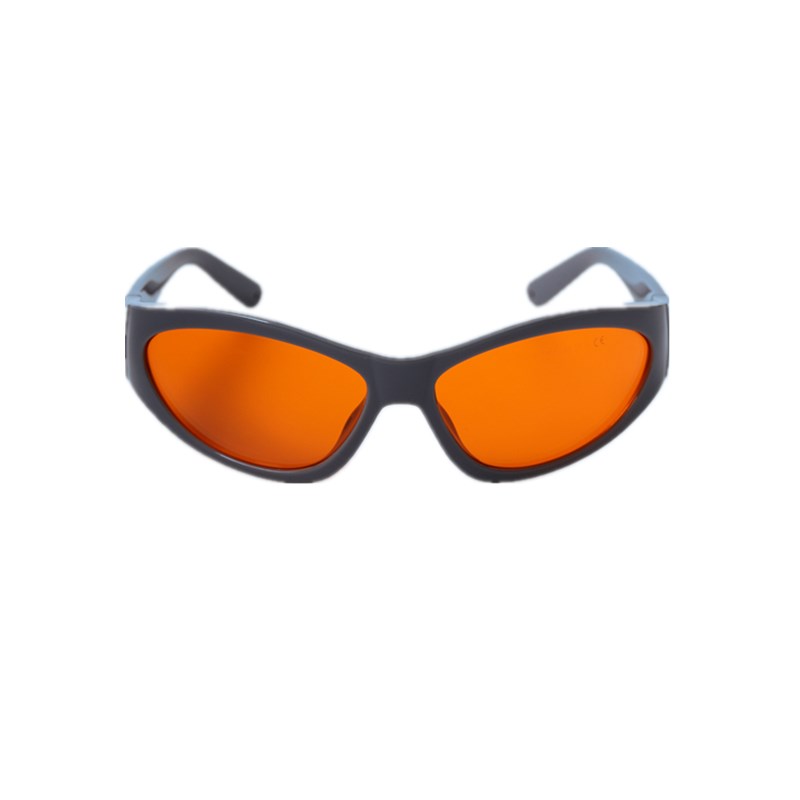
1. Laser Safety Eyewear
What you need:
- Wavelength: Must cover 1064nm (typical fiber laser) ±10nm
- Optical Density: OD6+ for direct/specular exposure; OD5+ minimum for diffuse-only
- Certification: CE EN 207:2017 or ANSI Z136.1 compliant
- Visible Light Transmission: 25-40% (balance between protection and usability)
What doesn’t work:
Incorrect Eyewear | Why It Fails |
Welding goggles (shade 5-14) | Blocks visible/UV light only; near-zero attenuation at 1064nm |
Generic “laser safety glasses” ($10-30) | Often rated for 532nm green lasers; wrong wavelength |
Sunglasses | No laser-specific filtering |
IPL/cosmetic laser glasses | Typically rated for 755-1200nm range but insufficient OD |
Verified incident: A 2019 case documented in the Journal of Laser Applications described permanent retinal damage to an operator using shade-10 welding goggles during fiber laser operation. The goggles provided effectively zero protection at 1064nm.
Budget specification:
Quality Tier | Price Range | Suitable For |
Entry certified (polycarbonate) | $80-150 | Occasional use, diffuse exposure only |
Professional (glass/coated) | $150-300 | Regular operation, mixed exposure |
Premium (prescription-compatible) | $250-500 | Full-time operators, maximum clarity |
Quantity required: Minimum 3 pairs—primary operator, secondary/visitor, backup. Anyone entering the Nominal Hazard Zone needs protection.
2. Fume Extraction System
Why this isn’t optional: Laser cleaning vaporizes surface contaminants into micron and sub-micron particles. These particles remain airborne for hours, penetrate standard dust masks, and accumulate in lung tissue over months/years.
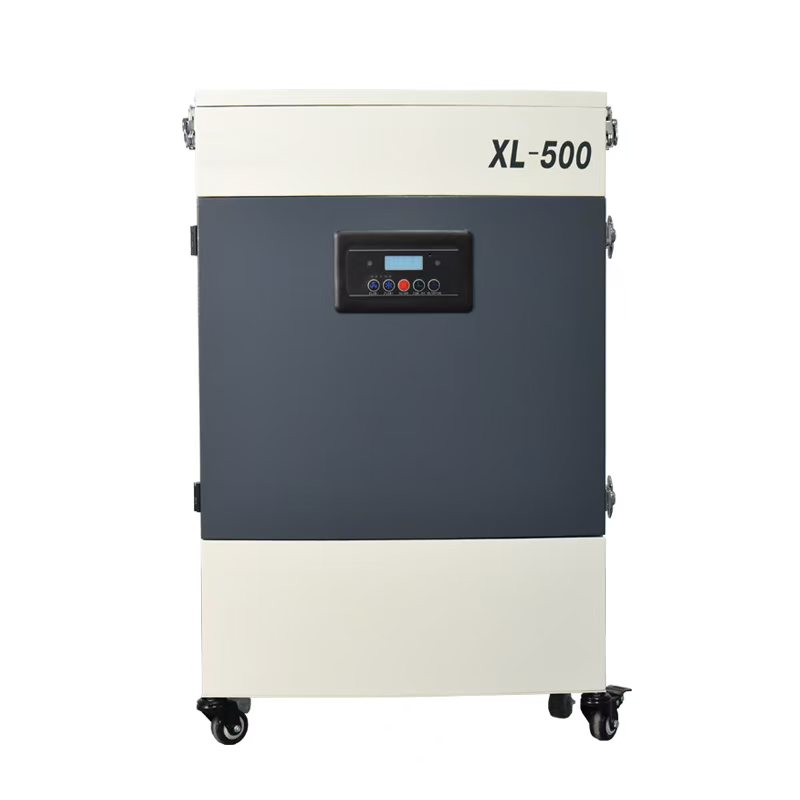
Minimum system specifications:
Parameter | Requirement | Verification Method |
Airflow capacity | 150-300 CFM per kW of laser power | Manufacturer spec sheet |
Primary filtration | HEPA H13/H14 (99.97% @ 0.3μm) | EN 1822 certification |
Gas/vapor filtration | Activated carbon, minimum 2kg media | Weight specification |
Capture velocity | 100-200 FPM at source | Anemometer measurement |
Noise level | <70 dB(A) at 1 meter | Prevents hearing damage |
Material-specific hazards you must plan for:
Material Being Cleaned | Primary Hazard | Additional Requirements | Regulatory Reference |
Rust / mill scale | Iron oxide particulates | Standard HEPA sufficient | OSHA PEL: 10 mg/m³ |
Lead-based paint | Lead fumes (neurotoxic) | Air monitoring required; medical surveillance | OSHA 29 CFR 1926.62 |
Chrome plating | Hexavalent chromium (carcinogenic) | Specialized filtration; exposure monitoring | OSHA PEL: 5 μg/m³ |
Zinc coatings (galvanized) | Zinc oxide fumes | Metal fume fever risk; adequate ventilation | OSHA PEL: 5 mg/m³ |
Oil / grease | Hydrocarbon vapors | Activated carbon critical; fire suppression nearby | NFPA 652 |
E-coat / powder coat | Isocyanates, VOCs | Supplied air may be required | OSHA PEL varies |
The DIY fume extraction question:
Many small workshops ask: “Can I build my own extraction system?”
Honest answer: Technically possible, but not recommended for primary protection.
DIY Approach | Feasibility | Risk Level |
Window fan + ductwork | Moves air but doesn’t filter; particles enter environment | High |
Shop vacuum + HEPA bag | Insufficient airflow; bags leak at seams | Medium-High |
Furnace filter + box fan | Wrong particle size rating; no gas capture | High |
DIY HEPA + carbon cabinet | Can work if properly sealed and sized; requires testing | Medium |
If budget forces a DIY approach, treat it as supplemental to—not replacement for—a rated extraction system. And test with a particle counter before relying on it.
Budget specification:
System Type | Cost Range | Best For |
Portable single-arm extractor | $2,000-4,000 | Mobile/handheld laser operations |
Dedicated workstation extraction | $4,000-8,000 | Fixed cleaning stations |
Ducted central system | $8,000-20,000+ | Multiple stations, high volume |
Annual filter replacement | $500-1,500 | Ongoing maintenance cost |
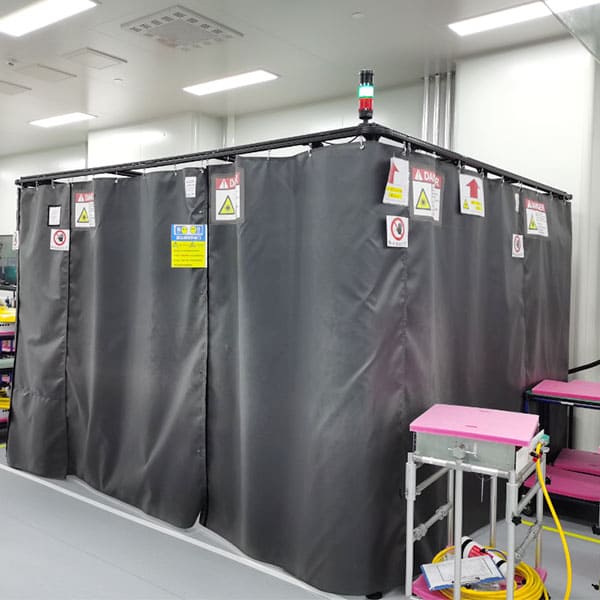
3. Controlled Access Zone
Definition: A designated area where laser hazards exist, with controls to prevent unauthorized entry during operation.
Minimum physical requirements:
Element | Specification | Purpose |
Laser safety barriers/curtains | Rated for 1064nm; typically OD4+ | Block scattered/reflected radiation |
Warning light | Illuminated when laser active; visible from all entry points | Prevent inadvertent entry |
Signage | ANSI Z535 compliant; states laser class, wavelength, hazards | Legal requirement; safety awareness |
Door interlocks (if enclosed) | Laser disables when door opens | Prevent exposure during access |
Emergency stop | Accessible within 2 seconds from any operating position | Rapid shutdown capability |
Nominal Hazard Zone (NHZ) calculation:
For handheld/open-beam systems, you must calculate the zone where hazardous exposure is possible:
Laser Power | Typical NHZ (Direct) | NHZ (Diffuse) |
100W | 50-100m | 3-5m |
500W | 100-200m | 5-10m |
1000W | 200-400m | 8-15m |
2000W+ | 400m+ | 10-20m |
Values approximate; actual NHZ depends on beam divergence, focusing optics, and reflection geometry. Consult ANSI Z136.1 Appendix B for calculation methodology.
Practical implication: Most small workshops cannot physically contain a 200m+ hazard zone. Solution: Administrative controls (scheduled operation, exclusion zones) combined with physical barriers around the immediate work area.
4. Operator Training and Certification
Regulatory requirement: OSHA mandates that employers ensure workers are trained on hazards they’re exposed to. For Class 4 lasers, this means formal laser safety training before operation.
Training must cover:
Topic | Content | Duration |
Laser physics fundamentals | Wavelength, power, beam characteristics | 1-2 hours |
Biological hazards | Eye and skin damage mechanisms | 1-2 hours |
PPE selection and use | Eyewear specification, inspection, limitations | 1-2 hours |
Engineering controls | Enclosures, interlocks, barriers | 1-2 hours |
Administrative controls | SOPs, access control, documentation | 1-2 hours |
Emergency procedures | Eye exposure, fire, equipment failure | 1-2 hours |
Hands-on operation | Machine-specific procedures | 2-4 hours |
Total minimum |
| 8-16 hours |
Certification sources:
Provider | Format | Cost | Recognition |
Laser Institute of America (LIA) | In-person/online | $400-800 | Industry gold standard |
Kentek Laser Safety | Online | $200-400 | ANSI Z136.1 compliant |
Equipment manufacturer | On-site/online | Often included | Verify ANSI compliance |
Lasermet / Laserax | Online/on-site | $300-600 | International recognition |
Critical point: Training certificates have no standard expiration, but ANSI Z136.1 recommends refresher training every 3 years. Keep documentation—inspectors will ask for it.
5. Equipment Safety Features (What to Verify Before Purchase)
Many safety issues stem from equipment lacking basic safety features. Before purchasing, verify:
Feature | What to Check | Why It Matters |
Emission indicator | Visible/audible signal when beam active | Warns of invisible hazard |
Key switch | Prevents unauthorized activation | Access control |
Remote interlock connector | Allows connection to door/area interlocks | Facility integration |
Beam attenuator | Manual beam block capability | Service/adjustment safety |
Emergency stop | Accessible, clearly marked | Rapid shutdown |
Delayed start | 3-5 second countdown before emission | Warning time |
Automatic shutoff | Disables after period of inactivity | Prevents forgotten active lasers |
For handheld systems specifically:
Feature | Requirement |
Dual-action trigger | Requires two simultaneous actions to fire (prevents accidental activation) |
Dead-man switch | Laser stops immediately when trigger released |
Contact interlock (optional) | Only fires when head contacts workpiece |
Category B: Strongly Recommended
Laser Safety Officer (LSO) Designation
When required:
- Multiple Class 3B or Class 4 laser systems
- More than occasional use (>20 hours/month)
- Employees operating without direct supervision
- Any state with registration requirements (AZ, MA, NY, TX, others)
When recommended but not strictly required:
- Single Class 4 system with limited use
- Owner-operated small business
- Clearly defined, simple application
LSO responsibilities:
- Classify and register laser systems
- Establish and maintain SOPs
- Ensure PPE availability and adequacy
- Conduct hazard assessments
- Manage training records
- Interface with regulatory agencies
- Investigate incidents
Practical solution for small workshops: Designate an existing staff member; provide them with LSO training ($500-1,500). They can then handle compliance documentation and training oversight.
Electrical Infrastructure Assessment
Overlooked requirement: High-power laser cleaners require substantial electrical infrastructure.
Laser Power | Typical Electrical Requirement | Implications |
100-200W | Single-phase 220V, 20A | Standard workshop outlet may work |
500W | Single-phase 220V, 30A | Dedicated circuit required |
1000W | Single-phase 220V, 50A OR three-phase 380V | Electrical upgrade likely needed |
2000W+ | Three-phase 380-480V, 30A+ | Industrial power required |
Hidden cost: Electrical upgrades can add $1,000-5,000 if your facility lacks appropriate power.
Category C: Application-Specific Requirements
Requirement | When Needed | Specification | Cost |
Respiratory protection (P100) | No extraction; dusty environment | NIOSH-approved half-mask + P100 filters | $50-150 |
Supplied air respirator | Hexavalent chromium, isocyanates | Full-face PAPR or airline | $500-2,000 |
Fire suppression | Flammable coatings; combustibles nearby | Class ABC or D extinguisher within 10m | $100-300 |
Hearing protection | High-frequency pulsed lasers >85 dB | NRR 25+ earmuffs or plugs | $20-50 |
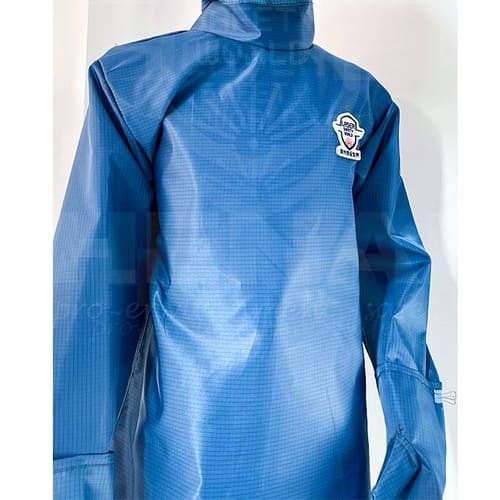
Skin protection | High-power systems; extended exposure | Long sleeves, leather gloves | $50-100 |
Air quality monitoring | Lead, chromium, or unknown coatings | Real-time particle counter or lab testing | $200-2,000/test |
Secondary containment | Liquid contaminants | Drip trays, absorbent materials | $100-500 |
The True Cost of Compliance: Complete Budget Analysis
Scenario A: 200W Pulsed Fiber Laser (Entry-Level)
Typical application: Small-batch rust removal, hobbyist/light commercial use
Item | Specification | Cost |
Laser safety glasses (×3) | OD6+ @ 1064nm, CE certified | $400 |
Portable fume extractor | 250 CFM, HEPA + carbon | $2,800 |
Laser safety curtain set | 2m × 2m panels (×2), 1064nm rated | $1,200 |
Warning signs and light | ANSI compliant kit | $250 |
Operator training (×1) | Online + manufacturer | $400 |
Fire extinguisher | ABC rated, 5lb | $80 |
Signage and documentation | SOPs, log sheets | $100 |
Total Initial |
| $5,230 |
Annual Maintenance | Filters, inspections | $800 |
As percentage of equipment cost ($12,000-18,000): 29-44%
Scenario B: 1000W Continuous Wave Laser (Professional)
Typical application: Production rust removal, paint stripping, industrial maintenance
Item | Specification | Cost |
Laser safety glasses (×5) | OD6+ @ 1064nm, professional grade | $1,000 |
Fume extraction system | 500 CFM, industrial HEPA + carbon | $5,500 |
Laser safety enclosure/barriers | Modular curtain system, 3m × 3m | $3,000 |
Interlock system | Door switches + warning light | $800 |
Warning signs and indicators | Full ANSI compliant set | $400 |
Operator training (×2) | LIA certification | $1,200 |
LSO training (×1) | Online certification | $600 |
Fire suppression | ABC + Class D extinguishers | $300 |
Electrical upgrade | Dedicated 50A circuit | $1,500 |
Documentation package | SOPs, logs, emergency procedures | $300 |
Total Initial |
| $14,600 |
Annual Maintenance | Filters, training refresh, inspections | $2,000 |
As percentage of equipment cost ($35,000-60,000): 24-42%
Scenario C: Fully Enclosed Workstation (Simplified Compliance)
Choosing a Class 1 enclosed system dramatically reduces ongoing safety requirements:
Compliance Element | Open System Requirement | Enclosed System Requirement |
Safety eyewear | Required for all in NHZ | Not required during normal operation |
Fume extraction | Full HEPA system | Integrated (included) |
Controlled access zone | Large area management | Limited to enclosure footprint |
Operator training | Full laser safety program | Machine-specific only |
Signage/barriers | Extensive | Minimal (on enclosure) |
Cost trade-off:
- Open system: Equipment $20,000 + Safety $8,000 = $28,000
- Enclosed system: Equipment $35,000 (integrated safety) = $35,000
Enclosed wins on: Simplicity, ongoing compliance burden, liability protection Open wins on: Flexibility, workpiece size, mobility
Six Critical Mistakes That Get Small Workshops in Trouble
Mistake #1: Believing Marketing Claims of "Easy" or "Plug-and-Play" Operation
The reality: Equipment sellers have financial incentive to minimize safety complexity during sales conversations.
Red flags in marketing materials:
- No mention of PPE requirements
- Safety glasses shown but not specified
- “Easy to use” without mentioning training requirements
- No visible fume extraction in demonstration photos/videos
Your protection: Request a written “Compliance Requirements List” before purchase. If the seller can’t or won’t provide one, consider a different supplier.
Mistake #2: Purchasing Safety Equipment After the Laser Arrives
The problem: Your $25,000 laser sits idle while you wait 3-6 weeks for safety equipment delivery.
Actual lead times:
Item | Typical Lead Time |
Laser safety glasses (stock) | 3-7 days |
Laser safety glasses (prescription) | 2-4 weeks |
Portable fume extractor | 1-3 weeks |
Laser safety curtains (standard) | 1-2 weeks |
Laser safety curtains (custom) | 3-6 weeks |
Interlock systems | 2-4 weeks |
Operator training scheduling | 1-3 weeks |
Solution: Order safety equipment simultaneously with laser equipment. Factor combined lead times into project planning.
Mistake #3: Assuming "CE Certified" Equipment Means Facility Compliance
Many Chinese manufacturers include a free 10kW 220V-to-380V three-phase transformer with 3000W units.
What CE marking means: The equipment itself meets European manufacturing and safety standards.
What CE marking does NOT mean:
- Your facility is compliant for operation
- No additional safety equipment needed
- No training required
- No documentation required
The distinction: Equipment certification ≠ Facility compliance. You are responsible for the operating environment.
Mistake #4: Underestimating Reflection Hazards
Common scenario: Operator carefully avoids looking at beam, but is injured by reflection off workpiece, tool, or nearby surface.
Surfaces that cause hazardous reflections:
Surface | Reflection Type | Hazard Level |
Polished metal | Specular (mirror-like) | Maximum—full beam intensity |
Machined metal | Mixed | High—significant reflected power |
Rough/rusty metal | Diffuse | Medium—reduced but still dangerous |
Painted surfaces | Diffuse | Low-Medium—depends on gloss |
Concrete/masonry | Diffuse | Low—but not negligible |
Glass/windows | Specular | High—beam passes through |
Critical action: Survey work area for reflective surfaces before operation. Remove, cover, or angle them away from personnel locations.
Mistake #5: Training Only the Primary Operator
The risk: An untrained supervisor, maintenance worker, or visitor enters the laser hazard zone during operation.
Who needs training:
Role | Training Level Required |
Primary operator | Full laser safety + machine operation |
Backup operators | Full laser safety + machine operation |
Supervisors/managers | Laser safety awareness (2-4 hours) |
Maintenance personnel | Laser safety + LOTO procedures |
Visitors/inspectors | Escorted access only; PPE required |
Documentation requirement: Maintain training records with dates, content covered, and trainer identification.
Mistake #6: Neglecting Maintenance and Inspection Schedules
Compliance is not a one-time event. Safety equipment degrades, certifications expire, and procedures drift.
Maintenance schedule:
Item | Frequency | Action |
Safety eyewear | Before each use | Inspect for scratches, cracks, coating damage |
Safety eyewear | Annually | Replace if any visible wear; consider replacing every 2-3 years regardless |
Fume extraction filters | Per manufacturer spec | Replace pre-filters monthly; HEPA/carbon per usage |
Fume extraction system | Quarterly | Check seals, airflow, filter condition |
Interlocks | Monthly | Function test all safety interlocks |
Emergency stops | Monthly | Verify operation |
Fire extinguishers | Annually | Professional inspection; check pressure monthly |
Training records | Ongoing | Update with refresher training; maintain for 5+ years |
SOPs | Annually | Review and update for procedure changes |
Minimum Workspace Requirements for Laser Cleaning
Frequently overlooked: Your facility may not have adequate space for compliant operation.
Minimum Room/Area Specifications
Factor | Minimum Requirement | Ideal |
Ceiling height | 2.5m (8 ft) | 3m+ (10 ft+) |
Floor area (handheld) | 15 m² (160 ft²) + buffer zone | 25 m²+ (270 ft²+) |
Floor area (workstation) | 10 m² (100 ft²) | 15 m²+ (160 ft²+) |
Ventilation | Fume extraction + general ventilation | Dedicated HVAC zone |
Electrical | Per equipment spec; dedicated circuit | Backup/redundant power |
Flooring | Non-reflective, non-combustible | Epoxy or sealed concrete |
Lighting | 300-500 lux work area | Adjustable; avoid glare |
Layout Considerations
Do:
- Position laser work area away from high-traffic zones
- Ensure clear line-of-sight to emergency exits
- Place fume extraction intake within 30cm of work area
- Install warning lights visible from all entry points
- Maintain 1m clearance around equipment for maintenance access
Don’t:
- Position workstation facing windows or reflective walls
- Block emergency stop access with workpieces or materials
- Route fume extraction exhaust toward air intake or occupied areas
- Store flammable materials within 5m of laser operation
Documentation and Record-Keeping Requirements
For regulatory compliance and liability protection, maintain:
Document | Content | Retention |
Equipment registration | Serial numbers, location, classification | Life of equipment |
Training records | Personnel trained, dates, content, trainer | 5 years minimum |
Maintenance logs | Inspections, repairs, filter changes | 5 years minimum |
Incident reports | Any safety incidents, near-misses | 10 years minimum |
SOPs | Written procedures for all operations | Current + 2 prior versions |
Safety assessments | Hazard evaluations, NHZ calculations | Current + updates |
PPE inventory | Eyewear serial numbers, issue dates, condition | Current + disposal records |
Inspection readiness: Keep records organized and accessible. Regulatory inspectors can request documentation with little notice.
Questions to Ask Equipment Suppliers Before Purchase
Use this checklist to evaluate supplier transparency on safety requirements:
Question | Acceptable Answer | Red Flag |
“What safety equipment is required for compliant operation?” | Detailed written list with specifications | “Just safety glasses” or vague response |
“Is operator training included?” | Yes, with ANSI Z136.1-compliant content | “It’s easy, no training needed” |
“What are the electrical requirements?” | Specific voltage, amperage, phase | “Standard outlet” (for >200W systems) |
“What fume extraction do you recommend?” | CFM specification matching laser power | “Any shop vacuum” or no recommendation |
“Do you provide SOPs and safety documentation?” | Yes, templates or customized | No documentation support |
“What are the warranty implications of safety incidents?” | Clear policy on damage from improper use | Evasive or unknown |
“Can you provide references for similar installations?” | Yes, with contact information | No references available |
Golden rule: If a supplier downplays safety requirements to make a sale, they are not a partner you want for long-term equipment support.
Frequently Asked Questions
General Requirements
A: Industrial laser cleaning machines are Class 4—the highest hazard classification under ANSI Z136.1 and IEC 60825-1. Class 4 lasers can cause immediate eye injury from direct or reflected beams, can ignite combustible materials, and can cause skin burns. This classification mandates specific safety controls including PPE, controlled access, training, and engineering controls.
A: In most US jurisdictions, there's no universal legal requirement for single-laser, owner-operated facilities. However, ANSI Z136.1 recommends LSO designation for any facility with Class 3B or Class 4 lasers. Some states (Arizona, Massachusetts, New York, Texas, and others) have specific registration and LSO requirements. Practical recommendation: Even if not legally required, designate a responsible person and provide basic LSO training for proper oversight.
A: Varies by jurisdiction. At the federal level (US), FDA/CDRH requires manufacturers to register and certify products, but end-users typically don't register with FDA. However, some states require user registration of Class 3B and Class 4 lasers, annual fees, and inspections. Check with your state radiation control program. In the EU, no user registration is typically required, but workplace safety documentation is mandatory.
Eyewear Questions
A: Yes, with proper management. Inspect before each use for scratches, cracks, or coating damage—any defect compromises protection. Store in protective cases. Ensure proper fit for each user (loose glasses can slip during operation). Budget for at least one pair per person who regularly enters the hazard zone, plus backups.
A: Replace immediately if scratched, cracked, dropped, or showing coating wear. With careful handling, 3-5 years is typical service life. Some manufacturers recommend replacement every 2-3 years regardless of visible condition, as coating effectiveness can degrade with UV exposure over time. Always err on the side of replacement—a $200 pair of glasses protects irreplaceable eyesight.
A: Verify three things: (1) Wavelength coverage—must specifically include 1064nm for fiber lasers, (2) Optical Density—OD5+ minimum, OD6+ preferred, (3) Certification—CE EN 207 or ANSI Z136.1 compliant, not just "CE marked." Many bundled glasses fail one or more criteria. When in doubt, purchase from a dedicated laser safety supplier with verifiable certifications.
Fume Extraction Questions
A: No. Laser-generated particulates are micron and sub-micron sized (0.1-10 μm typical). These particles remain airborne for hours, travel throughout facilities on air currents, and are not effectively removed by passive ventilation. They also cannot be seen or smelled in most cases. Active HEPA filtration with source capture is required for effective control. Passive ventilation may supplement but cannot replace proper extraction.
A: Yes. Even low-power laser cleaning generates respirable particulates. The quantity may be less than high-power systems, but particle size and toxicity (depending on material) remain the same. A smaller, less expensive extraction unit may be adequate, but zero extraction is not acceptable for any power level.
A: Three indicators: (1) Differential pressure gauge (if equipped)—replace when pressure drop exceeds manufacturer specification, (2) Reduced capture velocity—if you can't feel strong suction at the capture point, investigate, (3) Odor breakthrough—if you smell fumes during operation, activated carbon is saturated. For planning purposes: Pre-filters typically need monthly replacement with daily use; HEPA filters 6-12 months; carbon filters 6-12 months depending on contaminant load.
Compliance and Documentation Questions
A: Minimum documentation package includes: (1) Equipment inventory with classifications and serial numbers, (2) Written Standard Operating Procedures, (3) Training records for all personnel with access to laser area, (4) Maintenance logs including PPE inspections, (5) Hazard assessment/NHZ calculation, (6) Incident log (even if empty—shows you have a system). Keep documents organized and accessible—inspectors appreciate well-maintained records.
A: Consequences range from minor to severe:
- Immediate:Eye injury (permanent vision loss possible), skin burns, fire
- Regulatory:OSHA citations average $15,625 per serious violation (2024); willful violations up to $156,259
- Financial:Workers' compensation claims, increased insurance premiums, potential loss of coverage
- Legal:Personal injury lawsuits, potential criminal liability for willful negligence
- Business:Production shutdown during investigation, customer audit failures, reputational damage
Second-Hand Equipment Questions
A: Treat safety assessment as starting from zero:
- Eyewear:Do not trust used eyewear—replace or have professionally inspected
- Fume extraction:Check filter condition, seal integrity, and airflow performance
- Interlocks:Function test all safety interlocks before operation
- Documentation:Previous owner's training records do not transfer—train your own personnel
- Registration:If your state requires registration, re-register under new ownership
- Calibration:Have laser output power verified—degradation affects both performance and hazard calculations
Conclusion: Safety Investment Is Business Protection
The frustration behind “safety setup is harder than the machine” reflects a real gap between marketing presentations and operational reality.
Here’s the honest calculation:
- A compliant safety setup costs 15-30% of equipment investment
- A serious eye injury costs $100,000+ in medical bills and lifetime disability
- An OSHA willful violation costs up to $156,259 per instance
- A wrongful injury lawsuit costs $500,000+ in settlements and legal fees
The numbers make the business case obvious. Safety infrastructure isn’t overhead—it’s insurance with tangible return.
Action steps:
- Before purchase:Demand a complete safety requirements list from suppliers
- With purchase:Order safety equipment simultaneously with the laser
- Before operation:Complete all training; verify all safety systems functional
- Ongoing:Maintain equipment, documentation, and training currency
The goal isn’t regulatory box-checking. The goal is ensuring every operator goes home with their eyesight intact—every shift, every day.
Technical specifications in this guide reference ANSI Z136.1-2022, IEC 60825-1:2014, OSHA 29 CFR 1910/1926, and EN 60825-1:2014. Regulatory requirements vary by jurisdiction; verify local requirements before implementation. This guide provides educational information and does not constitute legal or professional safety advice.
Get Your Free Quote
Ready to improve marking quality and eliminate consumable costs?
Contact us:
Tell us about your application and we’ll recommend the perfect solution:
Contact Information:
- 📧 Email: [info@chihalo.com]
- 📱 WhatsApp: [+86 18608325040]
Our technical team will respond within 24 hours with personalized recommendations and competitive pricing.