Laser Cleaning Machine 1000W Price
Dawn Huang
I'm a passionate engineer and the founder of Chihalo Laser Factory. With an M.Sc. from HKU and 10 years in the field, I've mastered the laser craft from the ground up — from selecting parts to automating systems. Here, I translate complex industry updates into actionable knowledge. Join our community to stay ahead!
Table of Contents
Quick Answer: Laser Cleaning Machine 1000W Price
1000W laser cleaning machines cost between $9,000 and $40,000 depending on configuration. Pulse Multi-mode systems start at $40,000 (best value), Pulse Single-mode at $35,000 (precision applications), and Continuous Wave at $9,000 (maximum speed). These industrial-grade machines remove rust, paint, and coatings 3x faster than 500W models, with operating costs of only $80-120/month. Quality fiber laser sources last 100,000+ hours (15-25 years). Most buyers achieve ROI in 8-14 months.
Choose Your 1000W Model
Model | Pulse 1KW 2mJ | Pulse 1KW 100mJ | CW 1KW |
Best For | General rust removal, paint stripping | Precision cleaning, mold maintenance | Heavy-duty industrial, thick coatings |
Cleaning Speed | 6-8 m²/hour | 5-7 m²/hour | 10-15 m²/hour |
Heat Impact | Low | Very Low | Moderate |
Substrate Safety | Excellent | Superior | Good |
Pulse Multi-Mode ($40,000) delivers the optimal balance between cost and versatility. This configuration handles 90% of standard industrial cleaning tasks including rust removal up to 2mm thickness, paint stripping, and oxide layer removal. The multi-mode beam profile provides uniform energy distribution across the cleaning area, reducing the learning curve for operators. Auto shops, fabrication facilities, and maintenance departments find this model covers their diverse cleaning needs without overspending on specialized capabilities.
Pulse Single-Mode ($35000) produces a concentrated beam with higher peak power density. This precision-focused design excels in applications requiring minimal heat transfer to the base material. Mold cleaning, aerospace component preparation, and electronic assembly cleaning benefit from the single-mode’s ability to remove contamination without affecting tight tolerances or heat-sensitive substrates. The $3,500 premium investment returns value through extended component life and reduced rejection rates in quality-critical applications.
Continuous Wave ($9,000) systems maximize cleaning throughput for production environments. The constant energy output removes heavy rust, thick paint layers, and stubborn industrial coatings at speeds exceeding pulse systems by 40-60%. Manufacturing facilities with high-volume cleaning requirements recover the premium investment through reduced labor hours and increased productivity. Shipyards, heavy equipment refurbishers, and large-scale restoration operations particularly benefit from CW systems’ raw cleaning power.
Key Takeaway: For most buyers, the CW 1000Wat $9,000 provides the best value. Upgrade to Pulse Models for precision work also nice if have enough budget.
Calculate Your Laser Cleaning Savings
Quick ROI Reference:
Parts cleaned per month: | 100-500 parts |
Current method cost: | $2-15 per part |
Laser cleaning cost: | $0.50-2 per part |
Typical monthly savings: | $500-$6,000 |
Average payback period: | 8-18 months |
Traditional cleaning methods carry hidden costs that inflate true operational expenses well beyond obvious material purchases. Chemical cleaning requires ongoing solvent purchases, disposal fees, and regulatory compliance costs that accumulate month after month. Sandblasting consumes abrasive media, demands protective equipment replacement, generates hazardous waste requiring special handling, and creates containment infrastructure requirements that many buyers underestimate.
The 1000W laser cleaning machine eliminates these recurring expenses entirely. Operating costs consist primarily of electricity consumption—approximately $1-2 per 10-hour shift at standard industrial rates. No consumable media purchases, no chemical replenishment schedules, no waste disposal manifests, no regulatory reporting burdens. The laser beam itself costs nothing to produce beyond electrical input.
Real-world ROI calculations from customer deployments reveal consistent patterns across industries. Auto restoration shops report 8-month payback periods when replacing chemical stripping operations that previously cost $2,500-4,000 monthly. Industrial maintenance facilities achieve 12-14 month returns by eliminating sandblasting contractor fees and media expenses. Mold maintenance operations see the fastest returns, often under 6 months, due to dramatic reduction in cleaning labor hours combined with extended mold life from gentler cleaning processes.
5-Year Cost Comparison:
Sandblasting (equipment + media + labor + disposal): $66,000
1000W Laser Cleaning (equipment + electricity): $39,000
Net Savings: $27,000
Technical Specifications
Understanding 1000W laser cleaning machine specifications ensures you select equipment capable of meeting your operational requirements. These technical parameters directly impact cleaning performance, application versatility, and long-term reliability. Specifications matter because they determine not just what the machine can clean today, but how well it adapts to future application demands.
Cleaning Speed | Up to 10 m²/hour (varies by contamination) |
Focal Length Range | 160-500mm adjustable |
Cleaning Width | 10-200mm per pass |
Rust Removal Depth | Up to 15mm thickness |
Pulse Frequency | 1-4000KHz (pulse models) |
Scan Speed | Up to 20000mm/s |
Pulse vs Continuous Wave: Quick Comparison
Factor | Pulse Laser | Continuous Wave |
Peak Power | Higher (concentrated bursts) | Lower (constant output) |
Heat Generation | Minimal (time to dissipate) | Higher (continuous energy) |
Cleaning Speed | Moderate | Fast |
Substrate Protection | Excellent | Good |
Best Applications | Precision, thin layers | Heavy rust, thick coatings |
Pulse frequency control enables fine-tuning energy delivery for specific contamination types. Lower frequencies increase individual pulse energy for tough deposits; higher frequencies spread energy for gentle surface preparation. This adjustability makes the 1000W pulse system remarkably versatile across applications that would otherwise require multiple specialized machines.
Material Compatibility Matrix
The 1000W laser cleaning machine handles diverse material and contamination combinations effectively. This comprehensive compatibility matrix provides definitive guidance on cleaning effectiveness across common industrial scenarios, helping you evaluate whether laser cleaning suits your specific applications before purchase.
Material compatibility depends on how the 1080nm wavelength interacts with both the contamination layer and base substrate. Ideal candidates exhibit high contamination absorption with low substrate absorption—the laser energy removes surface deposits while the underlying material reflects the beam harmlessly.
Material | Rust/Oxide | Paint/Coating | Oil/Grease | Weld Residue |
Carbon Steel | ✅ Excellent | ✅ Excellent | ✅ Excellent | ✅ Excellent |
Stainless Steel | ✅ Excellent | ✅ Excellent | ✅ Excellent | ✅ Excellent |
Aluminum | ✅ Excellent | ✅ Excellent | ✅ Excellent | ⚠️ Good* |
Copper/Brass | ✅ Excellent | ✅ Excellent | ✅ Excellent | ⚠️ Good* |
Cast Iron | ✅ Excellent | ✅ Excellent | ✅ Excellent | ✅ Excellent |
Titanium | ✅ Excellent | ✅ Excellent | ✅ Excellent | ✅ Excellent |
Tool Steel | ✅ Excellent | ✅ Excellent | ✅ Excellent | ✅ Excellent |
Galvanized Steel | ⚠️ Caution** | ✅ Excellent | ✅ Excellent | ✅ Excellent |
Chrome Plating | ⚠️ Caution** | ✅ Excellent | ✅ Excellent | N/A |
Concrete | N/A | ✅ Excellent | ✅ Excellent | N/A |
Stone/Marble | N/A | ⚠️ Good* | ✅ Excellent | N/A |
Wood | N/A | ✅ Excellent | ⚠️ Good* | N/A |
Rubber | N/A | ⚠️ Good* | ✅ Excellent | N/A |
Plastic (ABS/HDPE) | N/A | ⚠️ Caution** | ⚠️ Caution** | N/A |
Glass | N/A | ✅ Excellent | ✅ Excellent | N/A |
Legend:
✅ Excellent = Optimal results with standard parameters
⚠️ Good* = Effective with adjusted settings, request sample test
⚠️ Caution** = May affect base material, requires careful parameter tuning
Reflective metals like aluminum and copper require adjusted pulse parameters to achieve efficient energy coupling. The 1080nm wavelength exhibits lower absorption on these highly reflective materials, necessitating optimized scanning patterns and increased power density settings. These adjustments are straightforward once established—our technical team provides application-specific parameter recommendations for challenging materials free of charge.
Galvanized and chrome-plated surfaces present selective cleaning challenges requiring careful evaluation. The laser removes contamination effectively but may also affect thin plating layers if exposure parameters aren’t precisely controlled. For these applications, pulse mode operation with reduced power density preserves protective coatings while removing surface contaminants. Sample testing is strongly recommended before committing to production cleaning.
Non-metal materials including concrete, stone, wood, and rubber clean effectively for paint and coating removal applications. Organic materials require parameter adjustments to prevent substrate damage—the laser energy that vaporizes paint can also char wood if over-applied. Our applications team has developed optimized settings for these specialty materials.
Free Download: Request our complete Material Parameter Guide (PDF) with recommended settings for 60+ material/contamination combinations, including power levels, scanning speeds, and focal distances.
Why 1000W? 3 Core Benefits
The 1000W power level represents the optimal balance point for industrial laser cleaning applications. This sweet spot delivers professional-grade cleaning capability without the premium pricing of higher-power systems. Here’s why this specification outperforms both lower and higher power alternatives for most industrial buyers.
3x Faster Cleaning Speed vs 500W
Power directly correlates with cleaning throughput in laser systems. The 1000W configuration removes rust and coatings at 8-10 m²/hour compared to 3-4 m²/hour for 500W systems. This speed advantage compounds across production shifts—completing in one day what takes 500W machines three days to finish. Labor cost savings alone often justify the upgrade, particularly in operations with significant cleaning backlogs or production bottlenecks.
Handles 15mm Thick Rust Layers
Heavy industrial rust demands adequate power reserves to penetrate and vaporize stubborn oxide deposits. The 500W systems struggle with contamination exceeding 1mm thickness, requiring multiple passes and extended processing times that erode productivity gains. The 1000W delivers sufficient energy density to vaporize stubborn oxide layers, scale buildup, and multi-layer paint systems in single-pass operations—critical for time-sensitive maintenance windows.
14-Month ROI Instead of 24+ Months
Faster cleaning translates directly to accelerated return on investment. Customer data consistently shows 1000W systems achieving payback 40-60% faster than lower-powered alternatives. The higher initial investment recovers through increased productivity, reduced labor hours per job, and expanded application capabilities that generate additional revenue streams.
Power Selection Guide:
Choose 500W for: Light surface prep, thin oxide removal, limited budget
Choose 1000W for: General industrial cleaning, rust up to 3mm, production environments
Choose 2000W+ for: Continuous heavy-duty operation, maximum throughput requirements
7 Costly Mistakes to Avoid When Buying
Laser cleaning machine purchases represent significant capital investments. These common buyer mistakes lead to performance disappointments, unexpected costs, and equipment regret. Learn from others’ expensive lessons.
1. Buying on Price Alone
The cheapest 1000W machine often uses inferior laser sources that degrade rapidly. Verify the laser brand—Raycus, IPG, JPT and MAX are industry standards. Unknown brands may offer 50,000-hour lifespans versus 100,000 hours from quality sources, effectively doubling your long-term cost per hour.
2. Ignoring Duty Cycle Ratings
Production environments require continuous operation capability that budget machines often cannot deliver. Some lower-cost machines specify 50-70% duty cycles, meaning 30-50 minutes of mandatory rest per hour of operation—unacceptable for production workflows. Ask for specific duty cycle documentation and verify the cooling system supports your intended usage patterns before committing.
3. Skipping Sample Testing
Every contamination type responds differently to laser energy based on composition, thickness, and adhesion characteristics. Paint formulations, rust compositions, and substrate conditions affect cleaning results in ways specifications cannot predict. Always request sample cleaning on your actual materials before purchase—reputable suppliers offer free testing. Those who refuse should raise serious concerns about their confidence in equipment performance.
4. Wrong Focal Length Selection
Fixed focal length systems severely limit application versatility and future capability expansion. Ensure your machine provides 160-500mm adjustment range to accommodate various workpiece geometries. Recessed areas, complex shapes, and large flat surfaces each require different focal distances for optimal results—systems lacking adjustment force compromised cleaning quality.
5. Accepting Cheap Water Chillers
The laser source depends on precise temperature control for consistent performance and longevity. Generic chillers with inadequate cooling capacity cause thermal shutdowns during extended operation and accelerate laser degradation over time. Verify the chiller brand and cooling capacity specifications carefully. Quality chillers from brands like S&A or equivalent maintain ±0.3°C temperature stability essential for laser health.
6. No Local Technical Support
Equipment issues require timely resolution to minimize production downtime. Confirm your supplier maintains US-based technical support with phone availability during business hours. Ask about average response times, remote diagnostics capabilities, and spare parts inventory location. Overseas-only support means days or weeks of costly downtime for issues a local technician resolves in hours.
7. Missing I/O Integration Ports
Future automation requirements demand connectivity options that may not seem important today. Verify your machine includes standard industrial I/O ports for integration with robotic systems, PLCs, and automated production lines. Machines without these interfaces limit your upgrade path and may require complete replacement when automation projects become priorities.
Buyer Protection Checklist: Before purchasing, confirm: laser brand certification, duty cycle documentation, free sample testing, adjustable focal range, quality chiller specifications, US support contact, and automation I/O availability.
True Cost Comparison: 5-Year Analysis
Upfront machine pricing tells only part of the total ownership cost story. This comprehensive analysis reveals complete ownership expenses including hidden costs that traditional cleaning methods accumulate over time—costs that often surprise buyers who focus solely on initial purchase price.
Cost Category | 1000W Laser | Sandblasting | Chemical Stripping |
Equipment Purchase | $35,000 | $8,000 | $3,000 |
Consumables (5 years) | $500 | $24,000 | $18,000 |
Labor (8 hr/day) | Included* | +$12,000 | +$15,000 |
Waste Disposal | $0 | $8,000 | $12,000 |
Safety Equipment | $800 | $4,000 | $2,500 |
Maintenance/Repairs | $2,500 | $6,000 | $4,000 |
Regulatory Compliance | $200 | $2,000 | $8,500 |
Electricity | $3,000 | $2,000 | $500 |
5-YEAR TOTAL | $42,000 | $66,000 | $63,500 |
Laser cleaning requires 40-60% less labor time for equivalent surface area compared to traditional methods.
Hidden cost drivers significantly impact traditional cleaning method economics over operational lifetimes. Sandblasting media costs $0.50-2.00 per pound with typical consumption rates of 200-500 lbs per 8-hour shift depending on contamination severity. Media alone totals $2,000-5,000 annually before accounting for equipment wear. Chemical strippers require continuous solvent replenishment plus hazardous waste manifesting and licensed disposal services—often $500+ per pickup plus manifest fees and transportation charges.
Regulatory compliance costs continue escalating under increasingly stringent environmental and worker safety standards. EPA and OSHA requirements for abrasive blasting operations include dust containment infrastructure, respiratory protection programs, and waste characterization testing. Chemical operations face even stricter oversight with VOC emission reporting, worker exposure monitoring, air quality permits, and environmental impact documentation.
Net 5-Year Savings:
vs Sandblasting: $24,000 savings
vs Chemical Stripping: $21,500 savings
Plus: Zero hazardous waste liability, cleaner work environment, faster processing times, no regulatory reporting burden
Brand Comparison: Honest Assessment
The 1000W laser cleaning market includes multiple manufacturers with varying quality levels, support capabilities, and price points. This objective comparison includes our own products alongside major competitors because informed buyers make better decisions—even when that means choosing another supplier.
Factor | SFX | Preenex | HANTEN | BesCutter |
Price Range | $28K-$38K | $35K-$50K | $30K-$42K | $45K-$60K |
Laser Source | Raycus/MAX | IPG | Raycus | IPG |
Warranty | 2 years | 2 years | 2 years | 3 years |
US Support | Yes | Limited | Yes | Yes |
Lead Time | 20-30 days | 30-45 days | 25-35 days | 15-25 days |
Training Included | Yes | Basic | Yes | Yes |
Spare Parts | US stock | Overseas | US stock | US stock |
Our Honest Recommendations:
Best Value: SFX or HANTEN — These manufacturers deliver reliable performance using quality Raycus laser sources at competitive price points that maximize cost-to-performance ratios. Both maintain US-based support operations and domestic spare parts inventory, ensuring responsive service when issues arise. For most standard industrial applications including rust removal, paint stripping, and surface preparation, these brands provide everything you need without premium pricing.
Best Premium: BesCutter — When budget allows for premium investment, BesCutter’s IPG laser sources offer marginally higher beam quality and documented longer operational life under demanding conditions. The extended 3-year warranty demonstrates manufacturer confidence in product durability. Faster lead times justify the premium for time-sensitive projects or production environments where delayed delivery creates costly schedule impacts.
Maximum Power Options: Preenex CW Systems — For buyers requiring continuous wave configurations with absolute maximum power output for heavy industrial applications, Preenex offers robust industrial designs built for demanding environments. However, limited US support infrastructure means longer resolution times for technical issues—acceptable for experienced operators but potentially problematic for first-time laser cleaning equipment buyers.
Important Note: We include competitors in this comparison because informed buyers make better decisions. If another brand better suits your specific requirements, we’d rather you make the right choice than purchase equipment that doesn’t meet your needs. Contact us for personalized recommendations based on your specific application requirements—we’ll give you honest guidance even if it means recommending a competitor’s product.
Laser source brand significantly impacts long-term reliability and total cost of ownership. IPG (German engineering), Raycus (Chinese manufacturing), and MAX (Chinese manufacturing) represent tier-one manufacturers with proven track records across millions of deployed units. Avoid machines equipped with unnamed or generic laser sources—the initial cost savings disappear when premature replacement becomes necessary after 2-3 years instead of the expected 10+ year lifespan.
Chihalo Laser Customer Reviews ⭐⭐⭐⭐⭐ 4.8/5
Real feedback from verified 1000W laser cleaning machine owners across different industries and applications. These testimonials represent actual customer experiences, both positive outcomes and honest learning curves.


Shipping & Warranty
Complete purchase protection and delivery information for your 1000W laser cleaning machine investment. Understanding these details upfront prevents surprises and ensures smooth equipment acquisition.
Shipping Details
- Delivery usually within 10-20 days;
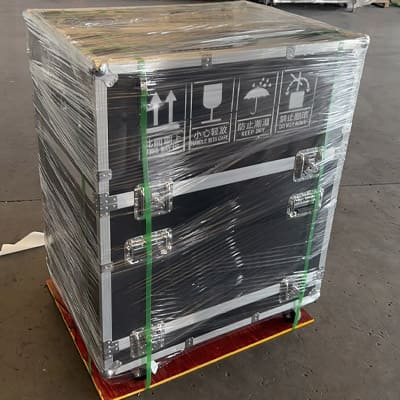
- Package with a air-box and wheels;
- Air flight booking, handing all papers and you can receive the machine at door.
- Shipping usually costs USD1200-1800.
Warranty Coverage
- Chihalo provide 2 years warranty for all parts, from laser source to cleaning head;
- If warranty issue, Chihalo will pay all costs to return and change;
- Sometimes we will have special offer for life-time warranty
Frequently Asked Questions
The 1000W laser cleaning machine price ranges from $30,099 to $42,000 depending on configuration and beam delivery type. Pulse Multi-mode systems start at $30,099, offering the best value for general industrial cleaning applications. Pulse Single-mode configurations cost $33,671, optimized for precision applications requiring minimal heat transfer to substrates. Continuous Wave (CW) models at $42,000 deliver maximum cleaning speed for high-volume production environments. These prices include the complete operational system: laser source, control cabinet, handheld cleaning gun, 10m fiber cable, industrial water chiller, safety eyewear, and standard accessories. Shipping within continental US is free for commercial addresses.
Standard packages include all components needed for immediate operation upon delivery: 1000W fiber laser source from quality manufacturers (Raycus, IPG, or MAX brand) with 100,000-hour rated lifespan, integrated control cabinet with touchscreen interface, ergonomic handheld cleaning gun weighing 1.2-1.8kg for comfortable extended use, 10-meter fiber optic cable, industrial water chiller sized for continuous operation, two pairs of OD6+ laser safety glasses, complete tool kit for routine maintenance, operation manual and quick-start guide, and remote training session with our technical specialist. Optional additions available at purchase include extended 15-meter fiber cables, automated positioning fixtures, fume extraction systems, spare protective lens kits, and automation integration packages.
Pulse lasers deliver energy in discrete bursts with rest periods between pulses, allowing accumulated heat to dissipate from the workpiece between energy applications. This characteristic makes pulse systems ideal for cleaning heat-sensitive materials, precision components with tight tolerances, and thin contamination layers without affecting base material properties or dimensions. Continuous wave (CW) lasers emit constant uninterrupted energy for maximum material removal rates and cleaning throughput. CW systems excel at removing thick rust deposits, heavy paint buildup, and stubborn industrial coatings where processing speed matters more than thermal management. Choose pulse configurations for delicate work requiring substrate protection; choose CW configurations for aggressive cleaning where maximum throughput is the priority.
Quality 1000W fiber laser sources carry rated lifespans of 100,000 operating hours under normal industrial conditions. At typical usage patterns of 8 hours daily operation, 250 working days annually, this specification equates to over 50 years of theoretical operational life. Realistically, expect 15-25 years of productive service before considering laser source replacement. The fiber laser design contains no consumable parts or wear items requiring regular replacement during this period. Maintenance consists primarily of keeping optical surfaces clean, ensuring adequate cooling system operation, and periodic cable inspection. The cabinet, control electronics, and mechanical components typically outlast the laser source when properly maintained according to manufacturer guidelines.
Yes, we strongly encourage sample testing before purchase commitment. Send us representative samples of your contaminated materials—rusted parts, painted components, coated surfaces, or whatever you need to clean. Our applications laboratory processes samples within 5-7 business days, returning cleaned samples with documented operating parameters and video recording of the cleaning process. This service is completely free and carries absolutely no purchase obligation. Testing verifies the machine handles your specific contamination types effectively and reveals optimal settings for your applications. Buyers who skip testing occasionally discover their materials require different configurations than expected—testing prevents expensive surprises.
Select 1000W if any of these conditions apply to your situation: you regularly clean rust exceeding 1mm thickness, you need sustained cleaning speeds above 5 m²/hour, you work with large surface areas or high part volumes, or you anticipate increased cleaning demands as your business grows. The 1000W system cleans approximately 3x faster than equivalent 500W machines and handles contamination types that overwhelm lower-powered systems. The price premium (typically $8,000-12,000 over 500W) recovers through productivity gains within 6-12 months for operations with regular cleaning requirements. Choose 500W only if your applications involve exclusively light surface preparation, thin oxide removal on small parts, or firm budget constraints prevent 1000W investment regardless of ROI benefits.
Monthly operating expenses typically range $80-$120 for active industrial usage patterns. Electricity constitutes the primary ongoing cost—approximately $50-70 monthly for 8-hour daily operation at average US industrial electricity rates ($0.10-0.15/kWh). Protective lens covers require periodic replacement at approximately $20-30 monthly with normal use intensity. No consumable media purchases, no chemical replenishment schedules, no waste disposal manifest fees, no regulatory reporting burdens. Compare these minimal costs to sandblasting ($200-400/month in media alone, plus disposal) or chemical stripping ($300-500/month in solvents plus hazardous waste disposal fees). The laser's minimal operating costs accelerate ROI realization and provide predictable monthly budgeting.
Standard warranty coverage includes 1-year comprehensive protection on all machine components plus 2-year extended coverage on the laser source specifically. The laser source warranty covers complete replacement for any manufacturing defects or premature failure occurring under normal operating conditions. Chiller units carry separate 1-year warranties covering parts and labor. Extended warranty packages available at time of purchase extend total coverage to 3 years for buyers seeking additional protection on this capital investment. Warranty service utilizes our US-based support center with remote diagnostics capability and domestic spare parts inventory. Most warranty claims resolve within 48-72 hours through remote support intervention or expedited replacement parts shipment via overnight carrier.
Ready to Order?
Take the next step toward cleaner, faster, more profitable surface preparation. Our team provides personalized guidance to match 1000W configurations to your specific applications, ensuring you invest in the right equipment for your needs.
Whether you’re replacing outdated chemical stripping processes, upgrading from sandblasting operations, or adding laser cleaning capability for the first time, we’re here to help you make an informed decision. Our application specialists have helped hundreds of businesses select and implement laser cleaning systems successfully.
What Happens After You Contact Us:
1. Submit your quote request with application details and cleaning requirements
2. Receive personalized configuration recommendation within 2 hours during business days
3. Optional: Send samples for free cleaning demonstration at our facility
4. Finalize specifications, payment terms, and delivery schedule
5. Production and quality testing at factory (15-20 days)
6. Free shipping to your facility with tracking updates
No pressure, no obligation. We’re happy to answer questions even if you’re just researching options for future consideration.