Laser Blasting: The Complete Decision Guide

Hi! I am Dawn. With 10 years of field experience, I specialize in laser cleaning systems—from optical sourcing to automation. I write here to turn complex specs into actionable buying guides.
Table of Contents
What is Laser Blasting?
Laser blasting is a surface cleaning method that uses laser energy to remove contaminants without damaging the base material.
Also known as laser ablation or laser cleaning, this non-contact process vaporizes rust, paint, oil, and coatings through precisely controlled laser pulses.
Unlike sandblasting, it requires no abrasive media and produces minimal waste.
According to industry reports, the global laser cleaning market reached $589 million in 2023 and is projected to exceed $1.2 billion by 2030.
Key terminology: “Laser blasting,” “laser ablation,” and “laser cleaning” all describe the same technology.
The term varies by industry context.
Quick Comparison: Laser Blasting vs Sandblasting
Here’s what most people want to know upfront:
Factor | Laser Blasting | Sandblasting |
How it works | Laser energy vaporizes contaminants | Abrasive media physically removes material |
Surface damage | Minimal to none | Can damage substrate |
Consumables | None (electricity only) | Sand, grit, or other media |
Waste generated | Minimal (captured particles) | Significant (used media + debris) |
Precision | High (millimeter accuracy) | Low (broad coverage) |
Noise level | Low (~70 dB) | Very high (~100+ dB) |
Safety gear | Laser safety glasses | Full suit, respirator, hearing protection |
Equipment cost | $15,000 – $300,000+ | $500 – $10,000 |
Best for | Precision, sensitive surfaces, automation | Large areas, heavy contamination |
Real-World Results: What to Actually Expect
These aren’t hypothetical — they’re documented outcomes from actual projects:
Case Study 1: Aerospace Component Manufacturer
Challenge: A Tier-1 aerospace supplier needed to strip primer from aluminum wing components.
Chemical stripping took 4-6 hours per batch and generated 2,000+ gallons of hazardous waste annually.
Solution: 500W pulsed fiber laser system
Results:
- Processing time reduced from 4-6 hours to 45 minutes (85% faster)
- Hazardous waste eliminated entirely
- Annual savings: $67,000 (waste disposal + chemical costs)
- ROI achieved in 14 months
Case Study 2: Automotive Welding Preparation
Challenge: An EV battery manufacturer struggled with weld quality.
Oxide layers caused 8% rejection rate.
Solution: Automated 200W laser cleaning integrated into welding line
Results:
- Weld rejection rate dropped from 8% to 0.3%
- Line speed increased 12%
- Payback period: 11 months
Case Study 3: When Laser Blasting Wasn't the Right Choice
Challenge: A shipyard wanted to strip paint from a 50,000 sq ft cargo hold.
Our recommendation: Sandblasting
Why: Surface area too large, contamination too heavy (15+ layers), and profiling needed for recoating.
Laser would have taken 10x longer.
Lesson: Laser blasting isn’t always the answer — honest suppliers tell you that upfront.
5 Questions to Choose the Right Method
Answer these questions to determine which technology fits your application:
Question 1: How Large is Your Surface Area?
- Small (< 10 sq ft): Laser blasting — precision, no setup time
- Medium (10-50 sq ft): Either — depends on other factors
- Large (> 100 sq ft): Usually sandblasting — speed advantage
Question 2: How Sensitive is Your Material?
- Precision parts, composites: Laser blasting (zero damage)
- Heavy steel, thick plates: Either works
- Delicate/historical: Laser blasting (only safe option)
Question 3: Environmental Requirements?
- Strict EPA/OSHA compliance: Laser blasting (zero waste)
- Indoor/cleanroom: Laser blasting (no dust)
- Outdoor industrial: Either acceptable
Question 4: One-Time or Ongoing?Material?
- One-time project: Sandblasting or rent laser
- Daily operations: Laser ROI in 18-24 months
- Production line: Laser (easily automated)
Question 5: Budget Reality?
- Under $5,000: Sandblasting equipment
- $5,000-$35,000: laser (handheld)
- 3-year TCO focus: Run analysis — laser often wins
Quick Rule: If laser fits 3+ answers above, it’s likely your better choice.
How Laser Blasting Works?
The Ablation Process
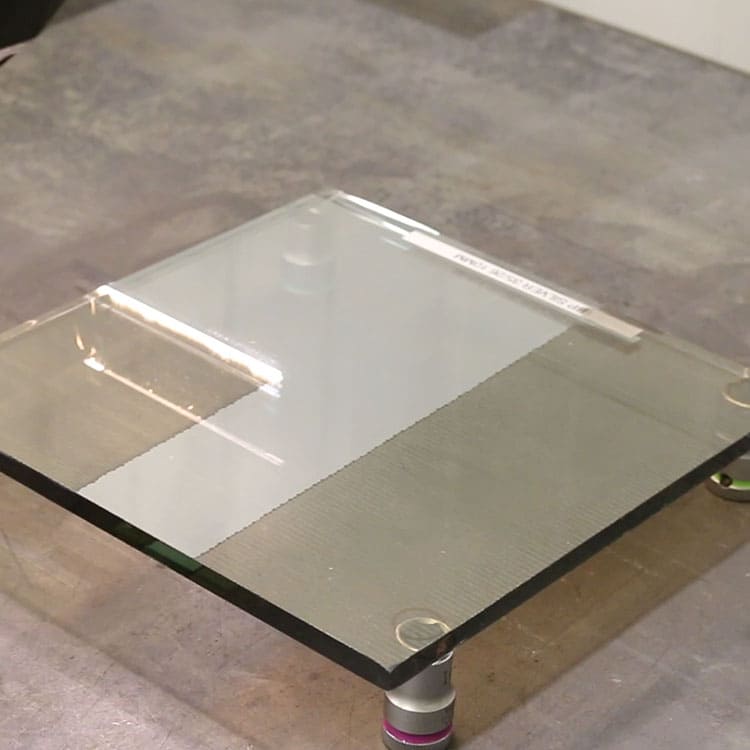
- Laser pulse hits surface — Concentrated energy in nanoseconds
- Contamination absorbs energy — Heats almost instantly
- Material vaporizes — Solid converts directly to gas
- Particles ejected — Rapid expansion blows debris off
- Extraction captures waste — Fume extractor collects material
Why It Doesn't Damage the Base Material
Every material has an ablation threshold — minimum energy to vaporize it:
- Rust, paint, oil → LOWthreshold (easy to remove)
- Steel, aluminum → HIGHthreshold (won’t be affected)
By tuning power above contamination threshold but below substrate threshold, you remove only what you want.

When NOT to Choose Laser Blasting
We’d rather lose a sale than have you buy the wrong equipment:
Choose Sandblasting Instead:
- Surface exceeds 100+ sq ft — Sandblasting is simply faster
- Surface profiling needed — For coating adhesion anchor pattern
- Extremely heavy contamination — 10+ layers or decades of buildup
- One-time project, tight budget — Rental may make more sense
Laser Blasting Limitations:
- No line-of-sight = no cleaning — Can’t reach inside pipes
- Highly reflective surfaces — May reflect energy; needs testing
- Some plastics — May melt rather than ablate
Equipment Selection Guide
Types of Systems
Type | Power | Price | Best For |
Handheld portable | 100-500W | $4K-$15K | Maintenance, fieldwork |
Handheld industrial | 500-1000W | $15K-$35K | Heavy-duty cleaning |
Workstation | 200-1000W | $6K-$35K | Batch processing |
Robotic/automated | 500-3000W+ | $15K-$12K+ | Production lines |
Power Selection Guide
Power | Application | Speed |
100-200W | Light rust, oil removal, surface prep | 1-3 sq ft/min |
200-500W | Paint stripping, medium rust | 3-8 sq ft/min |
500-1000W | Heavy coatings, industrial descaling | 8-20 sq ft/min |
1000W+ | High-volume production | 20+ sq ft/min |
How to Purchase: Recommended Process
- Define requirements — Materials, contaminants, volume
- Request sample testing — Send parts to 2-3 suppliers (usually free)
- Compare results AND support — Training, warranty, service matter
- Evaluate financing — Leasing available; Section 179 benefits
- Plan for training — 2-3 days for operator certification
Major suppliers: IPG Photonics, Laser Photonics, Laserax, TRUMPF, Adapt Laser, CleanLASER. Request quotes from multiple vendors.
Common Misconceptions
Myth 1: "Too expensive for small operations"
Reality: Entry systems start ~$4,000 — comparable to quality sandblasting setup when factoring compressor, media, PPE, and disposal.
For 20+ hours weekly use, laser often costs less over 3 years.
Myth 2: "Slower than sandblasting"
Reality: For large flat surfaces, sandblasting is faster.
But for precision work, laser is often faster overall — no masking, minimal setup, zero cleanup.
Myth 3: "Need engineering degree to operate"
Reality: Modern systems designed for industrial operators. Most become proficient in 1-2 days.
No more complex than CNC equipment.
Myth 4: "Technology is too new"
Reality: Industrial laser cleaning has been used since the 1990s.
It’s standard in aerospace and rapidly growing in automotive and manufacturing.
Frequently Asked Questions
Removing rust, paint, coatings, oil, and contaminants from surfaces. Primary applications: pre-weld surface prep, paint stripping, mold cleaning, aerospace maintenance, historical restoration.
Neither is universally better. Laser excels at precision, sensitive materials, automation. Sandblasting better for large areas, heavy contamination, surface profiling needs.
$15,000-$500,000+ depending on type. Handheld: $15K-$60K. Industrial handheld: $40K-$100K. Workstations: $50K-$150K. Automated: $100K-$500K+.
When properly configured, no. Different ablation thresholds between contaminants and substrates allow selective removal without affecting base material.
Yes. Laser cleaning, laser blasting, and laser ablation describe the same technology. Terms vary by industry context.
Depends on power and contamination. 100-200W: 1-3 sq ft/min. 500-1000W: 8-20 sq ft/min. 1000W+: 20+ sq ft/min.
Yes. No chemicals, minimal waste, no consumable media, electricity only. Vaporized contaminants captured by filtration.
Most metals, alloys, ceramics, stone, concrete, some composites. Highly reflective or heat-sensitive materials require testing.
Yes. Laser safety and equipment operation training required, typically 1-2 days. Manufacturers provide training with purchase.
Yes. Integrates easily with robots and production lines. Precise, repeatable nature ideal for high-volume manufacturing.
Consider contamination thickness, material sensitivity, speed needs, budget. When uncertain, request supplier sample testing.
Get Your Factory-Direct Quote
Ready to skip the dealer markup? Contact us:
Tell us about your application and we’ll recommend the perfect solution:
Contact Information:
- 📧 Email: [info@chihalo.com]
- 📱 WhatsApp: [+86 18608325040]
Our technical team will respond within 24 hours with personalized recommendations and competitive pricing.