
Laser Cleaning Safety Risks: Why Online Videos Are Dangerously Misleading (And How to Protect Your Workers)

Hi! I am Dawn. With 10 years of field experience, I specialize in laser cleaning systems—from optical sourcing to automation. I write here to turn complex specs into actionable buying guides.
Table of Contents
Laser cleaning machines operate at Class 4 — the highest and most dangerous laser classification. Viral videos showing bare hands passing through a laser beam create a false sense of security that has led to serious workplace injuries. At Chihalo, we engineer safety into the machine itself through a triple-lock interlock system (proximity sensor auto-shutoff, dual-click activation, and dead man’s switch), so your operators are protected by design — not by luck or caution alone.
Key Takeaways
- 1064nm fiber laser beams are invisible to the naked eye— camera sensors and human eyes work completely differently, which is why online videos are dangerously misleading about real exposure risks
- Cumulative retinal damage is painless and irreversible— operators may not notice harm until permanent vision loss has already occurred
- A single laser safety incident can cost your business $16,000–$161,000+ in OSHA fines alone, not counting production downtime, workers’ compensation, lawsuits, and insurance premium spikes
- Safety should never depend on operator discipline— it must be engineered into the equipment at the hardware level
- Chihalo laser cleaning machines feature a triple-lock safety interlock system— proximity sensor auto-shutoff, dual-click activation, and dead man’s switch — that physically prevents accidental laser emission
- Every Chihalo system ships with integrated fume extraction, CE certification with full test documentation, and a complete safety compliance packageincluding SOPs, risk assessment templates, and operator training outlines
The Dangerous Lie in Laser Cleaning Videos
If you’ve researched laser cleaning machines online, you’ve almost certainly seen the videos: an operator’s bare hand passes through the laser beam, the surface gets cleaned, and nothing seems to happen. The implicit message is clear — this technology is harmless.
That message is wrong. And it’s getting people hurt.
Here’s what those videos don’t show you:
- The camera lies.Digital sensors respond to 1064nm near-infrared light completely differently than human eyes. What appears as a visible bright line on screen is actually invisible scattered radiation in reality — radiation that passes through the cornea and damages the retina directly.
- Low power ≠ your power.Most demonstration videos use deliberately reduced power settings. Your production floor runs at full industrial power — often 200W, 500W, or 1000W+ — where exposure consequences are exponentially more severe.
- Skin damage happens below the surface.At 1064nm, laser penetration depth far exceeds CO₂ lasers. Burns occur in deep tissue layers while the skin surface may appear completely normal — until it doesn’t.
- You can’t smell a video.Laser cleaning generates fumes and aerosol particulates that may contain heavy metals (from lead paint removal), toxic oxides, and respirable nanoparticles. Without proper fume extraction, operators inhale industrial-grade hazardous dust with every cleaning cycle.
- Reflected beams are invisible killers.When cleaning metal surfaces, specular reflections can redirect the beam unpredictably. A beam that bounces off a shiny workpiece can strike an operator — or a bystander across the room — without any warning.
"Working With a Gun" — Why This Analogy Matters
Industry safety professionals frequently compare industrial laser operation to firearms handling — and the comparison is more accurate than most people realize. A Class 4 laser can cause instant, permanent eye injury from direct or reflected beam exposure at distances of hundreds of meters.
But here’s the critical difference: no responsible firearms manufacturer would sell a gun without a safety mechanism. Yet many laser cleaning machines ship with nothing more than a single-press trigger between the operator and a Class 4 beam.
The problem is not that laser cleaning is inherently unsafe. The problem is that too many machines lack the engineered safety systems that a Class 4 industrial tool demands.
The Real Cost of Ignoring Laser Safety
Before we detail how Chihalo solves these risks, consider what’s at stake when safety is treated as optional:
Risk Category | Potential Consequence |
Regulatory fines | OSHA serious violation: $16,131+; willful violation: up to $161,323 per incident (2024 rates). EU member states impose comparable penalties under Directive 2006/25/EC |
Insurance | Claim denial if equipment lacks standard safety features; premium increases of 25–40% after a reported incident |
Production downtime | Full-line shutdown during incident investigation — typically 3–10 business days |
Legal liability | If your equipment has no safety interlocks, proving you met duty-of-care obligations becomes nearly impossible. In some jurisdictions, management faces personal criminal liability |
Workforce impact | Post-incident operator attrition and significantly increased hiring difficulty. In Europe’s tight skilled-labor market, a safety incident reputation can take years to recover |
Customer audits | Automotive (IATF 16949), aerospace (AS9100), and defense clients will revoke supplier qualification for non-compliant laser safety setups |
Retrofit costs | Retrofitting safety measures after an incident costs 3–5× more than purchasing properly equipped machines from the start |
Laser Safety Officer requirement | ANSI Z136.1 and many state regulations require a designated, certified LSO for any facility operating Class 4 lasers — a compliance requirement many buyers don’t learn about until after an inspection |
The safest laser cleaning machine is not the one that looks safe in a video — it’s the one engineered so that accidents cannot happen in the first place.
How Chihalo Engineers Safety Into Every Machine — By Design, Not By Luck
At Chihalo, we approach laser safety from a fundamentally different philosophy than most manufacturers: safety is not an accessory you add later. It is a core engineering requirement built into every machine before it leaves our factory.
While other suppliers strip safety features to lower their sticker price — shifting all risk onto the buyer — Chihalo integrates multiple independent safety systems that protect operators at the hardware level, regardless of their training, experience, or attention span.
Triple-Lock Safety Interlock System: Eliminating Human Error at the Hardware Level
The foundation of Chihalo’s safety architecture is our triple-lock interlock system — three independent safety mechanisms that work in concert so that no single point of failure can ever result in uncontrolled laser emission.
1.Proximity Sensor Auto-Shutoff
Every Chihalo laser cleaning system includes a human body proximity sensor that continuously monitors the area around the beam path. When the sensor detects a person entering the danger zone, it triggers an automatic emergency stop in milliseconds — far faster than any human reaction time.
Unlike systems that rely on operators to “be careful,” this is a hardware-level intervention that requires zero human action. The machine protects the operator whether they are paying attention or not.
Why this matters: In real-world factory environments, distractions happen constantly. A coworker walks too close. An operator turns their head. A shift change creates momentary confusion. Chihalo’s proximity sensor doesn’t care about any of that — it detects and reacts in milliseconds, every single time.
2.Dual-Click Activation (Anti-Accidental Trigger)
Chihalo laser cleaning machines require a deliberate double-click sequence before the laser will emit. This eliminates the most common cause of accidental laser exposure in industrial settings: unintentional trigger activation.
Think of it as a firearm’s safety mechanism — the operator must make two conscious, intentional actions to activate the beam. A bump, a slip, or a momentary lapse in grip will not cause laser emission.
Why this matters: Single-button trigger machines — the design most low-cost suppliers use — are one accidental touch away from emitting a Class 4 beam. When operators are wearing gloves, handling heavy parts, or working in tight spaces, accidental activation is not a theoretical risk. It happens.
3.Dead Man’s Switch (Continuous-Press Requirement)
Once activated, Chihalo machines require the operator to continuously press and hold the trigger to maintain laser output. The instant pressure is released — for any reason — the laser stops immediately.
This means if an operator:
- Stumbles or falls
- Is startled and releases their grip
- Loses control of the handpiece
- Experiences any physical emergency
…the laser shuts off automatically. There is no scenario where the laser continues firing without active, intentional operator control.
Why this matters: This is the last line of defense in any emergency situation. Even if the proximity sensor fails and the dual-click mechanism is already activated, releasing the trigger stops everything instantly. It’s the same principle used in train operator controls and industrial crane systems — if the human becomes incapacitated, the machine stops.
Why Three Layers — Not Just One
Any single safety mechanism can theoretically fail. A sensor can malfunction. A switch can stick. That’s why Chihalo implements defense-in-depth: three completely independent safety systems, each capable of preventing injury on its own.
Even in the unlikely event that one system is compromised, the remaining two still protect the operator. This is the same safety philosophy used in aviation, nuclear power, and medical devices — and it’s the standard that Class 4 laser equipment should meet.
Unlike machines from suppliers who use viral “bare-hand” videos as marketing, every Chihalo system ships with all three interlock mechanisms as standard equipment — not as optional add-ons you discover you need after an incident.
Integrated Fume Extraction: Protecting What You Can't See
Laser cleaning safety extends well beyond beam exposure. The fumes, aerosol particulates, and nanoparticles generated during laser ablation pose serious respiratory hazards that most suppliers completely ignore — and that those viral demonstration videos never mention.
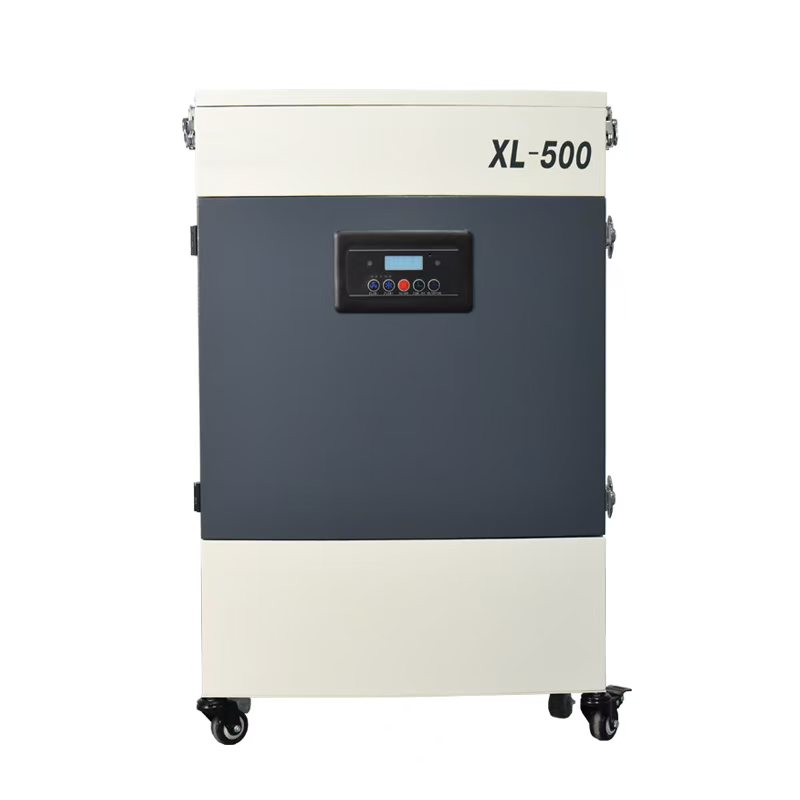
Depending on the material being cleaned, laser ablation can release:
- Heavy metal particles(lead, chromium, cadmium) from old paint and coating removal
- Metal oxide nanoparticlesfrom rust and scale removal on steel and aluminum
- Volatile organic compounds (VOCs)from oil and grease ablation
- Fine particulate matter (PM2.5 and smaller)that penetrates deep into lung tissue
At Chihalo, fume extraction is treated as a standard safety requirement, not an optional accessory:
- Every Chihalo machine ships with integrated fume extraction interfaces— purpose-designed ports that connect directly to your industrial extraction system
- Select models include built-in HEPA filtration units, providing complete on-board fume capture without requiring external infrastructure
- Application-specific guidanceis provided for high-risk materials (lead-based coatings, chromium alloys, galvanized surfaces) where particulate toxicity demands enhanced filtration protocols
With Chihalo, respiratory protection is part of the system architecture from day one. You won’t discover six months later that you need a $5,000+ extraction retrofit because your supplier never mentioned it.
CE-Certified Compliance: Your Shield in Every Safety Audit
In global manufacturing, regulatory compliance isn’t optional — it’s a business survival requirement. A laser safety audit failure can shut down an entire production line. Chihalo provides complete, audit-ready compliance documentation with every machine:
CE Certification — Real Testing, Not Just a Sticker
Every Chihalo laser cleaning machine carries CE certification backed by actual third-party testing and technical documentation. This is not a self-declared label — it represents verified compliance with European safety directives including the Machinery Directive (2006/42/EC) and laser radiation standards.
Why this distinction matters: Many low-cost laser cleaning machines carry CE markings that are self-declared by the manufacturer without independent testing. When an inspector asks for the Declaration of Conformity and supporting technical file, these suppliers often cannot produce them. Chihalo can — for every single machine we ship.
Complete Safety Documentation Package
With every Chihalo system, you receive:
- Professional Safety Operation Procedures (SOPs)— ready-to-implement documents for your quality management system
- Risk Assessment Templates— pre-built frameworks that satisfy ISO 12100, ANSI Z136.1, and OSHA documentation requirements
- Operator Training Outlines— structured training programs covering safe operation, emergency procedures, PPE requirements, and Laser Safety Officer (LSO) responsibilities
- Technical Compliance Files— complete test reports and declarations of conformity for third-party audits
Why this matters in practice: When your automotive (IATF 16949), aerospace (AS9100), or defense customer sends an auditor to inspect your laser cleaning workstation, Chihalo customers can produce a complete compliance file in minutes. Customers using undocumented equipment from low-cost suppliers often fail these audits — losing contracts, facing corrective action requirements, and spending weeks scrambling to create documentation that should have existed from day one.
📢 Ready to See the Difference Safety Engineering Makes?
Request a free safety and application assessment from Chihalo’s engineering team. We’ll evaluate your specific cleaning application, recommend the right safety configuration for your regulatory environment, and provide a detailed technical specification — with zero obligation.
📧 Contact Chihalo Engineering Team
📞 Or request a callback for a 15-minute technical safety review of your current or planned laser cleaning setup.
Coming Late 2026: AI-Powered Safety Monitoring — Next-Generation Protection
Chihalo is currently developing an AI-enabled intelligent laser cleaning system scheduled for market release in late 2026. This next-generation platform extends safety capabilities beyond hardware interlocks into predictive, real-time AI-driven safety monitoring:
AI Vision Safety Zone Enforcement
- Integrated industrial camera modules with real-time computer vision will continuously monitor the entire operating areafor unauthorized personnel, exposed skin, or unsafe operator positioning
- The system will automatically reduce power or initiate emergency shutdown when safety zone violations are detected — beforeany exposure occurs
- This capability replaces the need for manual safety zone monitoring by supervisors or LSOs during active operation
Intelligent Parameter Safeguards
- AI-driven material recognition will automatically match optimal cleaning parametersto the workpiece, preventing operators from inadvertently setting dangerously high power levels
- This eliminates a common risk factor in facilities where operators with varying experience levels share equipment
- Overpowered cleaning settings not only create safety risks but also damage workpieces and generate excessive fume volumes — the AI system prevents both problems simultaneously
Behavioral Anomaly Detection
- The AI system will monitor operating patterns and flag abnormal behaviors — such as prolonged exposure of a single area, unusual beam angles, or irregular operation sequences
- Real-time alerts notify supervisors of potential safety concerns before they escalate into incidents
- Historical pattern data supports continuous improvement of safety protocols and training programs
This represents Chihalo’s roadmap from passive safety (stopping damage after detection) to proactive safety (predicting and preventing hazardous conditions before they occur). Current Chihalo customers will receive priority access to upgrade paths when the AI system launches.
Cheap Machine vs. Safe Machine: The True Cost Comparison
The most expensive laser cleaning machine you can buy is the one that injures your worker.
Here’s how a typical low-cost machine compares to a Chihalo system when you look at total cost of ownership:
Feature | Typical Low-Cost Machine | Chihalo Laser Cleaning Machine |
Trigger mechanism | Single-press trigger; easy to activate accidentally | Triple-lock: proximity sensor + dual-click + dead man’s switch |
If operator loses control | Laser continues emitting | Laser stops instantly (dead man’s switch) |
Human proximity protection | None — relies entirely on operator awareness | Automatic sensor detection with millisecond emergency stop |
Reflected beam protection | Not addressed | Proximity sensor covers reflected beam paths in the work area |
Fume extraction | No interface or optional add-on (rarely purchased) | Standard integrated interface; select models with built-in HEPA |
Safety certifications | CE sticker (often self-declared, no technical file) | CE certified with full third-party test documentation and technical file |
Compliance documentation | None provided | Complete SOPs, risk assessment templates, LSO guidance, and training outlines |
Safety training support | None | Operator training program and safety protocol guidance included |
Regulatory audit readiness | Customer must create all documentation from scratch | Audit-ready compliance package ships with the machine |
Sticker price | 15–30% lower | Higher (includes complete safety package) |
True cost after 1 incident | Equipment + fines ($16K–$161K) + downtime + legal + insurance increase = 5–10× equipment price | Equipment price (all safety already included) |
The Math That Changes the Conversation
Let’s put real numbers behind this decision:
Scenario: Your team operates a laser cleaning system 8 hours per day. You chose a machine that saved you $4,000 by not including safety interlocks or compliance documentation.
When an incident occurs (and in an unprotected operation, it’s when — not if):
- OSHA serious violation fine:$16,131 minimum per violation (2024 rates)
- OSHA willful violation fine:up to $161,323 per violation
- EU equivalent penalties:Vary by member state but can exceed €50,000 per incident
- Production downtime (5–10 days investigation):$2,000–$15,000/day = $10,000–$150,000
- Workers’ compensation claim (eye injury):$50,000–$250,000+
- Insurance premium increase (3-year compounding impact):25–40% annually
- LSO appointment + retroactive compliance setup:$5,000–$15,000
- Customer audit failure / contract loss:Potentially unlimited revenue impact
- Legal fees (employer liability defense):$20,000–$100,000+
Total potential cost of one incident: $100,000 to $700,000+
That $4,000 “savings” on equipment now represents the most expensive purchasing decision in your company’s history.
Chihalo’s safety features are not a premium — they are the most cost-effective risk management investment you can make. Every dollar spent on engineered safety returns multiples in avoided losses, insurance savings, and operational continuity.
What a Responsible Laser Cleaning Setup Actually Looks Like
Whether you choose Chihalo or another manufacturer, every industrial laser cleaning operation must include these five safety layers to comply with ANSI Z136.1 and global workplace safety regulations. Use this as a checklist when evaluating any supplier:
✅ 1. Equipment Safety Systems (Engineering Controls)
- Multiple independent safety interlocks (not just a single trigger)
- Proximity/presence detection with automatic shutdown
- Dead man’s switch (continuous-press operation)
- Beam path shielding appropriate to the application type
- Key switch or coded access to prevent unauthorized operation
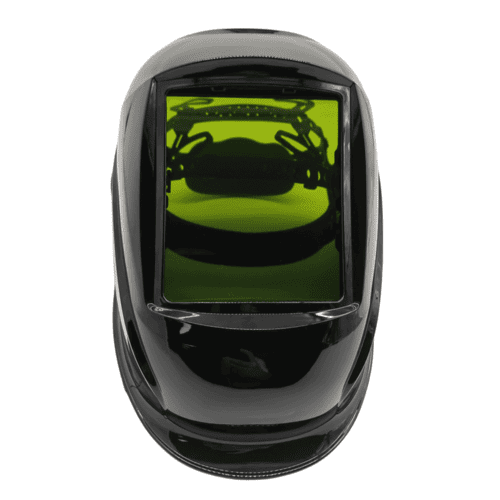
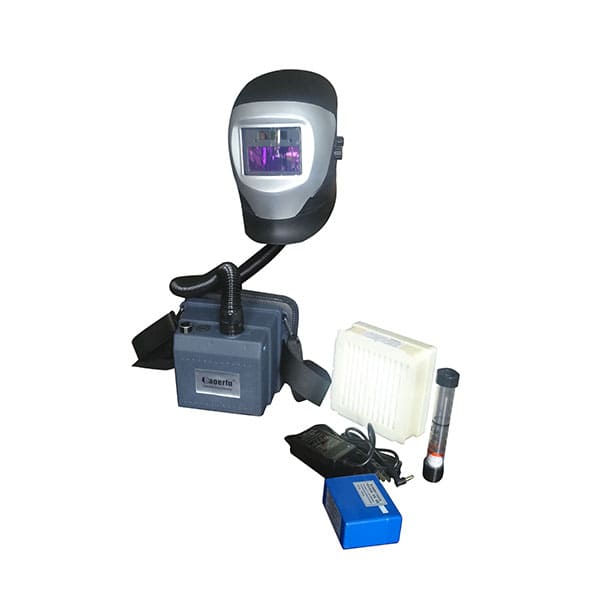
✅ 2. Personal Protective Equipment (PPE)
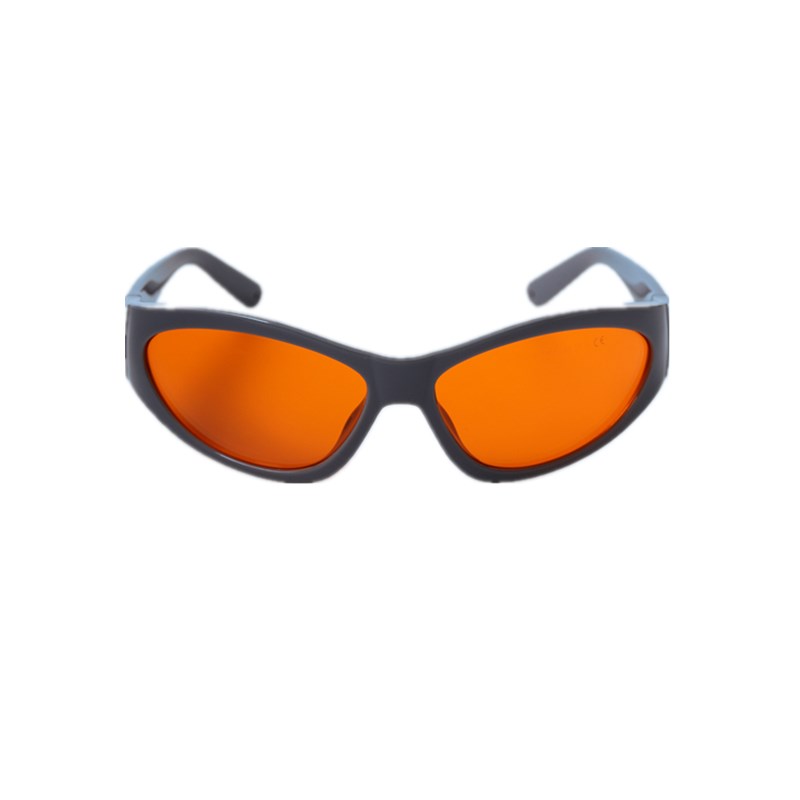
- OD7+ rated laser safety eyewear specific to 1064nm wavelength
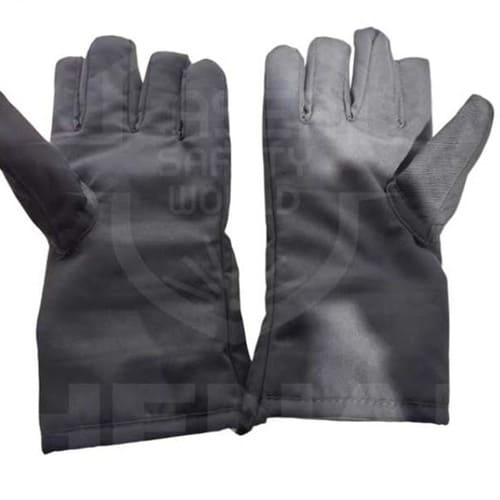
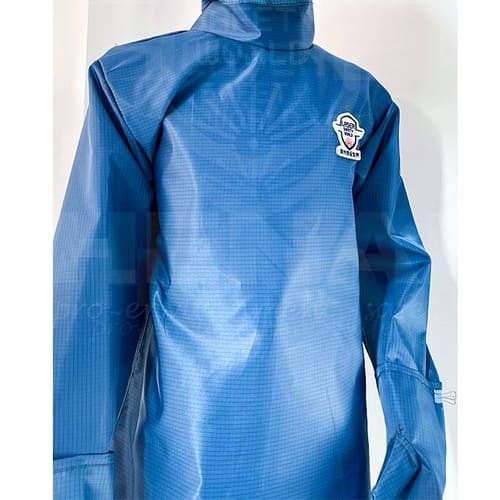
- Laser-rated protective gloves and skin coverage
- Respiratory protection appropriate to the material being cleaned
- PPE requirements should be posted at the entrance to every laser operating area
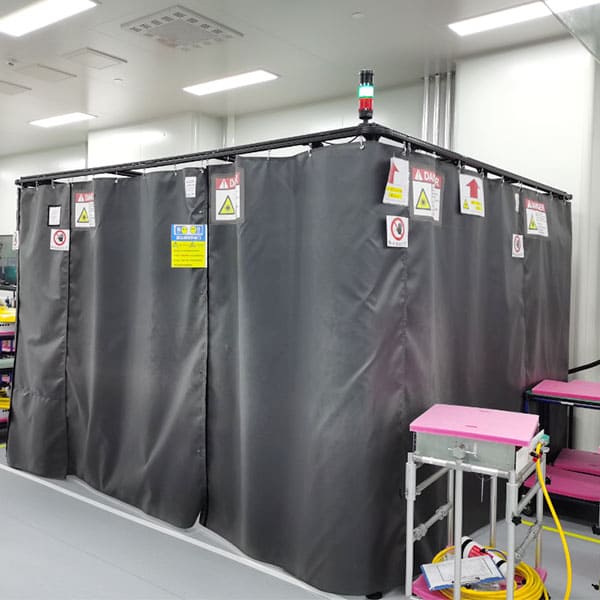
✅ 3. Environmental Controls (Nominal Hazard Zone)
- Designated laser safety zones (Nominal Hazard Zone/NHZ) with physically controlled access
- Warning signage and laser-active indicator lights meeting ANSI Z136.1 / EN 60825-1 requirements
- Door interlocks or laser-rated curtains for enclosed operating areas
- Removal or securing of reflective surfaces in the beam path area
✅ 4. Fume and Particulate Management
- Integrated or connected fume extraction system with capture at the source
- HEPA filtration rated for the specific particulate types generated
- Regular air quality monitoring in and around the operating area
- Material Safety Data Sheets (MSDS) readily available for all materials being cleaned
✅ 5. Personnel and Administrative Controls
- Designated, certified Laser Safety Officer (LSO) — required by ANSI Z136.1 for Class 4 operations
- Documented operator training with competency verification for each laser system
- Written Standard Operating Procedures (SOPs) covering all routine and non-routine operations
- Regular safety refresher training (annual minimum recommended)
- Incident reporting, investigation, and corrective action procedures
- Maintenance logs and scheduled safety system verification
At Chihalo, items 1 and 4 are built into every machine we ship. We also provide complete documentation to help you rapidly implement items 2, 3, and 5 — because selling you a machine without helping you operate it safely would contradict everything we stand for as a National High-Tech Enterprise certified manufacturer.
Why Chihalo Won't Make "Look How Safe" Marketing Videos
You’ll notice that Chihalo doesn’t produce videos showing operators touching our laser beam bare-handed. This is a deliberate choice.
We refuse to downplay the real physics of Class 4 laser operation for marketing purposes. Our machines include visible safety components — proximity sensors, interlock indicators, extraction ports — because those components exist to protect your people.
Some of our competitors use these “bare-hand” videos to imply that their machines are so safe you don’t need safety equipment. What they’re actually demonstrating is that they don’t take your workers’ safety seriously enough to model proper operation in their own marketing materials.
When you’re evaluating laser cleaning machine suppliers, ask yourself this: If a manufacturer’s demonstration video doesn’t show a single safety feature, a piece of PPE, or a fume extraction system, how seriously are they taking your workers’ safety — and your regulatory compliance?
Get a Complete Safety Assessment From Chihalo — Free
Choosing the right laser cleaning machine is a decision that affects your production efficiency, your regulatory compliance, and your workers’ safety for years to come.
Chihalo’s engineering team offers complimentary safety and application assessments that include:
- ✅ Application analysis — identifying the right power, wavelength, and configuration for your specific cleaning requirements
- ✅ Safety requirements review — mapping the complete regulatory obligations for your facility and jurisdiction
- ✅ Detailed technical specification — with all safety features and compliance documentation clearly itemized
- ✅ Sample cleaning tests — conducted on your actual materials so you can verify results before purchasing
- ✅ Total cost of ownership comparison — so you can see the real long-term cost difference between “cheap” and “safe”
Whether you’re purchasing your first laser cleaning machine or replacing equipment that doesn’t meet safety standards, we’ll help you make the right decision — with zero pressure and full transparency.
As a National High-Tech Enterprise certified manufacturer and OEM supplier to leading European brands, Chihalo has the engineering depth and production experience to back every claim we make. We don’t just sell machines — we help you build a safe, compliant, and productive laser cleaning operation from day one.
FAQ: Laser Cleaning Safety Questions Answered
Laser cleaning uses Class 4 lasers — the highest hazard classification under both ANSI Z136.1 and EN 60825-1. When operated with proper safety equipment, engineering controls, and trained personnel, it is a safe and highly effective industrial process. The danger arises when operators underestimate the risks — often influenced by misleading online content showing unprotected handling at reduced power levels. Properly engineered machines like Chihalo systems, with triple-lock safety interlocks and integrated fume extraction, significantly reduce operational risk compared to machines without these features.
Yes — and the damage is often irreversible. The 1064nm wavelength used in fiber laser cleaning is invisible to the naked eye but passes through the cornea and is focused by the eye's lens directly onto the retina. Unlike visible light that triggers a blink reflex, 1064nm radiation causes no protective response. Damage is cumulative, painless during exposure, and can result in permanent blind spots or complete vision loss. Even scattered and reflected radiation (not just the direct beam) can cause progressive retinal damage over time. OD7+ rated laser safety eyewear specific to 1064nm is absolutely mandatory for all personnel in the operating area — no exceptions.
Despite what viral videos suggest — no, you should never allow skin contact with an industrial laser cleaning beam. At full production power (200W–1000W+), 1064nm laser energy penetrates deep into tissue, causing subsurface burns that may not be immediately visible on the skin surface. The fact that a brief, low-power demonstration appears harmless on camera does not reflect real operating conditions. Additionally, prolonged or repeated exposure at any power level carries cumulative risk of tissue damage. This is why Chihalo equips every machine with a dead man's switch and proximity sensors — to physically prevent accidental contact.
Minimum PPE requirements for Class 4 laser cleaning operations include: OD7+ laser safety eyewear rated specifically for 1064nm, laser-rated protective gloves, appropriate skin coverage (long sleeves, closed footwear, no exposed skin in the beam path area), and respiratory protection when cleaning materials that generate toxic fumes — such as lead paint, chromium coatings, or galvanized steel. ANSI Z136.1 requires that the Laser Safety Officer (LSO) conduct a hazard analysis to determine the specific PPE requirements for each application. Chihalo provides application-specific PPE guidance with every machine to help your LSO make the right selections.
At minimum, an industrial laser cleaning machine should include: multiple independent safety interlocks (not just a single trigger button), a dead man's switch (continuous-press operation), proximity or presence detection with automatic emergency shutdown, integrated fume extraction capability, a key switch to prevent unauthorized operation, and complete CE or equivalent safety certification with supporting test documentation. Machines with only a single-button trigger and no additional safety layers do not meet the standard of care expected for Class 4 laser equipment under ANSI Z136.1 or EU Machinery Directive requirements. Chihalo's triple-lock interlock system (proximity sensor + dual-click + dead man's switch) exceeds these minimum standards.
Price alone doesn't determine safety — but the features that make a machine safe cost real money to engineer and manufacture. When a supplier's price is 20–30% below market average, it's worth asking exactly what was removed to reach that price point. In most cases, the answer includes: safety interlocks, fume extraction interfaces, proximity sensors, compliance documentation, and operator training support. The cost of a single workplace incident ($100,000–$700,000+ when accounting for fines, downtime, legal fees, and insurance increases) far exceeds any equipment savings. The cheapest machine is almost never the least expensive one to own.
OSHA addresses laser safety through the General Duty Clause (Section 5(a)(1)) and references ANSI Z136.1 as the recognized consensus standard for laser safety in the workplace. Key requirements include: designating a certified Laser Safety Officer (LSO), establishing engineering controls (machine interlocks, beam enclosures, Nominal Hazard Zones), providing appropriate PPE, implementing Standard Operating Procedures (SOPs), conducting documented operator training, and maintaining compliance records. OSHA's Technical Manual (Section III, Chapter 6) provides detailed guidance for compliance officers. Equipment with built-in safety interlocks and comprehensive compliance documentation — like Chihalo systems — provides strong evidence that an employer has met their duty-of-care obligations.
Chihalo's approach to safety operates on three integrated levels: (1) Hardware-level protection — every machine includes our triple-lock interlock system (proximity sensor auto-shutoff, dual-click activation, dead man's switch) as standard equipment, not optional add-ons. (2) Environmental protection — integrated fume extraction interfaces are standard on all models, with select models featuring built-in HEPA filtration for complete on-board particulate capture. (3) Compliance support — CE certification with full third-party test documentation, professional SOPs, risk assessment templates conforming to ISO 12100 and ANSI Z136.1, and structured operator training outlines ship with every system. Additionally, an AI-powered intelligent safety monitoring system — featuring real-time vision-based zone enforcement, automatic parameter safeguards, and behavioral anomaly detection — is currently in development for late 2026 release.
Yes. Under ANSI Z136.1 — the recognized standard for laser safety in the United States — any facility operating a Class 3B or Class 4 laser system must designate a Laser Safety Officer (LSO). Many U.S. states also require registration of Class 4 laser systems with state radiation control agencies. In the EU, the employer must appoint a competent person responsible for laser safety under Directive 2006/25/EC. The LSO is responsible for conducting hazard evaluations, establishing control measures, maintaining training records, and ensuring ongoing compliance. Chihalo's documentation package includes LSO guidance materials to help your designated officer fulfill these responsibilities efficiently.
CE marking indicates that a product meets EU safety, health, and environmental requirements. However, for most machinery (including laser cleaning equipment), CE marking is self-declared by the manufacturer — meaning there is no mandatory third-party audit. Some suppliers apply CE labels without conducting the required conformity assessment, risk analysis, or technical file preparation. Genuine CE compliance requires: a complete technical construction file, a formal risk assessment per ISO 12100, an EU Declaration of Conformity, and compliance with all applicable directives (Machinery Directive 2006/42/EC, Low Voltage Directive, EMC Directive). Chihalo maintains full technical files and test documentation for every machine — available on request for your compliance records or third-party audits.
Get Your Factory-Direct Quote
Ready to skip the dealer markup? Contact us:
Tell us about your application and we’ll recommend the perfect solution:
Contact Information:
- 📧 Email: [info@chihalo.com]
- 📱 WhatsApp: [+86 18608325040]
Our technical team will respond within 24 hours with personalized recommendations and competitive pricing.