
Laser Stone Cleaning: Complete Guide to Equipment & Cost [2026]

Hi! I am Dawn. With 10 years of field experience, I specialize in laser cleaning systems—from optical sourcing to automation. I write here to turn complex specs into actionable buying guides.
Table of Contents
What Is Laser Stone Cleaning?
Laser stone cleaning is a non-contact cleaning technology that uses pulsed laser beams to remove dirt, pollution, paint, and biological growth from stone surfaces without chemicals or physical abrasion. It is the preferred method for historic building restoration, monument conservation, and delicate stonework cleaning worldwide.
Quick Price Reference
Type | Cost Range |
Equipment Purchase | $4,000 (entry-level) to $35,000 (industrial) |
Professional Service | $5–$15 per square foot |
Small Project Service | $500–$2,000 per project |
Operating Cost | Under $2 per hour |
Best Applications
- Historic monuments and buildings
- Sculptures and museum pieces
- Building facades
- Graffiti removal
- Cemetery memorials
Compatible Materials
Marble, granite, limestone, sandstone, travertine, slate, and most natural and engineered stones.
See the Results: Before & After Gallery
The effectiveness of laser stone cleaning is best demonstrated through visual results.
Below are typical outcomes across different applications:
Historic Monument Restoration
Before | After |
Heavy black crust from decades of pollution | Original stone color and detail fully restored |
Obscured carved details and inscriptions | Sharp, clear details without material loss |
Building Facade Cleaning
Before | After |
Dark soot and urban pollution staining | Clean, uniform appearance |
Biological growth (moss, lichen, algae) | Pristine surface ready for protective treatment |
Laser Graffiti Removal from Stone
Before | After |
Multiple layers of spray paint | Complete removal with no ghost images |
Paint embedded in textured stone | Original texture preserved |
Sculpture Conservation
Before | After |
Centuries of accumulated grime | Fine details revealed without erosion |
Environmental damage and discoloration | Surface stabilized for long-term preservation |
Key Observation: In every application, laser cleaning removes only the unwanted material while preserving 100% of the original stone—something no other cleaning method can consistently achieve.
Key Benefits at a Glance
1. Zero Surface Damage
Laser stone cleaning equipment is completely non-contact and non-abrasive. Unlike sandblasting, which removes stone material along with contaminants, laser ablation only affects the unwanted layer. This makes it safe for:
- Delicate carved details
- Historic inscriptions
- Polished surfaces
- Fragile or weathered stone
2. No Chemicals Required
The process uses only light energy—no solvents, acids, or cleaning agents. This eliminates:
- Chemical residue on the stone
- Environmental contamination
- Hazardous waste disposal requirements
- Risk of chemical damage to surrounding materials
3. Precision Control
Operators can adjust laser parameters in real-time:
- Power output: 0–100% adjustable
- Pulse frequency: Customized to contamination type
- Beam width: From pinpoint to wide coverage
- Cleaning depth: Remove specific layers while preserving others
4. Environmentally Friendly
Laser stone cleaning is one of the most sustainable cleaning technologies available:
- No water consumption
- No chemical runoff
- Minimal waste generation
- Low energy consumption (typically 0.5–2 kWh)
5. Cost-Effective Long-Term
While laser stone cleaning equipment investment is higher than traditional tools, operating costs are remarkably low:
- No consumable media (unlike sandblasting)
- No chemical purchases
- Minimal maintenance requirements
- Operating cost under $2 per hour
Benefits Comparison Summary
Benefit | Laser Cleaning | Sandblasting | Chemical | Pressure Washing |
Zero material loss | ✓ | ✗ | ✗ | ✗ |
Chemical-free | ✓ | ✓ | ✗ | ✓ |
Precision control | ✓ | ✗ | ✗ | ✗ |
Safe for delicate surfaces | ✓ | ✗ | ✗ | ✗ |
Eco-friendly | ✓ | ✗ | ✗ | △ |
Low operating cost | ✓ | ✗ | ✗ | ✓ |
Key Benefit Summary: Laser stone cleaning combines zero surface damage, chemical-free operation, precision control, and low operating costs—making it the only cleaning method suitable for irreplaceable historic stonework where preservation is paramount.
Is Laser Stone Cleaning Right for You?
Not every stone cleaning project requires laser technology. Use this guide to determine if laser cleaning is the optimal solution for your specific situation.
Laser Cleaning Is IDEAL For:
✓ Historic Buildings and Monuments
- Protected heritage structures
- Buildings with carved ornamental details
- Structures requiring documentation of original materials
✓ Sculptures and Artwork
- Museum collections
- Outdoor public art
- Memorials and commemorative pieces
✓ Sensitive Stone Types
- Soft limestone and sandstone
- Polished marble surfaces
- Stones with existing weathering or fragility
✓ Precision Requirements
- Selective removal of specific layers
- Cleaning around intact paint or gilding
- Preserving patina while removing dirt
✓ Environmental Restrictions
- Indoor locations where dust/water is prohibited
- Sites near water sources (no chemical runoff)
- Projects requiring minimal site disruption
Consider Alternatives When:
△ Large-Scale Industrial Cleaning
- Massive surface areas with heavy contamination
- Cost is the primary concern over preservation
- Stone is robust and replacement is acceptable
△ Simple Dirt Removal
- Light surface dust on modern construction
- Non-historic structures with no preservation requirements
Quick Decision Tool
Answer these three questions:
Question 1: Is the stone historically significant or irreplaceable?
- Yes → Laser cleaning strongly recommended
- No → Other methods may be acceptable
Question 2: Does the surface have delicate details (carvings, inscriptions, texture)?
- Yes → Laser cleaning strongly recommended
- No → Evaluate based on other factors
Question 3: Are there environmental restrictions (indoor, near water, chemical limitations)?
- Yes → Laser cleaning strongly recommended
- No → Consider all options based on budget
If you answered “Yes” to any question, laser cleaning is likely your best choice.
Decision Summary: Choose laser stone cleaning when preservation matters more than speed, when surfaces have delicate details that must be protected, or when environmental restrictions prohibit traditional cleaning methods.
Laser vs. Traditional Cleaning Methods
Understanding how laser cleaning compares to conventional methods helps you make an informed decision for your project.
Comprehensive Comparison Table
Factor | Laser Cleaning | Sandblasting | Chemical Cleaning | Pressure Washing |
Surface Damage Risk | Very Low | High | Medium | Medium |
Precision Level | Excellent | Poor | Poor | Poor |
Material Loss | None | Significant | Some | Minimal |
Environmental Impact | Minimal | High (dust) | High (chemicals) | Medium (water) |
Safe for Historic Stone | Yes | No | Limited | Limited |
Safe for Delicate Details | Yes | No | No | No |
Operating Cost/Hour | <$2 | $60–220 | $35–110 | $10–30 |
Equipment Cost | High | Low | Low | Low |
Training Required | Moderate | Low | Moderate | Low |
Cleaning Speed | Medium | Fast | Slow | Fast |
Waste Generation | Minimal | High | High | Medium |
When to Choose Each Method
Choose Laser Cleaning When:
- Preservation is paramount
- Working with historic or valuable stone
- Delicate details must be protected
- Environmental compliance is required
- Long-term cost efficiency matters
Sandblasting May Work When:
- Stone is robust and modern
- Appearance is more important than preservation
- Large areas need fast, rough cleaning
- Budget is extremely limited
Chemical Cleaning May Work When:
- Specific stain types require targeted treatment
- Stone type is compatible with chosen chemicals
- Proper containment and disposal is possible
Pressure Washing May Work When:
- Surface contamination is light
- Stone is non-porous and sturdy
- Quick, basic cleaning is sufficient
Real-World Comparison Data
Studies of historic limestone building cleaning reveal significant differences:
Method | Original Stone Preserved | Detail Preservation | 5-Year Recontamination Rate |
Laser Cleaning | 100% | 98% | Slower |
Sandblasting | 85–95% | 65% | Faster |
Chemical Cleaning | 95–99% | 80% | Similar |
Source: Conservation industry comparative studies
Key Comparison: Compared to sandblasting, laser stone cleaning removes contaminants with zero material loss and is the preferred method for UNESCO World Heritage sites and museum conservation projects worldwide. While initial equipment costs are higher, operating costs under $2/hour compare favorably to sandblasting at $60–220/hour.
Equipment Selection Guide
Types of Systems
Type | Power | Price | Best For |
Handheld portable | 100-500W | $4K-$15K | Maintenance, fieldwork |
Handheld industrial | 500-1000W | $15K-$35K | Heavy-duty cleaning |
Workstation | 200-1000W | $6K-$35K | Batch processing |
Robotic/automated | 500-3000W+ | $15K-$12K+ | Production lines |
Power Selection Guide
Power | Application | Speed |
100-200W | Light rust, oil removal, surface prep | 1-3 sq ft/min |
200-500W | Paint stripping, medium rust | 3-8 sq ft/min |
500-1000W | Heavy coatings, industrial descaling | 8-20 sq ft/min |
1000W+ | High-volume production | 20+ sq ft/min |
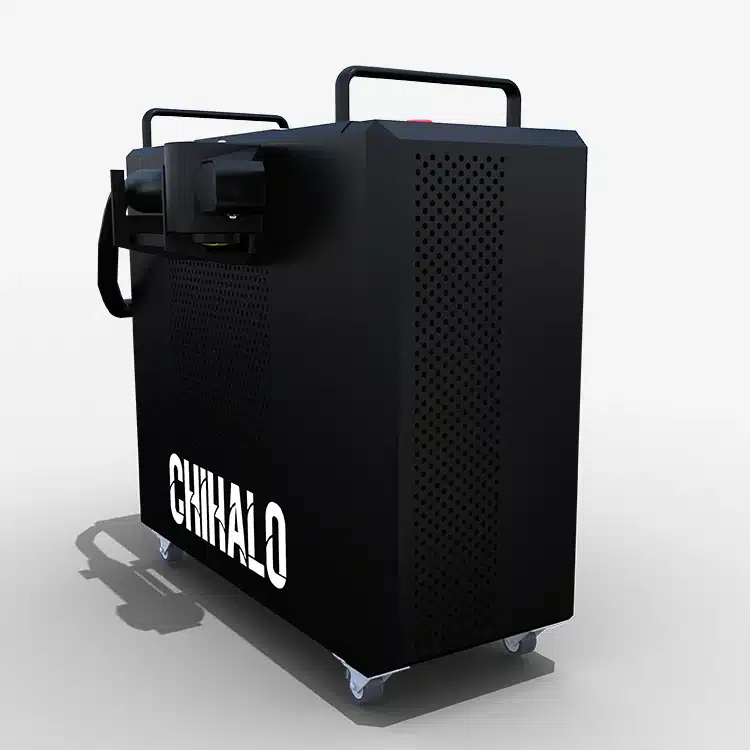
How to Purchase Chihalo Laser Stone Cleaning?
Common Misconceptions
Myth 1: "Too expensive for small operations"
Reality: Entry systems start ~$4,000 — comparable to quality sandblasting setup when factoring compressor, media, PPE, and disposal.
For 20+ hours weekly use, laser often costs less over 3 years.
Myth 2: "Slower than sandblasting"
Reality: For large flat surfaces, sandblasting is faster.
But for precision work, laser is often faster overall — no masking, minimal setup, zero cleanup.
Myth 3: "Need engineering degree to operate"
Reality: Modern systems designed for industrial operators. Most become proficient in 1-2 days.
No more complex than CNC equipment.
Myth 4: "Technology is too new"
Reality: Industrial laser cleaning has been used since the 1990s.
It’s standard in aerospace and rapidly growing in automotive and manufacturing.
Frequently Asked Questions
Removing rust, paint, coatings, oil, and contaminants from surfaces. Primary applications: pre-weld surface prep, paint stripping, mold cleaning, aerospace maintenance, historical restoration.
Neither is universally better. Laser excels at precision, sensitive materials, automation. Sandblasting better for large areas, heavy contamination, surface profiling needs.
$15,000-$500,000+ depending on type. Handheld: $15K-$60K. Industrial handheld: $40K-$100K. Workstations: $50K-$150K. Automated: $100K-$500K+.
When properly configured, no. Different ablation thresholds between contaminants and substrates allow selective removal without affecting base material.
Yes. Laser cleaning, laser blasting, and laser ablation describe the same technology. Terms vary by industry context.
Depends on power and contamination. 100-200W: 1-3 sq ft/min. 500-1000W: 8-20 sq ft/min. 1000W+: 20+ sq ft/min.
Yes. No chemicals, minimal waste, no consumable media, electricity only. Vaporized contaminants captured by filtration.
Most metals, alloys, ceramics, stone, concrete, some composites. Highly reflective or heat-sensitive materials require testing.
Yes. Laser safety and equipment operation training required, typically 1-2 days. Manufacturers provide training with purchase.
Yes. Integrates easily with robots and production lines. Precise, repeatable nature ideal for high-volume manufacturing.
Consider contamination thickness, material sensitivity, speed needs, budget. When uncertain, request supplier sample testing.
Get Your Factory-Direct Quote
Ready to skip the dealer markup? Contact us:
Tell us about your application and we’ll recommend the perfect solution:
Contact Information:
- 📧 Email: [info@chihalo.com]
- 📱 WhatsApp: [+86 18608325040]
Our technical team will respond within 24 hours with personalized recommendations and competitive pricing.