
Laser Furniture Stripper: The Complete Guide to Paint Removal in 2026

Hi! I am Dawn. With 10 years of field experience, I specialize in laser cleaning systems—from optical sourcing to automation. I write here to turn complex specs into actionable buying guides.
Table of Contents
If you’ve ever spent hours sanding a single chair or worried about toxic fumes from chemical strippers, you know how frustrating furniture restoration can be. Traditional paint removal methods are slow, messy, and often damage the very surfaces you’re trying to restore.
Laser furniture stripping technology offers a revolutionary solution: remove paint, varnish, and coatings in minutes instead of hours—without chemicals, without excessive dust, and without damaging delicate wood grain or intricate carvings.
This comprehensive guide covers everything you need to know: how laser stripping works, real-world costs, comparison with traditional methods, and how to choose the right machine for your needs. Whether you’re a professional restorer or a serious DIYer, you’ll find the answers here.
Quick Answer: What You Need to Know
What is it? | A precision tool using focused laser beams to vaporize paint, varnish, and coatings from furniture surfaces without physical contact or chemicals. |
Does it work? | Yes. Lasers remove coatings 3-5x faster than sanding while preserving wood grain and intricate details that other methods damage. |
How much? | Portable units: $5,000-$9,000 (100W-200W). Industrial systems: $15,000-$30,000+. Entry-level: $3,500 (50W). |
Who is it for? | Professional furniture restorers, antique dealers, woodworking shops, and serious DIYers who handle multiple projects monthly. |
Key Takeaway: For professionals completing 5+ furniture stripping projects monthly, a laser stripper typically pays for itself within 12-18 months through labor savings and superior results.
What Is a Laser Furniture Stripper?
Definition
A laser furniture stripper is a precision cleaning tool that uses concentrated fiber laser beams to remove paint, varnish, lacquer, stain, and other coatings from wood and metal furniture surfaces. The laser energy causes the coating to instantly vaporize (sublimate) while the underlying material remains completely undamaged.
Unlike sandblasting or chemical stripping, laser stripping is a non-contact, non-abrasive process. The technology is also known as laser paint removal, laser coating removal, or laser cleaning.
How Laser Furniture Stripping Works
The laser stripping process involves four key steps:
1.Laser beam generation: A fiber laser source generates a concentrated beam of light at 1064nm wavelength, delivered through a handheld scanning head.
2.Energy absorption: The coating material (paint, varnish, etc.) absorbs the laser energy. Different coatings absorb at different rates, affecting removal speed.
3.Thermal sublimation: Within milliseconds, the coating’s temperature rises past its ablation threshold. The material transitions directly from solid to gas (sublimation), ejecting from the surface.
4.Substrate protection: Wood and metal reflect the laser energy differently than coatings. With proper settings, the laser removes only the coating while the base material remains intact.
Technical Note: Pulsed fiber lasers are preferred for furniture restoration because they deliver energy in extremely short bursts (nanoseconds), minimizing heat transfer to the wood. This prevents burning or discoloration.
Types of Laser Furniture Strippers
Type | Best For | Price Range |
Portable/Suitcase (50-200W Pulsed) | Furniture restoration, on-site work, small workshops. Weight: 30-35kg. | $3,500 – $9,000 |
Backpack (100W Pulsed) | Maximum portability, tight spaces, overhead work. | $6,500 – $7,500 |
Workstation (200-500W) | Factory integration, high-volume production, robotic systems. | $8,000 – $18,000 |
High-Power CW (1000W+) | Heavy rust removal, thick industrial coatings. NOT recommended for delicate wood. | $4,000 – $7,000+ |
Recommendation: For furniture restoration, choose a 100W-200W pulsed fiber laser in portable/suitcase format. This offers the ideal balance of precision, speed, and portability for most restoration projects.

Laser Stripping vs. Traditional Methods: Complete Comparison
Before investing in laser technology, you need to understand exactly how it compares to the methods you’re currently using.
Here’s an honest, detailed comparison.
Laser Stripping vs. Sanding
Factor | Laser Stripping | Sanding |
Precision | Excellent – Micron-level control, removes only coating | Poor – Easy to over-sand, loses material |
Speed | Fast – 10-30 m²/hour (200W) | Slow – Hours per piece |
Dust/Mess | Minimal – Vaporized, extracted by fume system | Heavy – Fine dust everywhere |
Detail Work | Excellent – Handles carvings, moldings | Difficult – Hard to reach intricate areas |
Initial Cost | High – $5,000-$15,000 | Low – $50-$500 |
Consumables | None – Only electricity | Ongoing – Sandpaper, discs |
Laser Stripping vs. Chemical Strippers
Factor | Laser Stripping | Chemical Strippers |
Environmental Impact | Eco-friendly – No chemicals, no toxic waste | Harmful – Toxic fumes, hazardous disposal |
Health & Safety | Safe – Goggles + ventilation only | Risky – Full PPE required, health hazards |
Residue | None – Clean surface ready for finishing | Requires thorough washing/neutralizing |
Processing Time | Instant – Immediate vaporization | Hours – Apply, wait, scrape, clean |
Wood Damage Risk | Minimal – Non-contact process | Moderate – Can penetrate grain |
Laser Stripping vs. Heat Gun
Heat guns soften paint for scraping but come with significant drawbacks:
- Fire risk: Heat guns can ignite wood, especially older dried materials
- Scorching: Easy to burn and discolor wood with inconsistent heat application
- Still requires scraping: Labor-intensive follow-up work needed
- Limited precision: Cannot handle detailed carvings or moldings effectively
Bottom Line: Laser stripping vaporizes coatings in milliseconds without transferring heat to the substrate. For furniture restoration where preserving the wood is paramount, laser technology offers clear advantages despite higher upfront costs.
Real-World Applications: Where Laser Stripping Excels
Antique Furniture Restoration
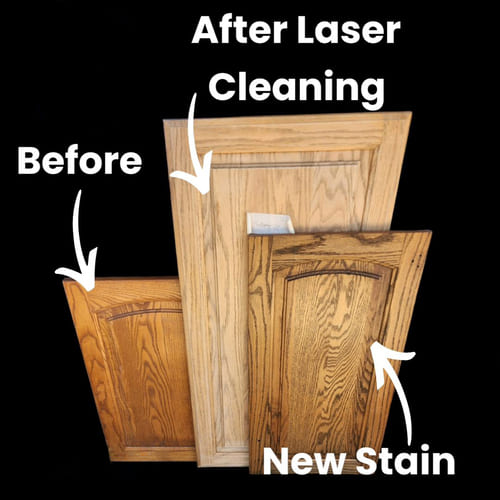
Antique furniture presents unique challenges: intricate carvings, delicate veneers, and irreplaceable historical value. Laser stripping excels here because:
- Precision removes old finishes from carved details without flattening them
- Non-contact method preserves fragile veneers and inlays
- No chemical penetration that could damage aged wood
- Selective stripping allows partial cleaning where needed
Modern Furniture Refinishing
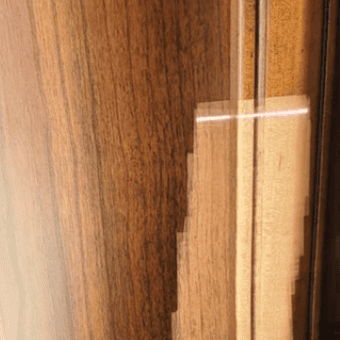
For refinishing businesses handling modern furniture, laser stripping dramatically increases throughput. A dining set that might take a full day with traditional methods can be stripped in 2-3 hours, allowing you to take on more projects and increase revenue.
Architectural Woodwork
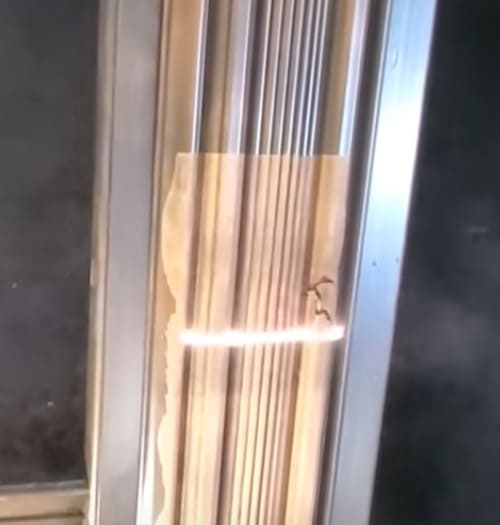
Beyond furniture, laser strippers effectively handle:
- Wood floors requiring refinishing
- Door and window frames
- Staircase railings and balusters
- Decorative moldings and trim
- Historic building restoration
What Coatings Can Laser Remove?
Laser furniture strippers effectively remove:
Coating Type | Laser Effectiveness |
Latex paint | Excellent |
Oil-based paint | Excellent |
Varnish / Lacquer | Excellent |
Wood stain | Excellent |
Polyurethane | Excellent |
Shellac | Excellent |
Powder coating | Good (may need higher power) |
Lead paint | Excellent (with proper extraction) |
Rust/oxidation | Excellent (on metal parts) |
Key Benefits of Laser Furniture Stripping
1. Precision and Control — Protect What Matters
The most significant advantage of laser stripping is micron-level precision. The laser removes only what you want—the coating—while leaving the underlying wood grain, carvings, and details completely intact.
This precision is impossible to achieve with sanding (which removes material) or chemical strippers (which can penetrate and damage wood fibers). For antique furniture worth thousands of dollars, this protection is invaluable.
2. Eco-Friendly and Chemical-Free
Traditional chemical strippers contain toxic compounds like methylene chloride and N-methylpyrrolidone (NMP), which pose serious health risks and require hazardous waste disposal. Many regions now restrict or ban these chemicals.
Laser stripping uses only electricity and produces no chemical waste. The vaporized coating material is captured by fume extraction systems, making it one of the most environmentally responsible stripping methods available.
3. Time-Saving Efficiency
Laser stripping dramatically reduces processing time:
Task | Traditional Method | Laser Stripping |
Strip dining chair | 2-4 hours (sanding) | 20-40 minutes |
Strip dresser | 6-10 hours | 1.5-3 hours |
Strip door | 3-5 hours (chemicals) | 30-60 minutes |
4. Low Operating and Maintenance Costs
Unlike traditional methods that require ongoing purchases of sandpaper, chemicals, and protective equipment, laser stripping has minimal consumable costs:
- No sandpaper or abrasive discs
- No chemical strippers to purchase
- Fiber laser source lasts 100,000+ hours (10+ years of typical use)
- Main maintenance: periodic lens cleaning
- Operating cost: primarily electricity (single-phase 220V)
Limitations: What Laser Stripping Cannot Do
No technology is perfect. Here’s an honest assessment of laser stripping limitations:
High Initial Investment
At $5,000-$15,000 for quality units, laser strippers represent a significant investment. For occasional users (1-2 projects per month), the ROI may not justify the purchase. In these cases, equipment rental or traditional methods may be more practical.
Learning Curve
Proper parameter settings (power, speed, frequency) vary by coating type and thickness. New users should expect 2-4 hours of practice to achieve optimal results. Always test on an inconspicuous area first.
Not for All Materials
While excellent on wood and metal, standard fiber lasers (1064nm) are less effective on certain materials:
- Plastics may melt rather than vaporize cleanly
- Some composite materials require specific wavelengths
- Very thick coatings may require multiple passes
Light Sanding Still Recommended
While laser stripping leaves a very clean surface, light sanding with fine-grit paper (220+) is still recommended before refinishing for furniture-grade results. The laser may slightly raise wood grain, and a final pass ensures perfect smoothness.
How Much Does a Laser Furniture Stripper Cost?
2026 Price Guide
Category | Power | Price Range (USD) | Best For |
Entry-Level Portable | 50W Pulsed | $3,500 – $4,500 | Hobbyists, light use |
Standard Portable | 100W Pulsed | $4,500 – $7,000 | Professional restorers |
Recommended | 200W Pulsed | $6,500 – $9,000 | High-volume shops |
Industrial Workstation | 500W+ | $15,000 – $20,000 | Factory production |
High-Power CW | 1000W+ | $4,000+ | Heavy industrial |
Factors Affecting Price
- Laser power: Higher wattage = higher price, but faster processing
- Laser source brand: JPT, Raycus, MAX (Chinese) vs IPG (German) – affects reliability and price
- Pulse type: MOPA lasers offer more adjustability but cost more
- Additional features: Auto-focus, wireless control, touchscreen interface
- Warranty and support: Extended warranties and local support add value
ROI Analysis: When Does It Pay Off?
Consider this scenario for a furniture restoration business:
Factor | Calculation |
Projects per month | 10 furniture pieces |
Time saved per piece (vs sanding) | 2 hours average |
Monthly time saved | 20 hours |
Labor cost @ $35/hour | $700/month saved |
Annual labor savings | $8,400 |
Machine cost (200W) | $7,500 |
Payback period | ~11 months |
Note: This calculation doesn’t include additional benefits like higher-quality results (which can command premium pricing), ability to take on more projects, and elimination of consumable costs.
How to Choose the Right Laser Furniture Stripper
Step 1: Determine Your Power Requirements
Application | Recommended Power | Reason |
Light coatings, occasional use | 50-100W | Sufficient for thin varnish, single-layer paint |
Most furniture restoration | 100-200W | Best balance of speed, precision, and cost |
Thick/multi-layer coatings | 200-300W | Higher energy needed for stubborn finishes |
Industrial/batch processing | 500W+ | Maximum throughput for production lines |
Step 2: Choose Pulsed vs. Continuous Wave
Pulsed Lasers (Recommended for Furniture): Deliver energy in extremely short bursts (nanoseconds). This minimizes heat transfer to the wood, preventing burning or discoloration. Essential for delicate wood and precision work.
Continuous Wave (CW) Lasers: Provide constant beam output. Faster for heavy rust removal on metal but can easily damage wood due to heat buildup. Not recommended for furniture restoration.
Step 3: Must-Have Features Checklist
- Handheld scanning gun — Ergonomic design for extended use
- Adjustable power and frequency — Customize settings for different coatings
- Red light focusing assist — Visible guide for precise positioning
- Adequate cable length (3m+) — Freedom of movement around furniture
- Overheat protection — Automatic shutoff prevents damage
- Portable/suitcase design — Easy transport for on-site work
Step 4: Consider Brand and Support
Reliable laser source brands include JPT, Raycus, and MAX (Chinese manufacturers with good quality-to-price ratio) and IPG (German, premium quality but higher cost). When evaluating suppliers, consider:
- Warranty length (standard 1 year, some offer 2-3 years)
- Technical support availability (online, phone, on-site)
- Spare parts availability
- Training provided
- User reviews and case studies
Safety Guidelines for Laser Furniture Stripping
Laser furniture strippers are Class 4 laser devices and require proper safety measures:
Essential Safety Equipment
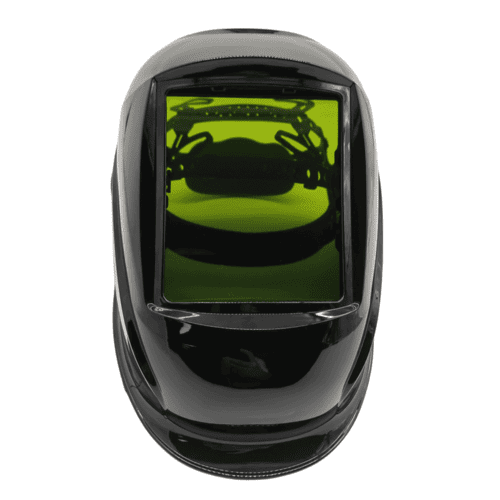
- Laser safety goggles — OD5+ rating, matched to 1064nm wavelength (CRITICAL – never operate without)
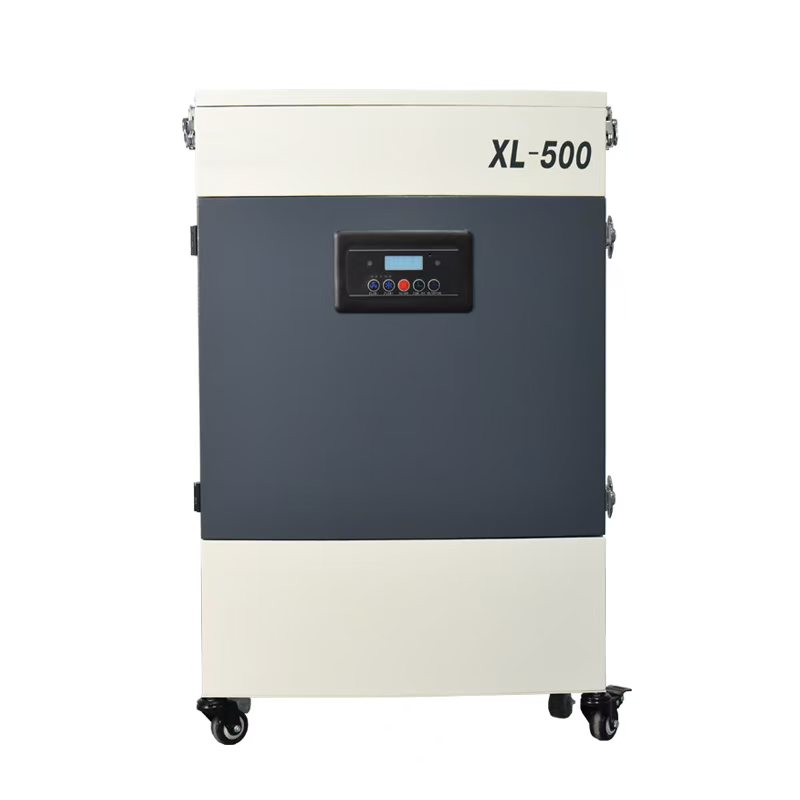
- Fume extraction system — Captures vaporized coating particles
- Protective barriers — Prevent laser exposure to bystanders
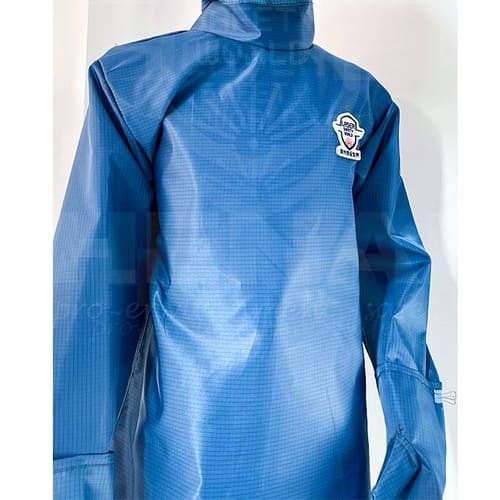
- Long sleeves/gloves — Protect skin from reflected laser light
Operating Best Practices
- Always test settings on an inconspicuous area first
- Work in a well-ventilated area or use fume extraction
- Never point the laser at reflective surfaces that could redirect the beam
- Keep unauthorized persons out of the work area
- Follow manufacturer’s maintenance schedule
Frequently Asked Questions
A laser furniture stripper is a precision tool that uses focused fiber laser beams to remove paint, varnish, and other coatings from furniture surfaces. The laser heats the coating until it vaporizes (sublimation), while the underlying wood or metal remains undamaged because it reflects the laser energy differently. This non-contact, chemical-free process is faster and more precise than traditional stripping methods.
No, when properly configured, a laser furniture stripper will not burn or damage wood. Pulsed fiber lasers deliver energy in extremely short bursts (nanoseconds), vaporizing only the coating while the wood reflects the laser energy. However, using a continuous wave (CW) laser or incorrect settings can cause damage. Always test on a hidden area first and use pulsed lasers for furniture work.
Portable laser furniture strippers cost between $5,000-$9,000 for 100W-200W models suitable for furniture restoration. Entry-level 50W units start around $4,500, while industrial-grade systems exceed $15,000. Price depends on laser power, source brand (JPT, Raycus, IPG), and features. For most furniture restoration work, a 100W-200W pulsed fiber laser in the $6,000-$8,000 range offers the best value.
Laser furniture strippers effectively remove latex paint, oil-based paint, varnish, lacquer, wood stain, polyurethane, shellac, powder coating, e-coating, and lead paint (with proper extraction). They also remove rust and oxidation from metal furniture components. Multi-layered coatings may require multiple passes. The laser works on most common furniture finishes with excellent results.
Laser stripping offers several advantages over chemical strippers: no toxic fumes or hazardous waste, no residue requiring cleanup, faster processing (instant vaporization vs. hours of waiting), and no risk of chemicals penetrating and damaging wood fibers. However, laser equipment has higher upfront costs ($5,000-$15,000 vs. $20-$50 per gallon for chemicals). For frequent users, laser stripping is more cost-effective long-term.
Laser stripping is 3-5 times faster than sanding. A 200W laser can clean 10-30 m²/hour depending on coating thickness. A dining chair that takes 2-4 hours to sand can be laser-stripped in 20-40 minutes. A dresser requiring 6-10 hours of sanding takes only 1.5-3 hours with laser. This time savings translates directly to increased productivity and profitability for professional restorers.
Light sanding is recommended but much less intensive than traditional stripping. Laser stripping leaves a very clean surface, but the process may slightly raise wood grain. A quick pass with fine-grit sandpaper (220+) ensures a perfectly smooth surface for refinishing. For rustic or industrial-style finishes, this step may be optional. The time spent on final sanding is minimal compared to traditional methods.
For furniture restoration, a 100W-200W pulsed fiber laser is ideal. 100W handles most varnishes and single-layer paints efficiently, while 200W provides faster processing for thicker or multi-layer coatings. For occasional light work, 50W may suffice. Avoid continuous wave (CW) lasers for wood—they deliver constant heat that can cause burning. Always choose pulsed lasers for delicate furniture work.
Yes, laser furniture strippers are safe when proper precautions are followed. Essential safety requirements include: OD5+ laser safety goggles matched to 1064nm wavelength (never operate without), fume extraction or adequate ventilation, protective barriers to prevent laser exposure to others, and training on proper operation. Most quality units include safety interlocks and emergency stops. Compared to chemical strippers, lasers eliminate toxic fume exposure.
Yes, laser strippers work excellently on metal furniture including steel, aluminum, and iron components. Lasers are actually more effective on metal because there's no risk of substrate damage—higher power settings can be used safely. The laser can simultaneously remove paint, rust, and oxidation in one process, making it ideal for metal chair frames, table bases, bed frames, and outdoor furniture restoration.
Fiber laser sources in quality furniture strippers typically last 100,000+ hours—equivalent to over 10 years of normal professional use (8 hours/day, 5 days/week). The overall machine lifespan depends on maintenance, but with proper care (regular lens cleaning, avoiding overheating), units can remain operational for 10-15 years. This long lifespan contributes to the excellent long-term ROI of laser stripping equipment.
For professionals completing 5+ furniture stripping projects monthly, a laser stripper typically pays for itself within 12-18 months through labor savings alone. Additional benefits include superior results (which can command premium pricing), ability to handle more projects, elimination of consumable costs, and healthier working conditions. For occasional users (1-2 projects/month), equipment rental or traditional methods may be more practical until volume increases.
Get Your Factory-Direct Quote
Ready to skip the dealer markup? Contact us:
Tell us about your application and we’ll recommend the perfect solution:
Contact Information:
- 📧 Email: [info@chihalo.com]
- 📱 WhatsApp: [+86 18608325040]
Our technical team will respond within 24 hours with personalized recommendations and competitive pricing.