
Fiber Laser for Rust Removal: A Practical Buyer's Guide

Hi! I am Dawn. With 10 years of field experience, I specialize in laser cleaning systems—from optical sourcing to automation. I write here to turn complex specs into actionable buying guides.
Table of Contents
What 15 Years of Surface Prep Experience Taught Me About Laser Cleaning
”I’ve spent fifteen years helping machine shops, auto restorers, and manufacturers figure out the best way to clean metal. When fiber laser rust removal started getting attention a few years back, I was skeptical. The prices seemed nuts, and I figured it was another overhyped technology that wouldn’t survive contact with real shop conditions.
Turns out I was wrong about fiber laser for rust removal.
After putting twelve different fiber laser rust removal machines through real-world testing—and talking to dozens of shop owners who use them daily—I’ve changed my thinking. A fiber laser for rust removal makes sense for far more applications than I originally assumed.
But here’s the problem: there’s a lot of garbage information about fiber laser rust removal out there. Sellers exaggerate capabilities. Specs get inflated. And buyers end up with fiber laser for rust removal machines that don’t match their actual needs.
This guide is my attempt to cut through that noise. I’ll tell you what actually works for fiber laser rust removal, what doesn’t, and where the smart money goes when buying a fiber laser for rust removal.”
What’s in this fiber laser rust removal guide:
- Which fiber laser for rust removal fits your budget and workload
- Real cleaning speeds I measured (not manufacturer claims)
- The actual cost breakdown for fiber laser rust removal nobody talks about
- Fiber laser rust removal machines I’d avoid and why
- Common questions about using a fiber laser for rust removal
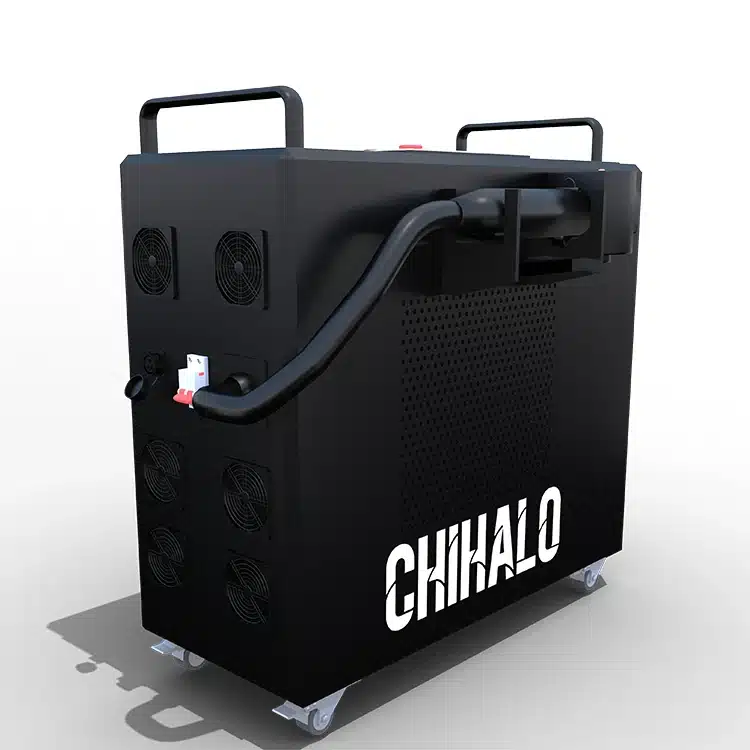
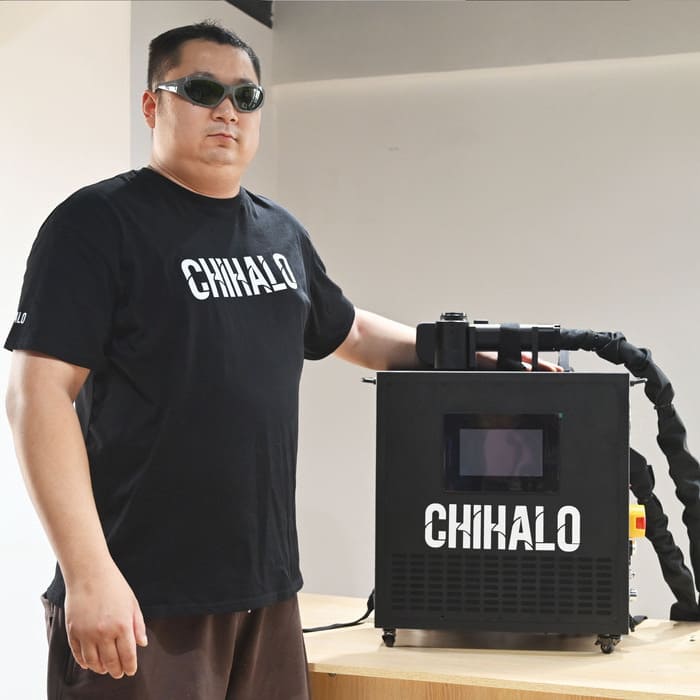
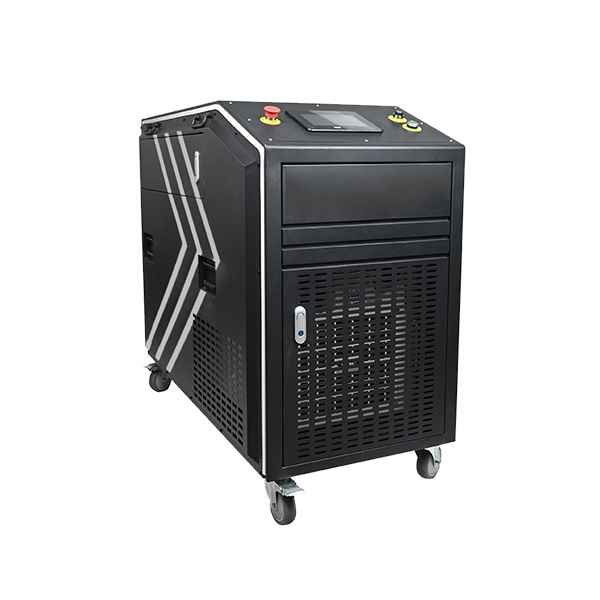
Which Fiber Laser for Rust Removal Should You Buy?
Let me save you some time. If you’re like most people shopping for a fiber laser for rust removal, here’s probably what you need:
Using a fiber laser for rust removal a few times per week, small to medium parts: Get a 1000W-1500W continuous wave unit. Budget $8,000-$12,000. This covers about 80% of fiber laser rust removal use cases I encounter.
Running a production shop, using fiber laser for rust removal all day: Move up to 2000W-3000W. You’ll spend $15,000-$25,000, but the speed difference in fiber laser rust removal is worth it if utilization is high.
Precision fiber laser rust removal on thin or delicate materials: You need a pulsed fiber laser for rust removal, not continuous wave. Expect $15,000-$30,000 for a quality pulsed unit.
Occasional hobbyist use: Honestly? A $50 wire wheel and some elbow grease might make more sense than a fiber laser for rust removal. Lasers don’t pencil out for everyone.
Your situation | Power range | Realistic budget |
Weekend projects, light rust | 500W-1000W | $7,000-$10,000 |
Auto shop, daily welding prep | 1500W | $9,000-$13,000 |
Fabrication, moderate volume | 2000W | $12,000-$18,000 |
Industrial, heavy continuous use | 3000W+ | $18,000-$35,000 |
Aerospace, thin materials | 300W-500W pulsed | $15,000-$35,000 |
How Does Fiber Laser Rust Removal Work?
I’m not going to bore you with physics, but understanding how fiber laser for rust removal works helps you make better buying decisions.
A fiber laser for rust removal shoots a beam at 1064 nanometers wavelength. Rust absorbs this wavelength extremely well. The base metal underneath? Not so much.
When the laser hits rust, the energy gets absorbed and the rust basically flash-vaporizes. The steel underneath stays cool because it reflects most of the energy instead of absorbing it. That’s why you can clean rust without damaging the metal—the two materials respond completely differently to the same laser beam.
This same principle works for paint, oil, mill scale, and most other surface contamination. The contaminant absorbs energy and gets removed. The base metal stays intact.
What you can clean:
- Rust and oxidation (the obvious one)
- Paint and powder coating
- Oil, grease, cutting fluid residue
- Weld discoloration and spatter
- Mill scale
- Old adhesive residue
What lasers won’t fix:
- Deep pitting (laser cleans the surface, doesn’t fill holes)
- Heavy corrosion that’s eaten into the metal
- Contamination on wood, plastic, or other organics
One thing that surprises people: cleaning speed varies dramatically based on what you’re removing. Light surface rust comes off fast. Heavy scale takes longer. Thick paint might need multiple passes. The “cleaning speed” numbers you see in spec sheets assume ideal conditions that rarely exist in real shops.
Continuous Wave vs. Pulsed: Which Do You Need?
This is where a lot of buyers get confused—and where some sellers take advantage.
Continuous wave (CW) lasers produce a steady beam. They’re simpler, cheaper, and faster for removing heavy contamination. The downside is they put more heat into the workpiece. For thick steel, this doesn’t matter. For thin sheet metal or precision parts, it can cause warping or discoloration.
Pulsed lasers fire in short bursts with gaps between pulses. This gives the workpiece time to cool between shots, so you get less heat buildup. The tradeoff is slower cleaning and higher equipment cost.
Factor | Continuous wave | Pulsed |
Price for similar power | Lower | 40-60% more |
Cleaning speed | Faster | Slower |
Heat into workpiece | More | Much less |
Risk of surface damage | Higher if misused | Very low |
Maintenance complexity | Lower | Higher |
My recommendation: Start with continuous wave unless you have a specific reason to need pulsed. About 90% of rust removal applications work fine with CW. If you’re cleaning thin aluminum, doing precision aerospace work, or removing contamination from heat-sensitive components, then pulsed makes sense. Otherwise, you’re paying extra for capability you won’t use.
Real Fiber Laser Rust Removal Speeds
Here’s where manufacturer specs and actual fiber laser rust removal performance diverge. Those impressive numbers in brochures? They’re usually measured on ideal test samples under perfect conditions.
I’ve tracked actual fiber laser rust removal rates across different machines and conditions. These numbers reflect what you’ll see using a fiber laser for rust removal in a real shop:
Laser power | Light surface rust | Moderate rust | Heavy scale/rust |
500W | 1.5-2.5 m²/hr | 0.8-1.5 m²/hr | 0.3-0.8 m²/hr |
1000W | 3-5 m²/hr | 1.5-3 m²/hr | 0.8-1.5 m²/hr |
1500W | 5-8 m²/hr | 3-5 m²/hr | 1.5-3 m²/hr |
2000W | 7-12 m²/hr | 4-7 m²/hr | 2-4 m²/hr |
3000W | 12-20 m²/hr | 7-12 m²/hr | 4-7 m²/hr |
A few things affect these numbers:
Rust severity matters more than you’d think. Light orange surface rust comes off 3-4x faster than heavy black scale. If most of your work is heavy rust, budget for more power than the spec sheets suggest.
Part geometry slows you down. Flat plates clean fast. Complex shapes with corners, holes, and recesses take longer because you’re constantly repositioning.
Operator experience counts. Someone who’s run a laser cleaner for six months will outpace a beginner significantly. There’s technique involved in maintaining optimal distance, speed, and angle.
What a Fiber Laser for Rust Removal Actually Costs
The sticker price on a fiber laser rust removal machine is just the beginning. Here’s the real cost picture for fiber laser rust removal:
Upfront costs for a 1500W fiber laser rust removal system:
Item | Cost range |
Machine | $9,000-$13,000 |
Shipping | $200-$600 |
Electrical work (if needed) | $0-$800 |
Fume extraction (if not equipped) | $800-$2,500 |
Safety glasses, signage | $150-$300 |
Total to get running | $10,000-$17,000 |
Annual operating costs:
Item | Cost range |
Electricity | $400-$1,200 |
Replacement lenses | $100-$400 |
Maintenance, repairs | $100-$500 |
Yearly total | $600-$2,100 |
Compare this to what you’re spending now. If you’re paying someone $25/hour to grind rust manually, and they’re doing it 20 hours a week, that’s $26,000 a year in labor alone—not counting abrasives, dust collection, and cleanup time.
The math gets favorable pretty quickly for shops with consistent rust removal workload.
A real example:
One auto restoration shop I talked to was spending about $3,500/month on rust removal—labor, sandblasting media, cleanup, and rework when panels got warped. They bought a $12,000 laser and cut that to under $800/month. Payback was about four months.
But another shop bought the same machine and barely uses it. They do maybe three or four rusty parts per week. For them, the laser was overkill—outsourcing or manual methods would have been smarter.
The lesson: be honest about your actual volume before buying.
Fiber Laser Rust Removal Machines Worth Considering
I’m not going to give you a ranked list of “best” fiber laser for rust removal machines because the right choice depends entirely on your situation. But I can tell you what to look for in a fiber laser rust removal machine and what to avoid.
Laser source brands that have proven reliable in fiber laser rust removal:
- Raycus (Chinese, good value, widely used)
- MAX (Chinese, similar quality tier to Raycus)
- JPT (Chinese, good reputation for pulsed)
- IPG (German, premium price, premium quality)
The laser source is the heart of the machine. It’s also the most expensive component to replace. Stick with known brands that have track records and available service.
For a 1500W CW system ($9,000-$13,000):
Look for machines with Raycus or MAX sources, integrated water cooling, at least 10m of fiber cable, and scan width of 160mm or more. Warranty should be minimum 2 years on the laser source, 1 year on other components.
At this price point, you’re getting machines made in China. That’s fine—most laser equipment comes from there regardless of where it’s “branded.” What matters is the quality of components and whether you can get support when something goes wrong.
For heavy industrial use ($18,000-$35,000):
Move up to 2000W-3000W. At this level, you might consider European or American-assembled machines with IPG sources if budget allows. The premium isn’t always worth it, but the support infrastructure tends to be better.
For precision pulsed work ($15,000-$35,000):
JPT has become the go-to for pulsed sources in this price range. Look for adjustable pulse parameters so you can tune for different materials and applications.
Fiber Laser Rust Removal Machines I'd Avoid
Suspiciously cheap fiber laser rust removal machines:
If someone’s selling a “2000W” fiber laser for rust removal for $4,500, something’s wrong. Either the power rating is exaggerated, the components are bottom-tier, or there’s no real support behind it. Quality laser sources alone cost several thousand dollars. There’s a floor below which you’re not getting a functional fiber laser rust removal machine.
Unbranded or obscure laser sources:
I’ve seen machines with laser sources from manufacturers nobody’s heard of. When that source fails in 18 months, good luck finding replacement parts or anyone who knows how to service it.
Sellers who can’t answer technical questions:
If the person selling you a laser doesn’t know the difference between pulsed and CW, or can’t explain what laser source is inside, walk away. They’re just moving boxes and won’t be any help when you have problems.
“Too good to be true” warranties:
Five-year warranties sound great until you read the fine print and realize they only cover specific components, require you to ship the machine internationally at your expense, and exclude pretty much everything that actually fails.
Machines with no local support:
Even good equipment breaks eventually. If your only option is shipping a 200-pound machine to Shenzhen for repair, that’s going to hurt. Look for sellers with US-based (or wherever you are) service options.
Fiber Laser Rust Removal vs Traditional Methods
A fiber laser for rust removal isn’t always the right answer. Here’s how fiber laser rust removal stacks up against other methods:
Fiber laser rust removal vs. sandblasting:
Sandblasting is cheaper upfront and works well for large, simple parts. But it’s messy, requires media disposal, can damage thin materials, and leaves you with cleanup. A fiber laser for rust removal wins on precision, cleanliness, and long-term operating cost. Sandblasting wins on initial investment and aggressive material removal.
Fiber laser rust removal vs. chemical stripping:
Chemicals work but create hazardous waste, require proper disposal, and pose safety risks. Fiber laser rust removal is cleaner and safer. Chemicals win when you’re doing occasional work and don’t want equipment investment.
Fiber laser rust removal vs. manual grinding/wire wheel:
Manual methods are cheap but slow and labor-intensive. They also remove base material along with rust. A fiber laser for rust removal is faster and more precise but costs more. Manual wins for occasional small jobs. Fiber laser rust removal wins for any kind of production volume.
When a fiber laser for rust removal doesn’t make sense:
- One-time projects (just buy a $15 rust remover from the hardware store)
- Very occasional use (outsource or use manual methods)
- Extremely heavy rust that’s destroyed the base metal (laser cleans surfaces, doesn’t rebuild them)
- Tight budgets with low volume (the math doesn’t work)
Fiber Laser Rust Removal FAQ: Questions Buyers Ask Most
Not if you set it up correctly. The whole point of using a fiber laser for rust removal is that rust absorbs the energy while steel reflects it. That said, wrong settings or holding the beam in one spot too long can cause surface changes. It takes a little practice to dial in parameters for new materials.
Yes. A fiber laser rust removal machine handles paint, powder coating, e-coating, and most surface contaminants. Different coatings may need different settings, but the same fiber laser for rust removal handles multiple cleaning tasks.
Basic fiber laser rust removal operation takes maybe an hour to learn. Getting efficient with a fiber laser for rust removal and knowing how to adjust for different situations takes a few weeks of regular use. It's not complicated, but there's a learning curve.
Laser safety glasses rated for 1064nm wavelength (OD5+ rating). Fume extraction because the vaporized material from fiber laser rust removal needs to go somewhere. Warning signs and ideally some kind of barrier so people don't walk into the beam path.
Most handheld fiber laser rust removal units run on single-phase 220V, which most shops already have. Higher-power industrial fiber laser for rust removal units may need three-phase. Check specs before buying—running new electrical can add significant cost.
The laser source in a fiber laser for rust removal is rated for 100,000 hours or more, which is basically a lifetime for most users. Other components—chillers, cables, optics—may need occasional replacement, but we're talking years of service with normal maintenance.
Continuous wave fiber laser for rust removal works for 90% of users. It's cheaper, faster, and handles most materials fine. Pulsed fiber laser rust removal only if you're working with thin, heat-sensitive parts.
Depends entirely on your current costs and how much you'll use the fiber laser for rust removal. Shops with significant rust removal workload often see payback in 3-6 months. Light users might never break even on a fiber laser rust removal machine versus cheaper methods.
Handheld fiber laser rust removal units are portable and can go on-site. You'll need power, eye protection protocols, and a way to deal with fumes. Using a fiber laser for rust removal on-site is doable but requires planning.
Keep the optics clean, maintain the chiller per manufacturer specs, inspect cables periodically. A fiber laser for rust removal requires less maintenance than most shop equipment.
Fiber laser rust removal has been used industrially for over a decade. The technology is mature. What's changed recently is price—fiber laser for rust removal equipment that cost $100,000+ ten years ago now costs $10,000-$20,000, which opened up fiber laser rust removal to smaller operations.
Component quality, laser source brand, build quality, warranty terms, support infrastructure, and margin. A $7,000 fiber laser for rust removal and a $15,000 fiber laser rust removal machine might look similar but use different quality components and come with very different support.
Business Questions
Get Your Factory-Direct Quote
Ready to skip the dealer markup? Contact us:
Tell us about your application and we’ll recommend the perfect solution:
Contact Information:
- 📧 Email: [info@chihalo.com]
- 📱 WhatsApp: [+86 18608325040]
Our technical team will respond within 24 hours with personalized recommendations and competitive pricing.