
Laser Varnish Remover: The Complete Guide to Eco-Friendly Paint & Coating Removal

Hi! I am Dawn. With 10 years of field experience, I specialize in laser cleaning systems—from optical sourcing to automation. I write here to turn complex specs into actionable buying guides.
Table of Contents
|
Quick Answer: What is a Laser Varnish Remover? A laser varnish remover is a fiber laser cleaning machine that uses pulsed or continuous wave laser beams to safely strip varnish, paint, stain, and other coatings from wood, metal, and stone surfaces without damaging the underlying material. Unlike chemical strippers or sanding, laser varnish removal is precise, eco-friendly, and produces no toxic waste. Prices range from $2,500 for entry-level portable units to $40,000+ for industrial systems. |
If you’ve ever spent hours sanding furniture or dealing with toxic chemical strippers to remove old varnish, you know how frustrating traditional methods can be. They’re time-consuming, messy, and often damage the wood grain you’re trying to preserve.
Laser varnish removal technology has changed the game. This guide covers everything you need to know about laser varnish removers: how they work, what they cost, which type suits your needs, and how to choose the right machine for furniture restoration, floor refinishing, or industrial applications.
How Laser Varnish Removal Works?
Laser varnish removal uses a process called laser ablation.
The machine emits high-energy laser pulses that are absorbed by the coating layer.
This absorption causes rapid heating, which vaporizes or ejects the varnish from the surface in microseconds.
The key to understanding why this works so well lies in selective absorption.
Coatings like varnish, paint, and stain absorb laser energy much more efficiently than the underlying wood or metal.
This means the laser removes only what you want removed, leaving the substrate completely intact.
The Science Behind Laser Ablation
When the laser beam hits the varnished surface, three things happen in rapid succession:
- Energy Absorption: The varnish layer absorbs the laser energy, converting light into heat.
- Rapid Vaporization: The coating reaches its ablation threshold in nanoseconds, turning directly from solid to gas.
- Shockwave Ejection: Micro-shockwaves lift and eject any remaining particles from the surface.
Because each laser pulse lasts only nanoseconds to milliseconds, heat doesn’t penetrate into the wood. The result is clean varnish removal without burning, charring, or damaging the wood grain.
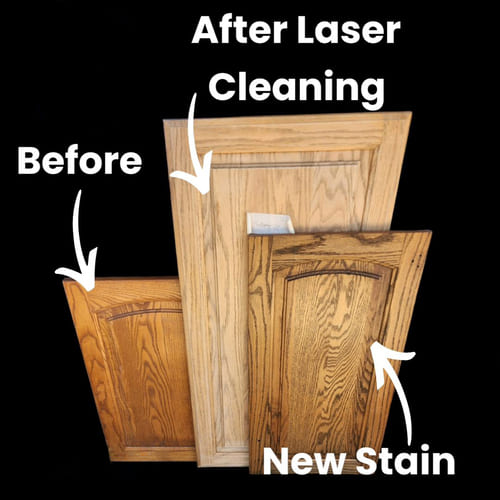
Pulsed Laser vs. Continuous Wave (CW) Laser
Not all laser varnish removers work the same way. There are two main types of laser sources, and choosing the right one depends on your specific application:
Feature | Pulsed Laser | CW Laser |
How It Works | Short bursts of high-energy pulses | Continuous beam of energy |
Best For | Delicate surfaces, wood, thin coatings, antiques | Thick coatings, heavy rust, large industrial areas |
Heat Risk | Very low – minimal heat transfer | Higher – may heat thin materials |
Precision | Excellent – ideal for detailed work | Good – better for large areas |
Speed | Moderate | Fast for heavy removal |
Power Range | 50W – 1000W | 1000W – 3000W+ |
Price Range | $5,000 – $35,000 | $8,000 – $40,000+ |
For most wood varnish removal applications, pulsed lasers are the recommended choice. They offer the precision and control needed to preserve delicate wood grain while completely removing the coating.
Laser Varnish Removal for Wood Surfaces
This is where laser technology truly shines. Unlike metal cleaning (where most lasers are used), wood requires a gentler approach that preserves the natural grain and texture. Laser varnish removal delivers exactly that.
Different Varnish Types & Removal Difficulty
Not all varnishes are created equal. Some respond exceptionally well to laser cleaning, while others present more challenges.
Here’s what you need to know:
Varnish Type | Difficulty | Laser Power | Notes |
Water-Based Varnish | Easy | 50W – 100W | Responds very well, fast removal |
Shellac | Easy | 50W – 100W | Quick vaporization, excellent results |
Lacquer | Easy-Medium | 100W – 200W | Clean removal, watch for multiple layers |
Oil-Based Varnish | Medium | 100W – 200W | Good results, may need slower passes |
Oil-Based Stain | Medium | 100W – 300W | Depends on penetration depth |
Polyurethane | Difficult | 200W – 500W | Strong adhesion, may need multiple passes |
Epoxy Coating | Very Difficult | 500W+ | High heat resistance, slower process |
UV-Cured Coating | Very Difficult | 500W+ | Reflects laser energy, challenging |
Wood Type Considerations
Different woods respond differently to laser varnish removal.
The key factors are wood density, grain pattern, and moisture content.
Hardwoods (Oak, Maple, Walnut, Cherry)
- Higher density allows more aggressive laser settings
- Excellent heat dissipation – lower risk of damage
- Can handle 200W-500W depending on varnish type
- Ideal for furniture restoration projects
Softwoods (Pine, Cedar, Fir, Spruce)
- Lower density requires more careful parameter settings
- Start with lower power (100W-300W) and test first
- Resinous woods may show slight discoloration – test in hidden area
- Excellent results achievable with proper settings
Antique & Aged Wood
- Perfect application for laser varnish removal
- Non-contact method preserves fragile surfaces
- Can reveal original wood grain hidden under layers of old finish
- Recommended: pulsed laser, 200W-500W, with TOPHAT beam profile
Wood Furniture Restoration Applications
Laser varnish removal has become the preferred method for professional furniture restorers. Here’s why:
- Antique Furniture: Remove centuries of varnish buildup without damaging original wood or carvings
- Cabinets & Kitchen Doors: Strip factory finishes in a fraction of the time compared to sanding
- Wooden Floors: Refinish hardwood floors without the dust and mess of drum sanders
- Wooden Beams & Trim: Clean architectural elements including difficult-to-reach areas
- Historical Monuments: Restore heritage wood without risk of damage from chemicals or abrasives
Beyond Wood: Metal, Stone & Industrial Applications
While this guide focuses on varnish removal, laser cleaning machines are highly versatile tools.
The same machine that strips varnish from furniture can also handle these applications:
Rust & Paint Removal from Metal
- Automotive: Car body rust, paint stripping for restoration, wheel cleaning
- Industrial: Weld preparation, oxide removal, degreasing metal surfaces
- Mold Cleaning: Tire molds, injection molds, food processing molds
- Aerospace & Defense: Hazardous coating removal (chromium, lead paint) with integrated extraction
Stone, Concrete & Specialty Surfaces
- Stone Restoration: Clean marble, granite, and limestone without chemical damage
- Graffiti Removal: Remove spray paint from buildings and monuments
- Concrete Cleaning: Surface preparation for coatings or repairs
- Cultural Relics: Gentle cleaning of historical artifacts and sculptures
Laser vs. Traditional Varnish Removal Methods
How does laser varnish removal compare to the methods you might already be using? Here’s an honest comparison:
Factor | Laser | Chemical Stripper | Sanding | Sandblasting |
Speed | Fast (up to 12m²/hr) | Slow (hours wait) | Very Slow | Fast |
Precision | Excellent | Poor | Moderate | Poor |
Wood Damage Risk | Very Low | Moderate | High | Very High |
Environmental | Eco-Friendly | Toxic Waste | Dust | Dust + Media |
Consumables | None | Chemicals | Sandpaper | Abrasive Media |
Labor Required | Low | High | Very High | Moderate |
Initial Cost | $5,000-$40,000 | $20-$100 | $100-$500 | $2,000-$10,000 |
Ongoing Cost | Very Low | High | Moderate | High |
Delicate Surfaces | Excellent | Poor | Poor | Not Suitable |
Why Professionals Are Switching to Laser
- Time Savings: A furniture piece that takes 8 hours to sand can be stripped in 1-2 hours with laser
- Better Results: Preserves wood grain and intricate details that sanding would destroy
- Healthier Workspace: No chemical fumes, minimal dust (with proper extraction)
- Lower Operating Costs: No sandpaper, no chemicals, just electricity
- Versatility: Same machine handles wood, metal, stone – multiple revenue streams
Laser Varnish Remover Pricing Guide 2026
One of the most common questions we receive is about pricing.
Here’s a transparent breakdown of what laser varnish removers actually cost in 2026:
Category | Price Range | Power Level | Best For |
Entry-Level Portable | $3,000 – $6,000 | 50W – 100W Pulsed | Hobbyists, small projects, demos |
Professional Portable | $6,000 – $18,000 | 200W – 500W Pulsed | Furniture restoration, workshops |
Heavy-Duty Pulsed | $15,000 – $35,000 | 500W – 1000W Pulsed | High-volume, mold cleaning |
Industrial CW | $4,000 – $12,000 | 1500W – 3000W CW | Rust removal, thick coatings |
Premium Industrial | $20,000 + | 3000W+ / Automated | Manufacturing, production lines |
Total Cost of Ownership
The purchase price is just one part of the equation. Here’s what else to budget for:
- Shipping & Customs: $500 – $2,000 depending on location and machine size
- Safety Equipment: Usually it’s free, extra for $50 for laser safety glasses
- Fume Extraction: $1,000 – $3,000 for proper extraction system
- Training: Often included, or $200 – $500 for additional training
- Maintenance: Minimal – lens cleaning supplies ($50/year), filter replacements ($100-300/year)
- Electricity: Very low – a 200W laser uses less power than a hairdryer
ROI Example: Furniture Restoration Business
Let’s look at a realistic return on investment calculation:
Traditional Method (Per Project) | Laser Method (Per Project) |
Chemical stripper cost: $30 | Electricity cost: $2 |
Sandpaper/supplies: $20 | No consumables: $0 |
Labor time: 8 hours | Labor time: 2 hours |
Labor cost (@$30/hr): $240 | Labor cost (@$30/hr): $60 |
Total per project: $290 | Total per project: $62 |
Savings per project: $228 |
With savings of $228 per project, a $10,000 laser pays for itself in approximately 44 projects. For a busy restoration shop completing 2-3 projects per week, that’s ROI within 4-6 months.
How to Choose the Right Laser Varnish Remover
With dozens of models on the market, choosing the right laser varnish remover can be overwhelming.
Here’s a systematic approach to finding the perfect machine for your needs:
Step 1: Define Your Primary Application
What will you use the machine for most often? Match your answer to these recommendations:
Application | Recommended Type | Power Range |
Furniture restoration | Pulsed laser, portable | 200W – 500W |
Floor refinishing | Pulsed laser, higher power | 100W – 500W |
Antique restoration | Pulsed laser with TOPHAT | 50W – 300W |
Car body/automotive | CW laser | 1500W – 3000W |
Industrial mold cleaning | Pulsed laser (TOPHAT) | 200W – 500W |
Heavy rust/thick coatings | CW laser | 1000W – 3000W+ |
Mixed applications | Versatile pulsed laser | 200W – 500W |
Step 2: Consider Portability Needs
Laser varnish removers come in several form factors:
- Trolley/Suitcase Type: Wheeled case design, 30-40kg, easy to transport, ideal for on-site work
- Backpack Type: Ultimate portability for field work, typically 100W-500W
- Cabinet/Stationary: Higher power, better cooling, for fixed workshop use
- Integrated/Automated: For production lines and manufacturing integration
Step 3: Evaluate Key Features
Must-Have Features:
- Adjustable pulse frequency and width (for fine-tuning to different coatings)
- Red light positioning system (for precise targeting)
- Ergonomic handheld gun design (critical for extended use)
- Safety interlock system (laser only fires when aimed at surface)
Nice-to-Have Features:
- Air cooling (simpler maintenance) vs. water cooling (higher duty cycle)
- TOPHAT beam profile (more uniform cleaning)
- Wireless control/parameter saving
- Integrated fume extraction port
Step 4: Verify Quality & Support
Buyer’s Checklist:
- CE certification (required for European markets)
- EN ISO 60825-1 laser safety compliance
- Minimum 1-year warranty (2-3 years preferred)
- Spare parts availability
- Technical support responsiveness (test before buying)
- Sample cleaning test on your materials (request this!)
- Video demos of similar applications
Safety Requirements & Best Practices
Laser varnish removers are safe when used properly, but they are Class 4 laser devices requiring appropriate safety measures.
1. Safety Requirements
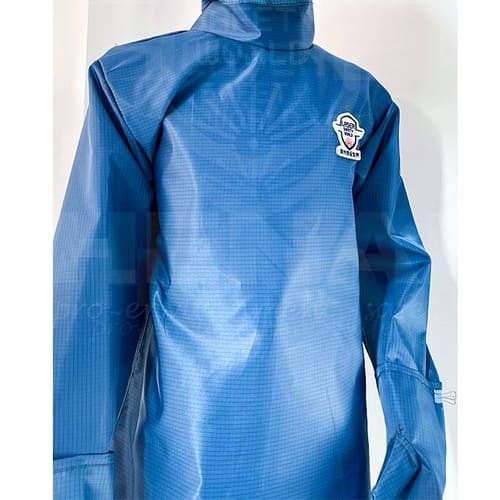
- Laser Safety Glasses: OD4+ rated for 1064nm wavelength. Required for operator and anyone in the work area.
- Fume Extraction System: Captures vaporized coating particles. Critical for lead paint or other hazardous materials.
- Safety Curtains/Enclosure: Prevents stray reflections from leaving work area.
- Warning Signage: “Laser in Use” signs at all entry points.
Operating Best Practices
- Always test on a hidden area first to determine optimal parameters
- Maintain proper focal distance for consistent results
- Clean the lens regularly (daily when in heavy use)
- Ensure adequate ventilation even with extraction system
- Never point laser at reflective surfaces without proper shielding
- Replace extraction filters according to manufacturer schedule
Certifications to Look For
When purchasing a laser varnish remover, verify these certifications:
- CE Marking: European conformity – indicates meeting EU safety requirements
- EN ISO 60825-1: International laser safety standard
- EN ISO 12100: General machine safety requirements
- FDA Registration: Required for laser products sold in the United States
Frequently Asked Questions
A laser varnish remover is a fiber laser cleaning machine that uses focused laser pulses to strip varnish, paint, and coatings from surfaces. It works through laser ablation: the coating absorbs laser energy, rapidly heats up, and vaporizes or ejects from the surface. Because the underlying wood or metal absorbs much less energy, it remains undamaged while the coating is completely removed.
Laser varnish remover prices range from $5,000 to $40,000+ depending on power level and features. Entry-level portable units (50W-100W) cost $5,000-$8,000. Professional-grade machines (200W-500W) range from $8,000-$15,000. Industrial systems (1000W+) cost $15,000-$40,000 or more. Additional costs include safety equipment ($500-$1,000) and fume extraction ($1,000-$3,000).
Yes, laser varnish removal is one of the safest methods for wood surfaces. Pulsed lasers are particularly effective because they deliver energy in short bursts that vaporize the coating without heating the wood. The process preserves wood grain, doesn't create scratches, and is ideal for valuable antiques and detailed carvings. For best results on delicate wood, use a 50W-200W pulsed laser with adjustable parameters.
The required power depends on your application: For furniture and antique restoration, 50W-200W pulsed lasers work well. For floor refinishing and larger wood surfaces, 100W-300W provides faster coverage. For industrial applications or thick coatings, 500W+ may be necessary. As a general rule, start with lower power settings and increase gradually to avoid any risk of marking the wood.
Laser offers significant advantages over traditional methods: It's faster (a piece taking 8 hours to sand can be laser-cleaned in 1-2 hours), more precise (no risk of over-sanding or chemical damage), eco-friendly (no toxic waste), and preserves surface details. The main disadvantage is higher upfront cost. For professional use, the time savings typically provide ROI within 3-6 months.
Laser varnish removers can clean multiple materials including: wood (hardwood, softwood, antique), metal (steel, aluminum, copper, brass), stone (marble, granite, limestone), concrete, glass, and carbon fiber. They remove various coatings: varnish, paint, stain, rust, oxide layers, grease, oil, and mold residue. This versatility makes them valuable for workshops handling diverse projects.
Yes, laser cleaning is considered the ideal method for antique furniture restoration. The non-contact process eliminates risk of physical damage. Adjustable parameters allow gentle cleaning of fragile surfaces. It can reveal original wood grain hidden under layers of old finish. Museums and conservation professionals increasingly choose laser cleaning for valuable historical pieces.
Laser varnish removal is significantly faster than traditional methods. Cleaning speed reaches up to 12 square meters per hour depending on coating type and laser power. A typical furniture piece that takes 6-8 hours to strip by sanding can be completed in 1-2 hours with laser. Large projects show even greater time savings. The time advantage multiplies when accounting for eliminated drying time (chemicals) or dust cleanup (sanding).
Epoxy and polyurethane coatings are challenging for laser removal due to their strong adhesion and heat resistance. They can be removed, but require higher power lasers (500W+), slower scanning speeds, and often multiple passes. Results vary by coating thickness. For projects primarily involving these coatings, consult with the manufacturer and request test samples before purchasing.
Essential safety requirements include: laser safety glasses rated OD4+ for 1064nm wavelength, fume extraction system to capture vaporized particles, safety curtains or enclosure to contain reflections, and warning signage. Operator training is recommended. Never point the laser at reflective surfaces without shielding. With proper safety measures, laser cleaning is safer than chemical stripping.
For wood varnish removal, pulsed lasers are generally better. They deliver energy in short bursts that remove coating without heating the substrate, making them ideal for delicate materials and precision work. CW (Continuous Wave) lasers are better suited for heavy rust removal and thick industrial coatings on metal where heat buildup is less of a concern. Most wood restoration professionals choose pulsed lasers.
Yes, laser cleaning presents strong business opportunities. Growing demand exists in furniture restoration, floor refinishing, automotive detailing, and industrial maintenance. A mid-range machine ($8,000-$15,000) can pay for itself within 6 months with regular use. Key success factors include: choosing the right power level for your target market, investing in proper safety equipment, building a portfolio of before/after examples, and marketing to both residential and commercial customers.
Get Your Factory-Direct Quote
Ready to skip the dealer markup? Contact us:
Tell us about your application and we’ll recommend the perfect solution:
Contact Information:
- 📧 Email: [info@chihalo.com]
- 📱 WhatsApp: [+86 18608325040]
Our technical team will respond within 24 hours with personalized recommendations and competitive pricing.